Sitting on a bucket in the middle of a gutted room, bare studs and exposed subfloor all around her, this homeowner looks straight into the camera and does something most renovators never do on social media: she names the actual numbers. How much the fixer-upper has cost so far, what’s already been spent room by room, and what’s realistically left in the budget to finish the job.
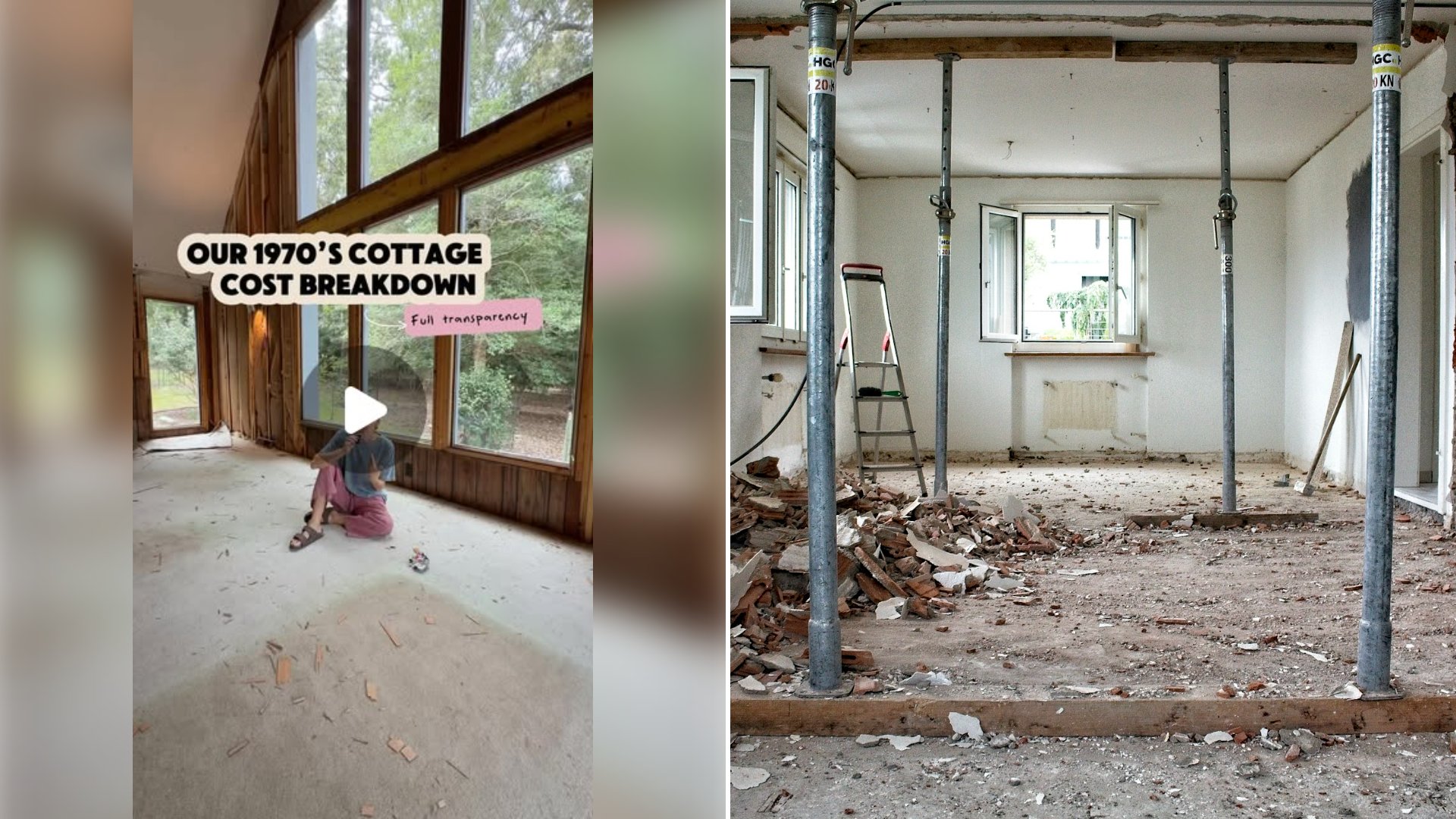
Creator @our.cash.build frames the video around a simple, blunt question: how much did we spend on our fixer upper, and how much do we have left for renovations. Rather than glossing over the financial reality the way so much renovation content does, she breaks down the running total out loud, unfinished room by unfinished room, while sitting inside the very space still waiting on drywall.
That kind of radical transparency is valuable because fixer-upper budgets are notoriously hard to predict from the outside. A full gut renovation commonly runs somewhere in the neighborhood of $100 to $200 per square foot once structural work, plumbing, electrical, and finishes are all factored in, and that range can swing significantly based on the home’s age, the local cost of labor, and how much of the original systems need to be replaced rather than simply updated. Older homes in particular tend to land on the higher end of that range, since outdated wiring and plumbing often can’t just be patched, it has to come out entirely to meet current code.
Budget overruns are also the norm rather than the exception on a project like this. Industry estimates commonly cited by contractors and renovation planners put typical cost overruns on a major renovation at 20 to 30 percent above the original budget, driven by the kind of hidden issues that only surface once walls are opened, things like water damage, outdated electrical panels, or structural repairs nobody could price accurately before demolition started. That’s exactly why experienced renovators build a contingency fund into their budget from day one rather than treating it as an afterthought if the money runs short partway through.
Financing is the other piece most fixer-upper owners have to solve for, since few renovations are paid entirely in cash upfront. Renovation loan products exist specifically for this situation, allowing buyers to roll both the purchase price and the estimated renovation cost into a single mortgage based on the home’s expected value once the work is finished, rather than its current gutted condition. Lenders typically require a detailed, itemized scope of work and contractor bids before approving that kind of loan, which is its own forcing function toward exactly the line-by-line transparency this homeowner is modeling on camera.
Watching someone sit inside an unfinished room and simply say the real numbers out loud, no sponsor pitch, no vague gesture at a budget, is rare enough that it stands out on its own. For anyone currently staring down their own renovation estimate and wondering if the math will actually work, that kind of honesty is worth more than another polished reveal video ever could be.
More from Willow and Hearth
- Freddie Mac Survey Puts the Average 30 Year Fixed Mortgage Rate at 7.40 Percent for October 8, Adding About $24.50 a Month to a $300,000 Loan Compared With the Week Before
- Homeowner Remodeling His House After Work Says He Is a 24 Year Old Dad on a Tight Budget as Part 48 Starts a Downstairs Bathroom Built From Scratch
- Homeowner Restoring the Castle Style Home His Mother Left Him After Cancer Lays Brick Paving and Plants a Garden Before Walking Through the Rooms Inside
Leave a Reply