The camera follows @jenixa_realtor up a dramatic staircase and through a multi story Dallas home full of floor to ceiling windows, sleek finishes, and the kind of open layout that reads as instantly out of reach for most buyers scrolling past it. That is exactly the assumption she sets out to correct.
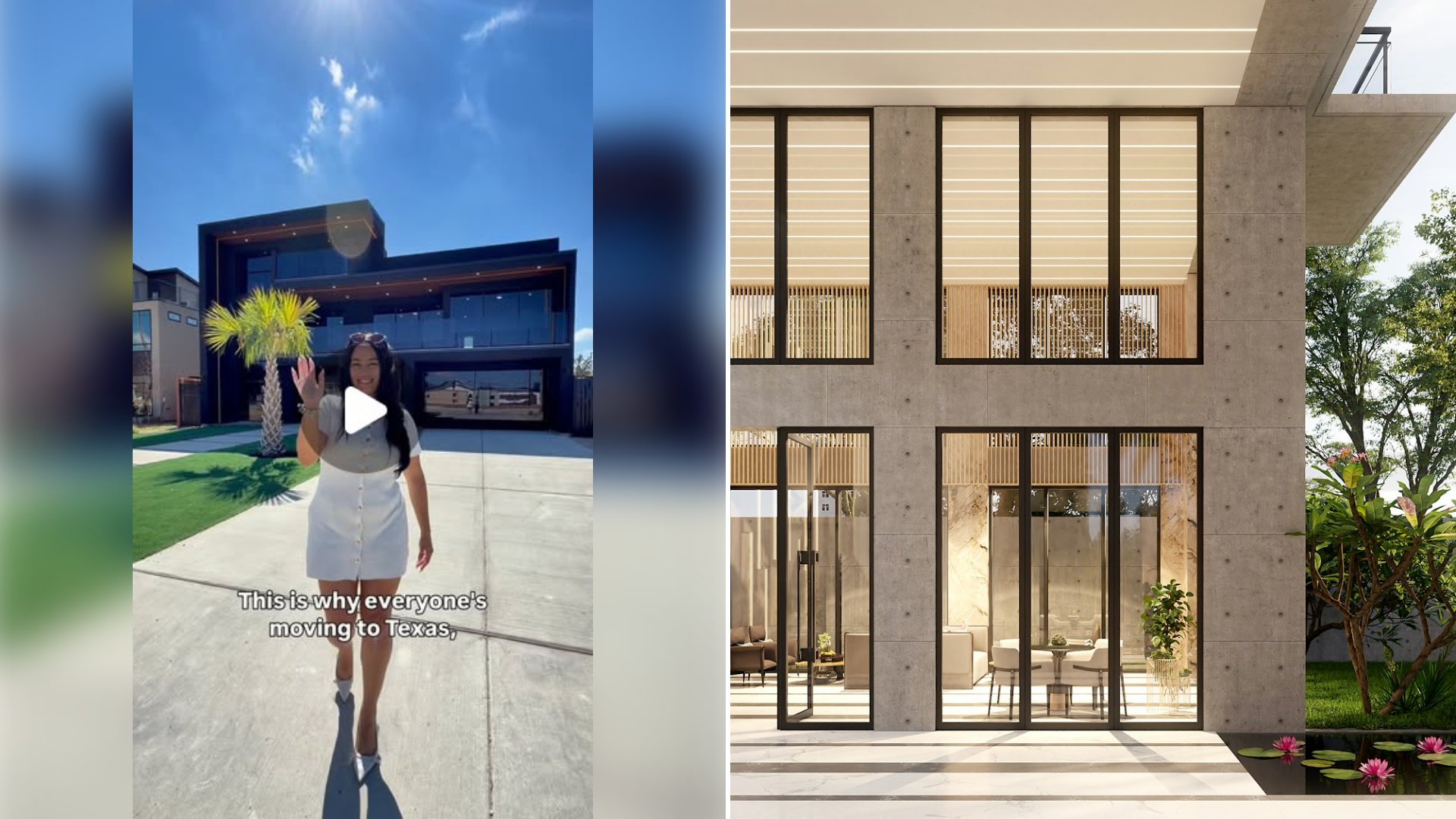
Midway through the tour, she stops in front of the kitchen island and breaks down the actual numbers: the loan programs available, the realistic down payment, and the monthly payment range that puts a home like this within reach of far more buyers than the price tag alone would suggest. The reveal lands as a genuine surprise against the backdrop of the home’s scale.
The gap between perceived and actual affordability she is pointing to is a real pattern in the Texas housing market, and the numbers back it up.
Freddie Mac’s weekly survey has put the average rate on a 30 year fixed mortgage in the neighborhood of 7.4 percent in recent readings, a figure that moves the monthly payment noticeably compared to the sub 4 percent rates buyers remember from several years ago. On a typical priced home in a major Texas metro, each quarter point move in that rate changes the monthly payment on a 300,000 dollar loan by roughly 50 dollars, which adds up quickly but also means a rate improvement of even half a point can meaningfully change what a buyer qualifies for.
Down payments are the other piece most people get wrong. The common assumption is still twenty percent, but conventional loans backed by Fannie Mae and Freddie Mac allow qualified buyers to put down as little as three percent, and FHA loans allow as little as three and a half percent with a lower minimum credit score requirement. The tradeoff is mortgage insurance, which adds a monthly cost until enough equity builds up, but for many buyers that added cost is still far cheaper than waiting years to save a full twenty percent down payment while home prices continue climbing.
Loan limits matter here too. The Federal Housing Finance Agency sets a baseline conforming loan limit each year, and for 2026 that baseline sits at 832,750 dollars in most counties, with higher cost areas allowed up to 1,249,125 dollars. A home that falls under that conforming limit generally qualifies for the lower interest rates and standard down payment options that make a tour like this one’s numbers possible. A home priced above it typically requires a jumbo loan, which usually carries stricter credit and down payment requirements.
None of that erases the fact that a home like the one in the video is still a major purchase. But the agent’s point holds up under the real numbers: the visual size and finish level of a home is not always a reliable guide to what it actually takes to qualify for it, and plenty of buyers rule themselves out of homes they could realistically afford simply because they never ran the math.
More from Willow and Hearth
- Freddie Mac Survey Puts the Average 30 Year Fixed Mortgage Rate at 7.40 Percent for October 8, Adding About $24.50 a Month to a $300,000 Loan Compared With the Week Before
- Federal Housing Finance Agency Raises the 2026 Baseline Conforming Loan Limit to $832,750 and Caps High Cost Areas at $1,249,125, Which Leaves Some Buyers Still Borrowing Jumbo
- National Association of Realtors Says the Typical First Time Buyer Is Now 40 Years Old and Puts Down 10 Percent, According to Its 2025 Profile of Home Buyers and Sellers
Leave a Reply