The clip starts with before photos that are hard to believe: peeling plaster, water stained ceilings, and a grand staircase buried under decades of neglect inside a once stately Baltimore mansion. Investor @mdrealestateshow walks through the purchase story, explaining how the property was picked up for just 135,000 dollars, a price that made sense only once the scale of the needed work became clear.
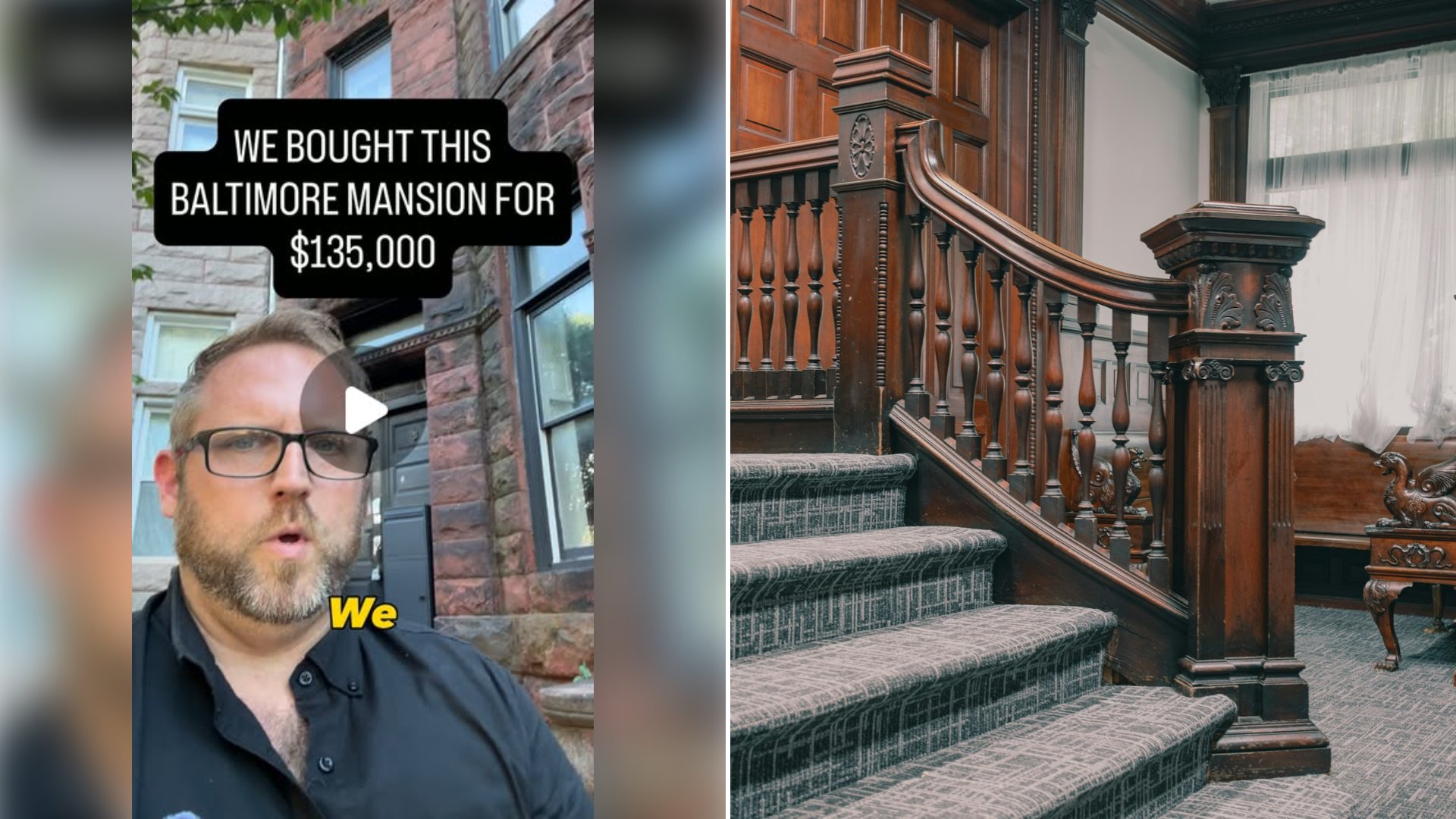
The video then cuts to the after: restored moldings, refinished original floors, and a kitchen rebuilt to match the home’s historic character rather than strip it away. Less than a year after closing on the purchase, the home sold for 460,000 dollars, more than tripling the original price.
A flip that dramatic rarely comes down to renovation skill alone, and Baltimore happens to be one of the better known markets for a specific financial tool that can make a project like this one pencil out: historic tax credits.
Maryland offers a state historic revitalization tax credit that can cover a meaningful percentage of qualified rehabilitation costs on a certified historic structure, and in certain targeted areas of Baltimore City, additional local incentives and property tax credits stack on top of it for owners who restore historic homes rather than demolish or heavily alter them. On the federal side, buildings listed on the National Register of Historic Places can qualify for a separate federal historic rehabilitation tax credit, generally worth 20 percent of qualified rehabilitation expenses for income producing historic properties. Investors who understand how to layer these programs together can offset a substantial share of a renovation budget that would otherwise eat into their margin.
The catch is that these credits come with real restrictions. Projects typically need approval from a historic preservation commission before work begins, and renovations have to follow specific standards for materials and techniques to keep the home’s historic character intact, which usually means custom millwork, salvaged or matched hardware, and significantly more labor than a standard gut renovation. That is part of why the before and after in the video shows restored original details rather than a stripped down modern flip; cutting corners on historic accuracy can disqualify a project from the very credits that made the deal work financially in the first place.
Baltimore’s broader housing market also plays a role here. The city has a large inventory of historic rowhouses and mansions that sat vacant or underpriced for years, which means purchase prices on fixer uppers can still be remarkably low compared to other East Coast cities, even as renovated home values in desirable, historic neighborhoods have climbed steadily. That combination, cheap basis plus available tax incentives plus rising demand for restored historic homes, is exactly the formula behind a profit margin this large.
It is not a result anyone can expect to replicate by accident. But it is a real and repeatable strategy for investors willing to do the paperwork alongside the renovation.
More from Willow and Hearth
- Owners of an Abandoned NYC Townhouse Wait Almost Two Years to Restore Its Carved Staircase With a Lion and a Harp Before a Woodworker Finally Starts
- Home Inspector Walks Through a 5000 Square Foot Abandoned House Where Finished Rooms Open Onto Piles of Lumber and Old Roofing and Warns It Gets Crazier the Longer You Watch
- Freddie Mac Survey Puts the Average 30 Year Fixed Mortgage Rate at 7.40 Percent for October 8, Adding About $24.50 a Month to a $300,000 Loan Compared With the Week Before
Leave a Reply