A rural property owner who posts under @rancholoscamberos has been documenting a long-running fight with a neighbor over road and easement access, and his latest video, posted September 19, is labeled simply “Fence Saga Part 8.” By this point in the series, the creator has walked viewers through surveyors, deed language, and the kind of neighbor standoff that makes rural property owners everywhere nervous about what’s actually written on their own title paperwork.
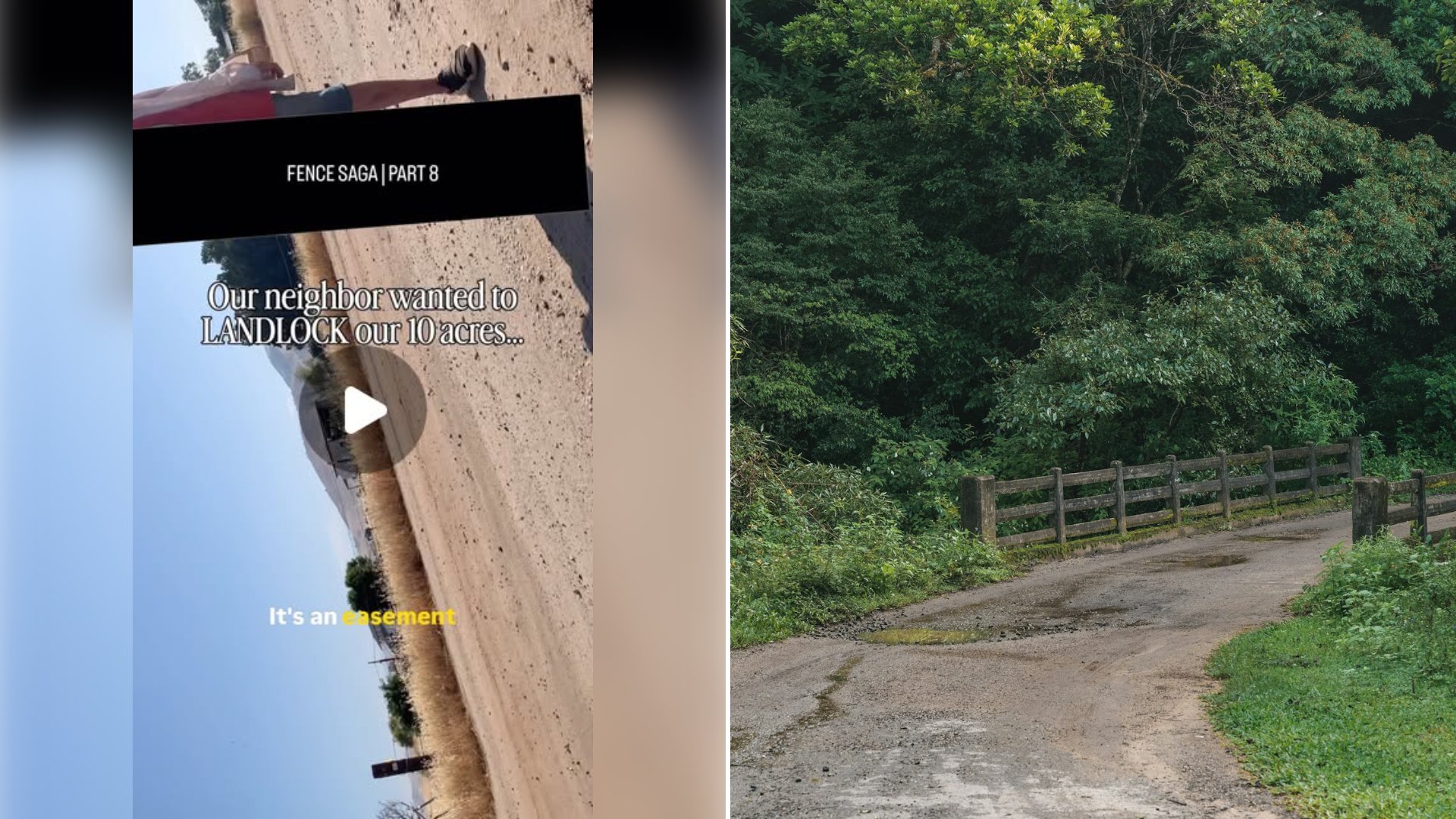
In this installment, the creator says the back-and-forth centers on the only road leading onto his property and the legal right to actually use it. Earlier parts of the saga laid out years of friction — fence lines moved, gates added, and arguments over who has the right to drive across whose land to reach the public road. Part eight picks up with what the creator frames as the next chapter in a dispute that has clearly worn on him, even as he keeps returning to document it for an audience that has followed the story from the start.
Access disputes like this one turn on a legal concept called an easement — a recorded right for one property owner to cross or use a portion of a neighboring property, most commonly for a shared driveway or road. Easements are typically created one of three ways: they’re written directly into a deed when land is subdivided, they’re granted later by a formal agreement between neighbors, or in some states, a court can recognize one that has existed by long, open use even without paperwork, sometimes called a prescriptive easement. Once an easement is properly recorded, it generally runs with the land — meaning it survives a sale and binds whoever buys the property next, not just the original parties who agreed to it.
Disputes tend to erupt when that paperwork is unclear, outdated, or was never formally recorded in the first place. A landowner might believe they have always had the right to use a particular road because their family has driven it for decades, while a new neighbor who just bought the adjoining parcel insists otherwise because the county’s records don’t spell it out. When that happens, the usual first step is pulling the actual recorded deed and any prior surveys from the county clerk or recorder’s office, since the written legal description — not memory, not a handshake, and not where a fence happens to sit — is what actually controls the outcome. A licensed surveyor can then confirm exactly where boundary lines and any recorded access rights fall on the ground.
When neighbors can’t resolve an access dispute informally, it typically heads to civil court, where a judge can be asked to formally recognize an easement, order one removed, or settle exactly how wide and where it runs. These cases can take months or longer to resolve and often involve real legal costs on both sides, which is part of why attorneys who handle rural property disputes almost always recommend mediation before litigation — a negotiated access agreement, even an imperfect one, is usually cheaper and faster than a trial. For landowners without any road frontage of their own, the stakes are especially high: a property that loses its only legal access can lose significant resale value, since most buyers and lenders are wary of land that depends entirely on a neighbor’s goodwill to reach it.
Whatever the exact resolution of this particular saga turns out to be, the series is a useful real-world reminder for any rural buyer: before closing on acreage, it pays to confirm in writing — not just verbally from a seller or agent — exactly how the property is legally accessed, and to get that confirmed by a title search and a survey rather than assuming a visible road or gate reflects the actual legal right to use it.
More from Willow and Hearth
- Homeowner Says He Stayed Calm When a Neighbor Poured Concrete Over His Prize Roses, Then Showed a Buyer a 1965 Easement Map Placing the Neighbor’s Garage on the Sewer Line
- Arkansas Court of Appeals Let an Old Fence Stand as the Property Line in One 2026 Ruling and Went the Other Way in 2024, Showing Why a Fence Alone Does Not Decide Who Owns the Land
- Land Buyer Compares Two 40 Acre Parcels Side by Side and Explains Why the One With a Dirt Road Leading Into It Is the One He Would Never Buy, Because It Is Landlocked
Leave a Reply