Some homeowners put off exploring their attic for years. It is dusty, it is dark and it is often home to insects and other creatures that would rather not be disturbed. One woman who lives in a house that is two centuries old finally decided it was time to look, and what she found turned the climb into a story about history, plumbing and a mystery waiting in a back room.
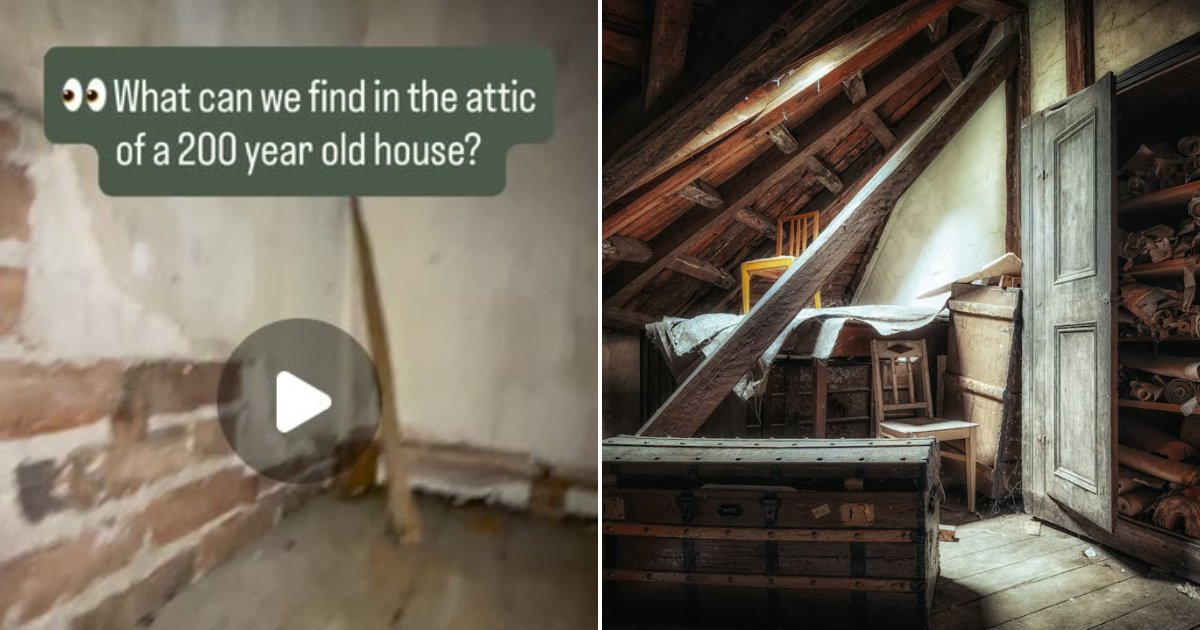
The adventure comes from @heathershistorichouse, who takes you up through a hatch that few people ever open.
View on Instagram
A house designed without an attic
Standing in a wallpapered hallway, she asks whether you are ready to explore the attic. She admits she has been putting it off for a few reasons. First, she honestly did not think there would be anything up there, and she says she was wrong. Second, she expects it to be worse than the basements for spiders and bugs, and her biggest fear is bats. That is why she is wearing overalls and arrives with a small dog and an aluminum stepladder.
The access itself is a story. The house was not designed with an attic at all, she explains. It was designed with servants’ quarters, and behind a small door high on the wall a spiral staircase once wound up to them. Long ago, before there were rules about what could be done to a listed house, her grandparents decided they absolutely had to have a shower. Today, all that remains behind the door is the pipework for that shower, and in the neighboring bathroom you can see where it was built into the space where the spiral steps would have been.
Up the ladder and through the hatch
The stepladder proves too short, so she returns with a taller wooden ladder and sets it on the pink carpet. Rung by rung she climbs and pulls herself through the hatch onto a small platform, the landing that sits above the bathroom door. There are lots of dead flies, she reports cheerfully. Turning around, she points out the original steps of the staircase, cut off partway where the shower was installed. They are quite steep.
A little further up, two empty rooms appear with bare walls, rough flooring and debris under natural light from a skylight. These were once the servants’ quarters. She says it was in one of these rooms that she discovered something she definitely had not expected, and she leaves that reveal for later before climbing back down and wiping her brow.
What to know about historic and listed homes
A listed building is one that has been officially recognized as having special architectural or historic interest, and in the United Kingdom that status means alterations generally require formal consent. Rules differ widely from place to place, and similar protections exist elsewhere through historic districts and preservation programs. If you own an older property, it is worth checking what applies before you change anything structural, even something as practical as a bathroom.
The story also shows how houses evolve. Modifications that once seemed sensible, like converting a staircase into plumbing space, leave marks that later owners have to interpret. That layered history is part of what makes old houses so rewarding to explore.
Attic exploration tips
- Check that your ladder is the right height and sits on a firm, level surface, and have a second person nearby when you climb into a high hatch.
- Wear overalls or long sleeves, gloves, a dust mask and eye protection, as this homeowner did with her overalls.
- Step only on joists or boards you know can bear weight, because many old attic floors are not designed for walking.
- Bring a bright flashlight, and look before you reach. Wasps, rodents and bats can nest in attics, and in many places bats are legally protected, so back out and call a wildlife professional if you find them.
- If you see signs of leaks, mold, damaged wiring or old insulation, stop and ask a licensed professional to assess it.
Common questions
How often should an attic be inspected? Many home maintenance guides suggest a quick look at least once a year, particularly after storms, to catch leaks, pests and damage early.
Is it normal for an old house to have no true attic? Yes. Houses built in earlier centuries often had roof spaces designed for staff, storage or nothing at all, and later changes created the attics we recognize today.
What should you do with items left in an attic? Photograph them, handle them carefully and ask relatives or previous owners about their history before deciding what to keep.
Takeaways
An old house rewards patience. Put on the right gear, prepare for the climb, and look closely at how earlier owners changed the building. A shower pipe behind a small door may not sound like a treasure, yet it explains how the house changed over time. And in the end, the most memorable discoveries are often the ones saved for the next room.
Credit for the original post goes to @heathershistorichouse on Instagram.
Leave a Reply