Most kitchen renovations bring out the usual surprises: crooked framing, old wiring, maybe a layer of flooring nobody knew was there. What the couple behind @alaynapletcher found inside their kitchen walls was something else entirely. Tucked up in the framing were tubes of rolled paper, books, coins and even a bag of pins.
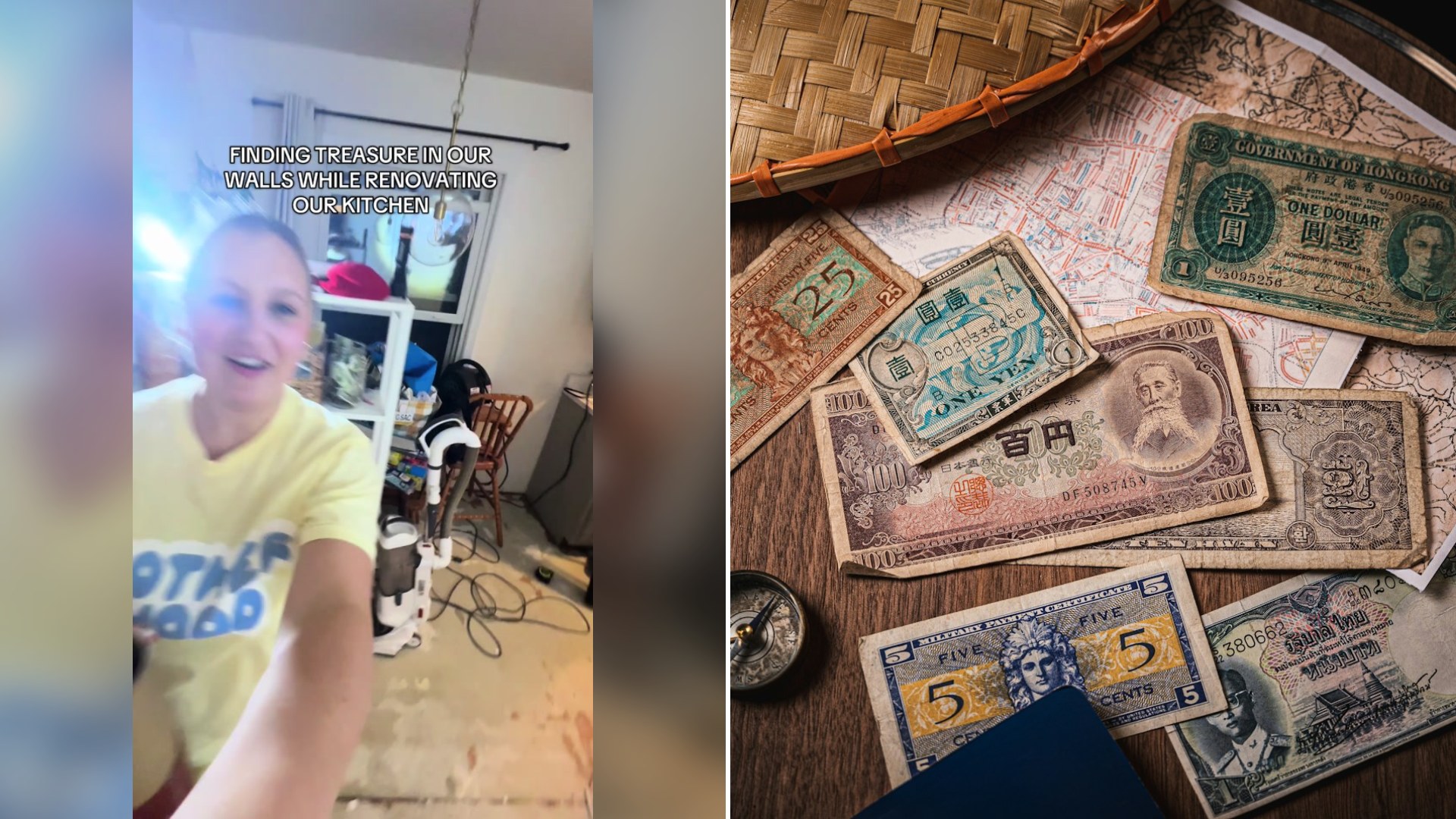
Their post drew more than 10 million plays, and the caption asked the question everyone in the comments wanted answered: what is all of this worth, and where do we even begin? Let’s look at what they found and how a person goes about finding out.
@alaynapletcher
What They Pulled From the Walls
The couple were partway through their kitchen renovation when they came across a bunch of tubes of paper. There was more up there too, including books. At one point one of them remarks that there is no way to get to these items, and that someone had framed them right into the house, which suggests they were not simply dropped in by accident but were tucked into a space that was then closed up.
As they kept going, more coins turned up. They also found a bag of pins, and one of them pauses to say how beautiful the pins are. They started opening some of the scrolls, though by their own account there was a lot more to go through. At one point they joke that for all they know they are looking at World War One maps. That is a guess and not a confirmed fact, and the couple are clear in their caption that they have no idea how to figure out the value of what they have found. They ask their followers to tag people who know about coins and old paper.
By the end, they say they have simply been putting everything into a box for safekeeping while they decide what to do next. That is actually a good instinct, and it brings us to the most useful part of this story.
What Should You Do If You Find Something in a Wall?
Finding old items in a wall is more common than you might think. Builders and homeowners of earlier generations sometimes left newspapers, coins, letters or small keepsakes inside walls, partly out of superstition, partly as a time capsule, and sometimes just because there was a gap and a handful of leftovers. Here is how to handle it if it happens to you.
- Stop and look before you pull. If you spot something that looks old or fragile, pause the demolition. Photograph it in place before you move anything, because where it was found can be part of the story.
- Handle paper with care. Old paper can be brittle. Clean, dry hands are the minimum, and cotton or nitrile gloves are better. Do not force a rolled document open, because it can crack or tear along the folds. Let someone with experience do that.
- Do not clean coins. This is the most common mistake. Scrubbing or polishing a coin can remove the surface and reduce what a collector will pay. Let them be, and store them in a dry container.
- Keep everything dry and out of the sun. Moisture, heat and light are enemies of old paper and metal. A plain cardboard or acid-free box is fine for the short term.
- Write down where each item came from. Which wall, which side of the room, how high. If anyone ever needs to date the house or the items, that detail helps.
How to Find Out What You Have
Once things are safely stored, you can start learning. A few options to consider:
- A local historical society or museum. Many are glad to look at finds connected to local homes, and some can help research when your house was built and who lived there.
- A reputable coin dealer or a numismatic club. Many towns have coin clubs where collectors will happily look at a few coins and tell you what the dates, mint marks and conditions mean. If something looks valuable, a professional grading service can authenticate and grade it.
- An appraiser who specializes in documents and ephemera. Paper items such as maps, letters and books are valued very differently from coins, and the person you want is someone who works with old documents.
- A university library or archive. Special collections staff often know how to preserve fragile paper and may point you toward experts in your area.
Be cautious about anyone who offers you a quick cash price over the internet before they have seen the items. A fair appraisal usually comes from someone who explains how they arrived at their number, and who does not pressure you to sell on the spot.
Could It Really Be From World War One?
The couple were openly guessing, and it is worth treating that guess with care. A house that dates to the early twentieth century could certainly contain items from that period, since many homes of that age remain across the country. But a rolled paper tube could be many things, such as blueprints, maps, school papers, calendars or posters. Until someone examines the paper, the type of ink and any dates or markings, it is too early to say. That is exactly why consulting an expert beats guessing.
Why These Finds Matter
Even if the coins turn out to be common and the scrolls turn out to be ordinary, the discovery is a reminder that a house is more than its rooms. Each wall holds the choices of the people who built it. Some of those choices were practical, some were sentimental, and some were just curious. A couple opening up a kitchen wall may get a rare look at what mattered to someone decades ago.
If you are planning a renovation of your own, keep a small box and a camera nearby. You may never need them, but if you do, you will be glad you took the time to do it right.
Leave a Reply