The house was 25 years old, and the sellers did not want anyone looking at it. According to the inspector behind the @HomeInspectionNightmares channel, the sellers had already cancelled the home inspection twice because they did not want an inspector in the house. When he was finally allowed through the front door, it did not take long to see why.
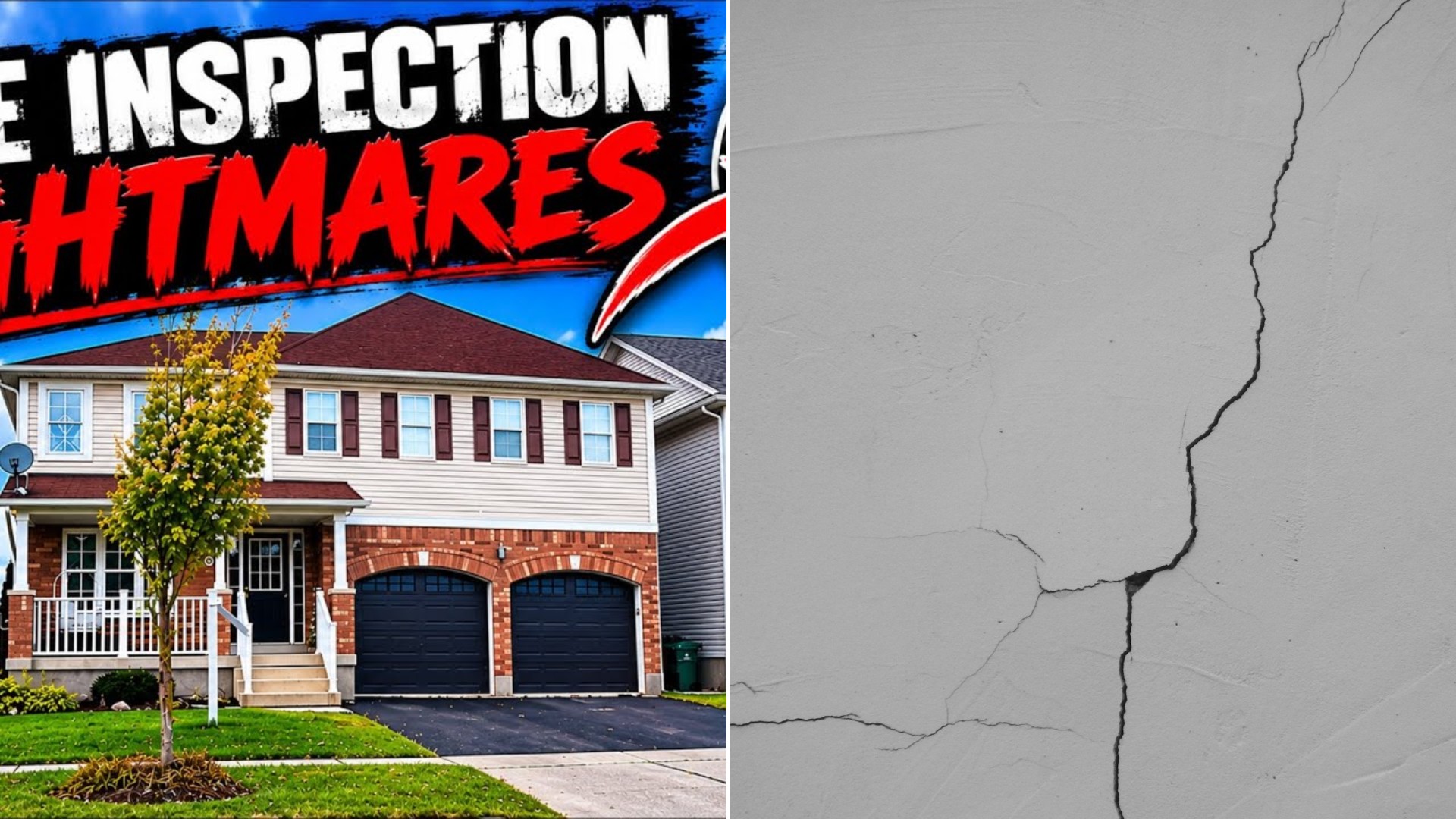
What followed was a walk through a long list of defects, from damaged shingles to a foundation crack to a deck that was rotting out from under a hot tub. The sellers kept the inspector out twice, and the house itself ended up telling the whole story.
Outside The House, A Pile Of Problems
The inspector started on the roof, where he spotted a few damaged shingles, then a few more on the other side of the house. Right away he moved to the foundation, where he found what he called a pretty good sized foundation crack. By the end of the walk-through, that was not the only one. He logged another small foundation crack near the corner where the parging, the cement coating over the foundation, was also cracking, and then another small crack after that.
The deck was next. There were four steps leading up to it with no handrail, which is a safety problem anyone would want fixed before a purchase. Worse, the deck boards had rotted spots, and he pointed out rot in more than one place. Then came the detail that made the whole thing almost comical: a hot tub was sitting right on top of that rotted deck. His verdict was short and to the point. That is not good.
He also flagged a missing light cover on an exterior light, a loose window screen, and an upper downspout that dumped water right onto the roof surface instead of into the lower gutters. It needed an extension, he said, so the water would not keep hitting the shingles and wearing them out. Another downspout had no extension at all.
Cracks, Settling And Water Where It Does Not Belong
As the inspection moved around the house, the list kept growing. One of the garage doors was damaged. The front of the garage showed some deterioration in the parging. Window sill joints on the outside were not sealed, and there was a crack on the side of the house in the brick that stepped all the way up toward the top. To an inspector, that stair-step pattern points to one thing: the house has been settling.
He also found a small mortar crack above the garage and a vent cover with missing flaps. At the back corner of the house, the ground sloped toward the foundation instead of away from it. That matters more than most homeowners realize, because water that drains toward a foundation tends to find its way into cracks like the ones he had already counted. Some exposed pipes also needed insulation so they would not freeze in cold weather.
Inside, The Basement Tells On The Sellers
Inside the garage, even a ceiling fan was wobbling. Down in the basement, the problems got stranger. He found corrosion on a plumbing line, a basement handrail with no balusters to stop a child from falling through, a light that did not work and a gap around a cold air door that had not been sealed properly with spray foam. There was rust inside the furnace, a reversed electrical outlet with no cover, and insulation that was missing along a long stretch of the wall.
Then came the part that made the inspector sigh. There were animal droppings on the basement floor, debris scattered everywhere, and he could actually hear something chewing in the walls, like a mouse or a rat. That, he said, probably explained the debris. The insulation was ripped apart, as if someone had sliced it with a knife. Efflorescence, the white mineral staining that shows up when moisture passes through concrete, ran along the base of the foundation throughout the basement. He also noted brown staining on one wall, another foundation crack, corrosion on the main water shut off, and no light switch at the bottom of the stairs.
The basement was also packed with junk, which made it hard to inspect. Upstairs, he finished with a fireplace fan that did not work, a ceiling fan that wobbled, missing light covers and a damaged flange.
Why A Seller Might Keep The Inspector Out
Nobody can say for certain why the sellers cancelled twice, and it would be unfair to guess at motives. But the result is one every buyer should think about. A seller who delays or refuses an inspection may know about problems, may be worried about what an inspector will write down, or may simply be disorganized. Whatever the reason, a cancelled inspection should make a buyer pay closer attention, not less.
A long list like this one also does not have to end a deal. Many items, such as light covers, screens and downspout extensions, are cheap and easy to fix. Others, such as foundation cracks, a rotted deck and signs of settling, deserve a closer look from a specialist before anyone signs.
What Buyers Can Do With A List Like This
If you are buying a home, a few steps can protect you.
- Do not skip the inspection. If the sellers resist, ask why in writing and keep your right to inspect as part of the contract.
- Bring in a specialist for structural concerns. Foundation cracks and brick that steps upward are worth a look from a structural engineer.
- Check the grading and the gutters. Ground that slopes toward the house and downspouts without extensions are inexpensive to fix but cause expensive damage over time.
- Look closely at decks. Rotted boards, missing handrails and heavy items like hot tubs on weak framing are safety issues.
- Ask for repairs or a price change. Use the written report to negotiate, or walk away if the problems are bigger than you want to take on.
A home inspection costs a small fraction of the price of a house, and in a story like this one, it is easy to see why it is worth every penny. Sellers who work hard to keep an inspector away often do themselves no favors, because the cracks, the rot and the droppings are still there when the report is written.
For anyone planning to sell, the lesson is simple. Fix the easy things ahead of time, from missing light covers to loose screens and downspout extensions, and let the inspector in on the first try. A clean report builds trust, and trust is what gets a house sold.
More Stories You May Like
- Charleston Family Bought a Home That Passed Its Termite Inspection, Then an Expert Found an Active Infestation and Major Damage the Report Never Mentioned
- Pressure Washer Says Another Contractor Told A First Time Home Buyer Her Brick Wall Needed To Be Torn Down, And All It Needed Was A Little Chemistry
- Full Cost Breakdown of a Home Renovation Shows It Took Longer and Cost More Than He Ever Imagined
Leave a Reply