When the price on a house is very low and the neighborhood is rough, a smart buyer expects trouble. Home inspector Frank certainly did. Walking up to an early 1900s house, the inspector said as much: with a price this low, in a neighborhood like this, expect a lot of problems. The house still managed to deliver surprises, including a beam holding up the whole place that was split down its entire length and propped on chunks of concrete.
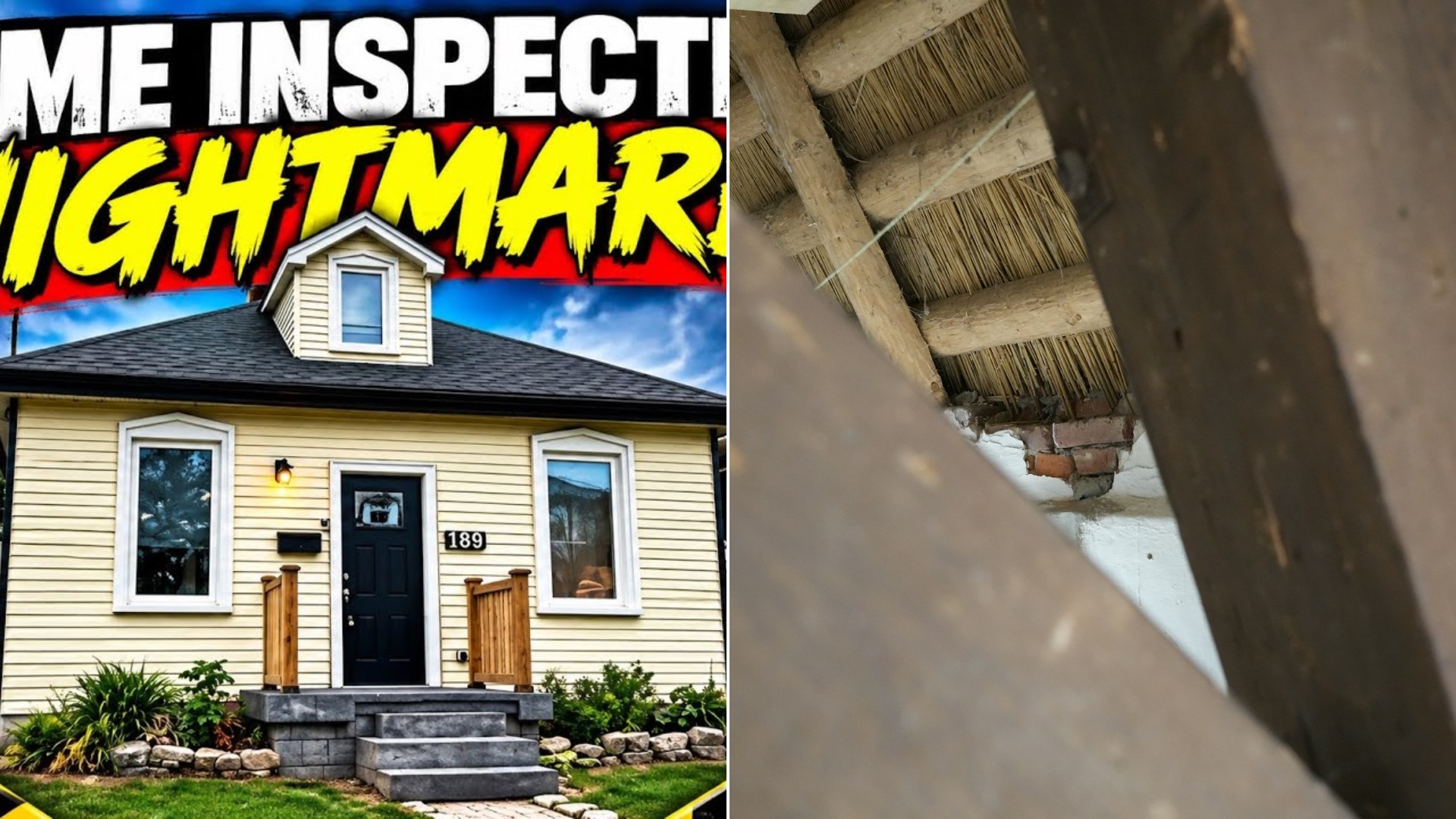
The walk-through comes from the YouTube channel Home Inspection Nightmares, in a video titled “WORST Home Inspection I’ve Had in a While – Shocking Defects FOUND!” Frank, the inspector in the video, checks the house from the outside in and narrates every problem along the way.
Trouble Before the Front Door
The problems start outside. The grading, the slope of the ground around the house, all runs toward the house, and the walkway is in terrible condition. A lot of the siding is in very poor shape. The steps are worse. There is no handrail, and Frank admits to almost dying coming down the stairs. There is no bottom step, and the steps are not even secured.
The water heater vent slopes downward, when it needs to slope upward. In the basement there are definite signs of moisture.
The Beam Holding Up the House
The crawl space, the shallow area under a house where inspectors check beams, posts and piers, is where the story turns. The supports down there are terrible, in Frank’s words: blocks with a stone on top, and a piece of wood under a beam with another of the same. One beam is completely split all the way down, and it is supported only by some chunks of concrete.
The inspector keeps finding more. Another poor support turns up nearby. Frank describes a block with a piece of wood holding up another piece of wood that holds up the house. A couple of jacks are propping up something over there. It is, to put it mildly, not what you want to see under a home you are thinking of buying.
The effect shows throughout the house. A beam that is supposed to hold things up is literally sloping down. No surprise, all the floors in the house slope this way and that, and every wall is wonky, none of them straight.
Electrical and Plumbing Trouble
The list goes on, and many items are safety hazards rather than cosmetic flaws:
- Condensation pipes that should be inserted into the floor drain but are just flopping around.
- An open junction box.
- Turn light switches, which Frank always recommends replacing because they are known to spark and catch on fire.
- A toilet stuck in the corner at an angle, and no exhaust fan in the bathroom.
- An electrical plug that is not grounded.
- A gas stove without the 6 inches of clearance from the side of the stove to another appliance or a sidewall.
- A plastic dryer vent, which is not supposed to be plastic because it can catch on fire.
An Attic Bath and Unlocked Windows
In a rough neighborhood, security matters, and Frank notes while testing the windows that every single window in the house has been unlocked.
Then comes the attic. The attic space turns out to be finished, and to have a bath you have to come up a set of stairs. Frank does not trust those stairs, because stairs like these have been known to collapse, so the inspector put up a personal ladder just to be safe. There is also no railing at the top of the steps, which raises a simple question: what is to stop a child from falling down?
What This Tells Home Buyers
A low price can be a bargain, or it can be a bill that arrives later. The house in this video shows how quickly the second kind can add up. If you are shopping for an older home, here are a few ways to protect yourself.
- Never skip the inspection. This is true no matter how little the house costs. A cheap price does not mean cheap repairs.
- Ask the inspector to look at the structure. Beams, posts and the crawl space matter more than paint and flooring.
- Take the report seriously. Problems with supports, wiring and gas appliances are safety questions, not just matters of money.
- Get repair quotes. A structural fix could cost far more than the discount you thought you were getting.
- Be ready to walk away. If the house needs more than you can afford, there is no shame in passing.
Old Houses Are Not the Enemy
It would be wrong to take this one house as proof that every old house is a disaster. Many older homes have been cared for over the years and are full of charm. The difference is in the upkeep, and the inspection is how you find out which kind you are looking at.
Frank’s walk-through is a reminder to look past the price tag and ask what is holding the house up, literally. Handrails, steady steps, solid supports and a safe attic cost money to put right. Better to learn that before closing day than after.
More Stories You May Like
- Appalachian Grandmas Fed Whole Families From Flour, Grease And A Cup Of Water During The Depression And One Meal Even Kept A Family From A Deadly Disease
- Gardener Strips A Tomato Plant Down To One Leaf And Lays It Sideways In A Trench So The Stem Turns Into Roots And Grows Bigger Tomatoes
- Couple Restoring An 1888 Home Clears The Attic And Finds A Sewing Machine, A 1920s Chemical Company Ledger And A Glass Display Cabinet
Leave a Reply