Sometimes a gut feeling is all you have. For the renter behind @harriette.fitt, that feeling was strong enough that she set up a camera in her own room. What it captured did not bring her peace of mind. It confirmed her fear. According to her caption, her landlord “did in fact let himself into my room twice this morning.”
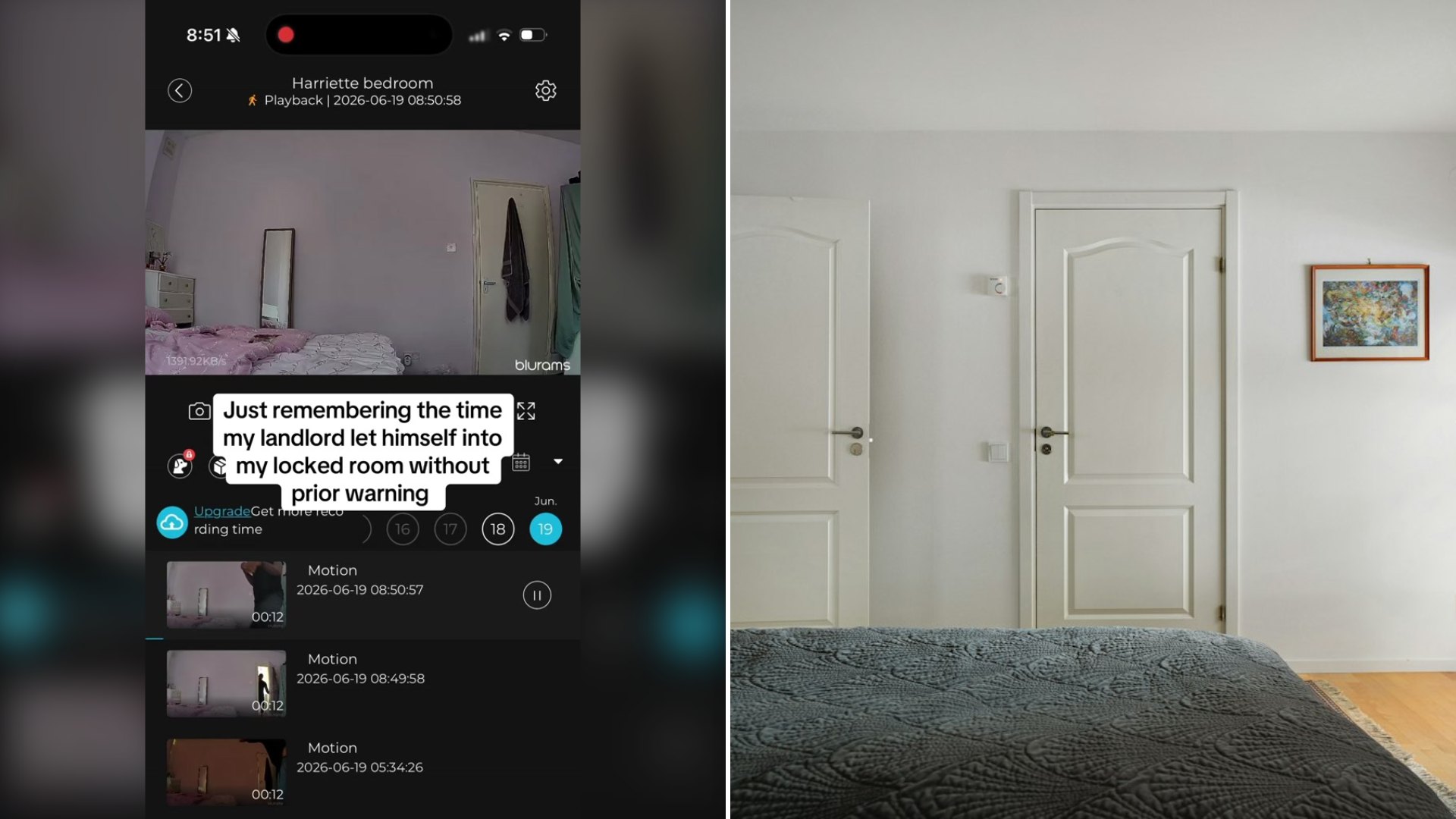
The video itself is only a few seconds long, with no speech, but the caption says everything. “I got a camera for my room when I got a bad feeling,” she wrote. “It however has not helped with my sleepless nights as it only proved what I thought was true.”
She tagged the post with the labels renters everywhere will recognize: renting problems, landlord problems, bad landlord, nightmare landlord.
Her post does not say why he came in, whether he gave any notice, or whether she was home at the time. What it does make clear is how it left her feeling. Your bedroom is supposed to be the one place you can close the door and feel safe. Learning that someone has been coming in without your knowledge takes that away in an instant, and the sleepless nights she describes are a very human reaction.
@harriette.fitt
Can a Landlord Just Walk In?
The rules depend on where you live and what kind of rental you have, so it is worth checking the specific laws for your state or country. But in many places, the general principles are similar.
Tenants have a right to privacy. Many laws give renters what is often called the right to “quiet enjoyment,” meaning they can use their home without unreasonable interference from the landlord.
Notice is usually required. In many U.S. states and in other countries such as the United Kingdom, landlords are generally expected to give advance notice, often at least 24 hours, before entering for routine reasons like repairs or inspections, and to come at a reasonable time of day.
Emergencies are different. A burst pipe, a fire or a gas leak can allow a landlord to enter without notice.
Renting a room in the landlord’s home can change things. If you rent a room in a house where the landlord also lives, the legal protections may be weaker than for a separate apartment. Even then, your private room is generally still your private space, and many agreements address entry. Read yours carefully.
Repeated entry into a tenant’s private room without notice or a valid reason can be a serious issue, and in some places it can amount to harassment.
What to Do If You Think Someone Is Entering Your Rental
If something feels off in your home, trust that instinct and take careful, calm steps.
Keep a record. Write down dates, times and what you noticed, such as items moved, doors unlocked or lights left on. If you use a camera, save and back up the footage somewhere other than the device itself.
Be mindful about cameras. A camera inside your own private room is usually your business, but laws about recording audio and recording shared spaces vary. Point cameras at your own space, not at other people’s rooms or shared bathrooms.
Read your lease or rental agreement. Look for any clause about entry, notice and inspections.
Put your concerns in writing. Send a short, polite message or letter stating that you have not consented to entry without notice and asking that future visits be scheduled in advance. Keep a copy.
Secure your space. Ask whether you can add a lock to your room door. In some places, changing locks without permission can break a lease, so ask first or get advice.
Get outside help. Local tenant unions, legal aid offices and housing agencies can explain your rights for free. If you ever feel unsafe or believe a crime has occurred, contact the police.
Plan your exit if needed. If the situation does not change, start looking for a new place and learn how to end your agreement properly so you do not lose your deposit.
A Word for Families of Young Renters
Many young adults rent rooms in shared houses or in a landlord’s home because it is the only affordable option. If your child or grandchild rents this way, it helps to talk about red flags before they sign. Ask who has keys, whether the room door locks, and how the landlord handles entry. Visit the place if you can. Encourage them to call you if something feels wrong, and remind them that feeling uneasy in their own room is not something they have to quietly put up with.
For older adults who rent out a spare room for extra income, the lesson runs the other way. Spell out in writing when and how you will enter the tenant’s space, give notice, and respect that closed door. It protects you legally and keeps the arrangement friendly.
The short clip from @harriette.fitt has no dramatic soundtrack and no confrontation. It just shows a renter who listened to her instincts and turned out to be right. Now she is left trying to sleep in a room that no longer feels like hers.
More From Willow and Hearth
- Former Landlord Says In Some Places Your Security Deposit Is Supposed To Earn Interest, And Tenants Who Never Asked Have Been Leaving Money Behind
- She Sued Her Landlord And Won, And Now She Is Choosing Peace Over A Fight About What She Says Is $550 Too Much Taken From Her Deposit
- Renter Asks the Internet What to Do After Her Neighbor Keeps Leaving Trash Where Every Other Neighbor Puts Theirs Leaving No Room on Recycling Day and Says It Was Never a Problem Until Now
Leave a Reply