There is a little extra pressure when a client tells you exactly why you were hired. Home inspector @inspector.jordan had just pulled up to a brand-new build when his client pulled in right behind him, climbed out of his truck and said, “Hey Jordan, my wife found you on social media. She says you’re pretty thorough. Let’s see what you got.”
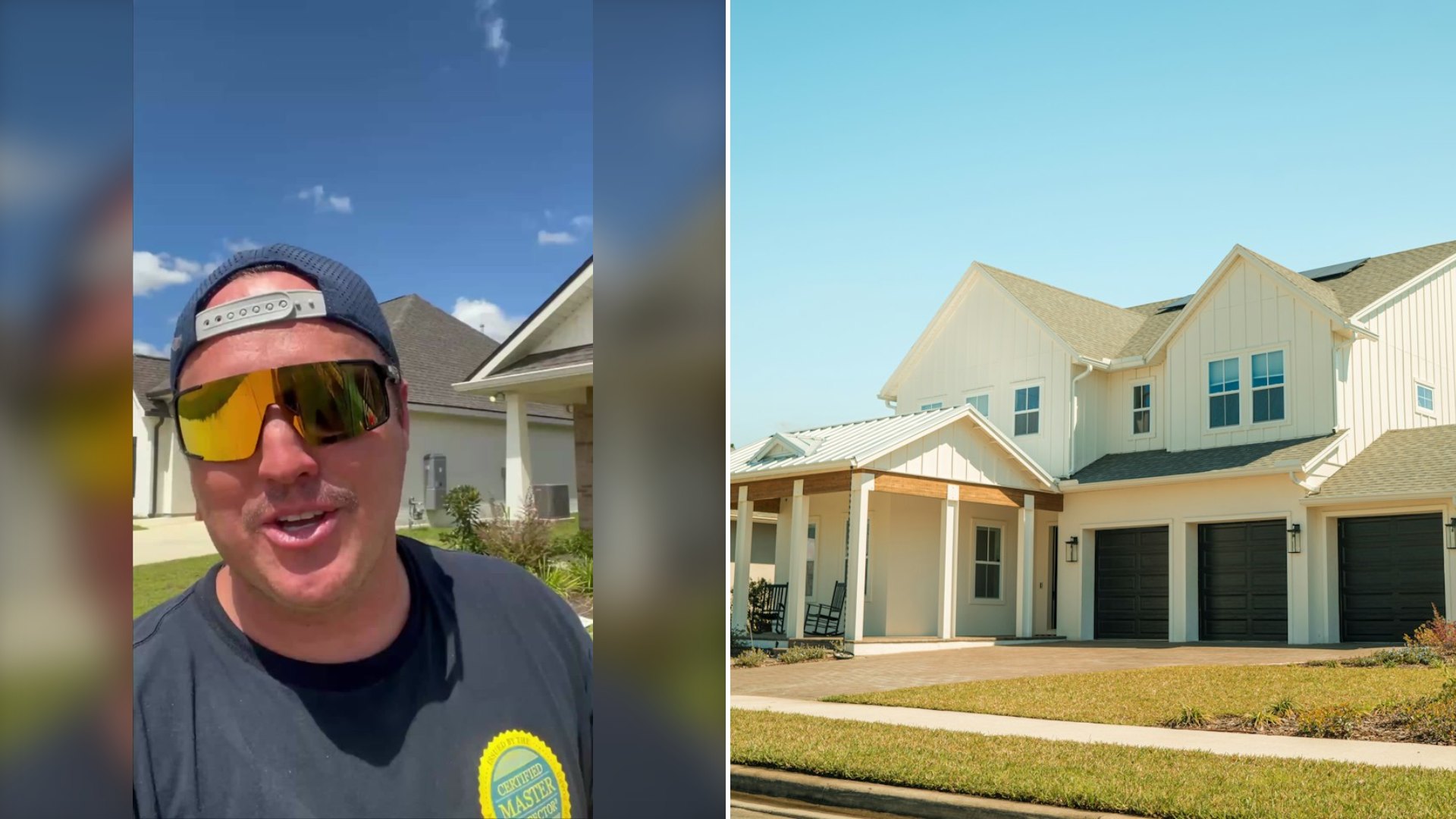
The inspector took it in stride. “Well, I’ve heard that one before,” he says. “Let’s have some fun.” What followed was a room-by-room tour that shows why even a brand-new house deserves a careful second look.
The Good News First
He started at the gas meter with a simple tool: a spray bottle of soapy water. He explains the trick so anyone can understand it. Spray the soapy water on every joint, and if you see white bubbling, there is a gas leak. After going over all of them, he reported good news. He did not see anything suggesting a leak.
Next came the water pressure test, and the reading impressed him. “That is like a perfect score,” he says. “I mean, that is impressive.”
Inside, the gas furnace fired up without trouble, and so did the fireplace. “I got the fireplace to light. It’s beautiful,” he says.
The List of Misses
Then the thorough part kicked in. At the air conditioning unit, he found what he described as an unusual and costly wiring setup. Rather than placing the required disconnect where it was needed, the installer had used a junction box and moved the disconnect elsewhere, adding extra work and material. “This guy loves to spend money,” he jokes, suggesting a much simpler route would have done the job.
A more serious question came up with the gas piping. He looked for bonding, the connection that ties metal gas piping into the home’s electrical grounding system, and could not find it outside or inside along the gas line coming up the wall. “I don’t see where this gas line is bonded,” he says. He notes it might be inside the wall and planned to ask about it.
From there, the small problems piled up:
A crooked wall sconce, which he straightened on the spot.
An exterior light that did not work, while the others did.
A bedroom closet door that would not latch, so it simply pushed open.
Gaps in the exterior, which he joked were where the snakes and spiders would get in.
A window that would not latch at all, plus a window screen that looked damaged and was not keeping bugs out.
A broken door stopper behind a heavy door.
An outlet with an opening around it that exposed the wires behind it. “So that’s not cool,” he says.
An outdoor water spigot that was not yet installed, so it could not be inspected.
An air conditioning condensate line dripping water right against the house. He suggests extending it, since it will drip for a good part of the year and you do not want that water against the foundation.
@inspector.jordan
None of these items is unusual on its own. Together, they show exactly why the client’s wife wanted someone thorough.
Why New Homes Still Need an Inspection
Many buyers assume a new house is perfect, or that the city inspections during construction caught everything. Municipal inspectors check for code compliance at key stages, but they often have limited time on each site and are not looking at things like a sticky window latch or a missing door stop. Builders also rely on many subcontractors, and small misses are common when crews rush to finish.
A private inspection before closing gives buyers a written list to hand to the builder while the builder still has every reason to fix it. Many inspectors also offer a second visit before the one-year builder warranty expires, which can catch settling cracks, drainage problems and other issues that show up after a few seasons.
Tips for Anyone Buying New Construction
Hire your own inspector. Choose someone independent of the builder and the sales office. Ask whether they offer phased inspections during construction, such as before drywall goes up.
Attend the inspection if you can. Walking along, as this client did, helps you understand what is serious and what is minor.
Ask about gas pipe bonding. If the inspector cannot see it, ask the builder to confirm where it is or have an electrician check.
Test simple things yourself. Open and lock every window and door, flip every switch, and run every faucet during your final walk-through.
Know your warranty. Read the builder warranty before closing. Many cover workmanship for one year, major systems for about two years and structural defects for up to ten. Note the deadlines on your calendar and report problems in writing as soon as you find them.
Watch where water goes. Condensate lines, downspouts and grading should send water away from the foundation, not toward it.
Put requests in writing. Give the builder the report and a written list, and get a date for repairs before closing when possible.
His client wanted to see what a thorough inspector could do. He got an honest report: solid gas joints and great water pressure, plus a list of fixes the builder needs to see before the family moves in.
More From Willow and Hearth
- Inspector Says He Could Pull Loose Bricks Right Off the Sill of a New Build Then Asks What You Think of a Kitchen in a Closed Off Far Corner
- Home Inspector Checking a Railing Pulled Out a Voltage Tester and Found a Live Electrical Wire Where No Homeowner Would Ever Expect One, and Electricians Are Stunned
- Pulte New Construction Inspection Shows a Very Different Experience Than the Inspector Expected
Leave a Reply