He stepped outside one night and noticed something that did not sit right. His neighbor’s cameras were all lit up and, as he describes it, “watching us,” pointed right at his back door. By the next morning, the homeowner behind @mycrazyneighborandi had hung a tarp along the fence. “This is the extent that I had to go to this morning,” he says.
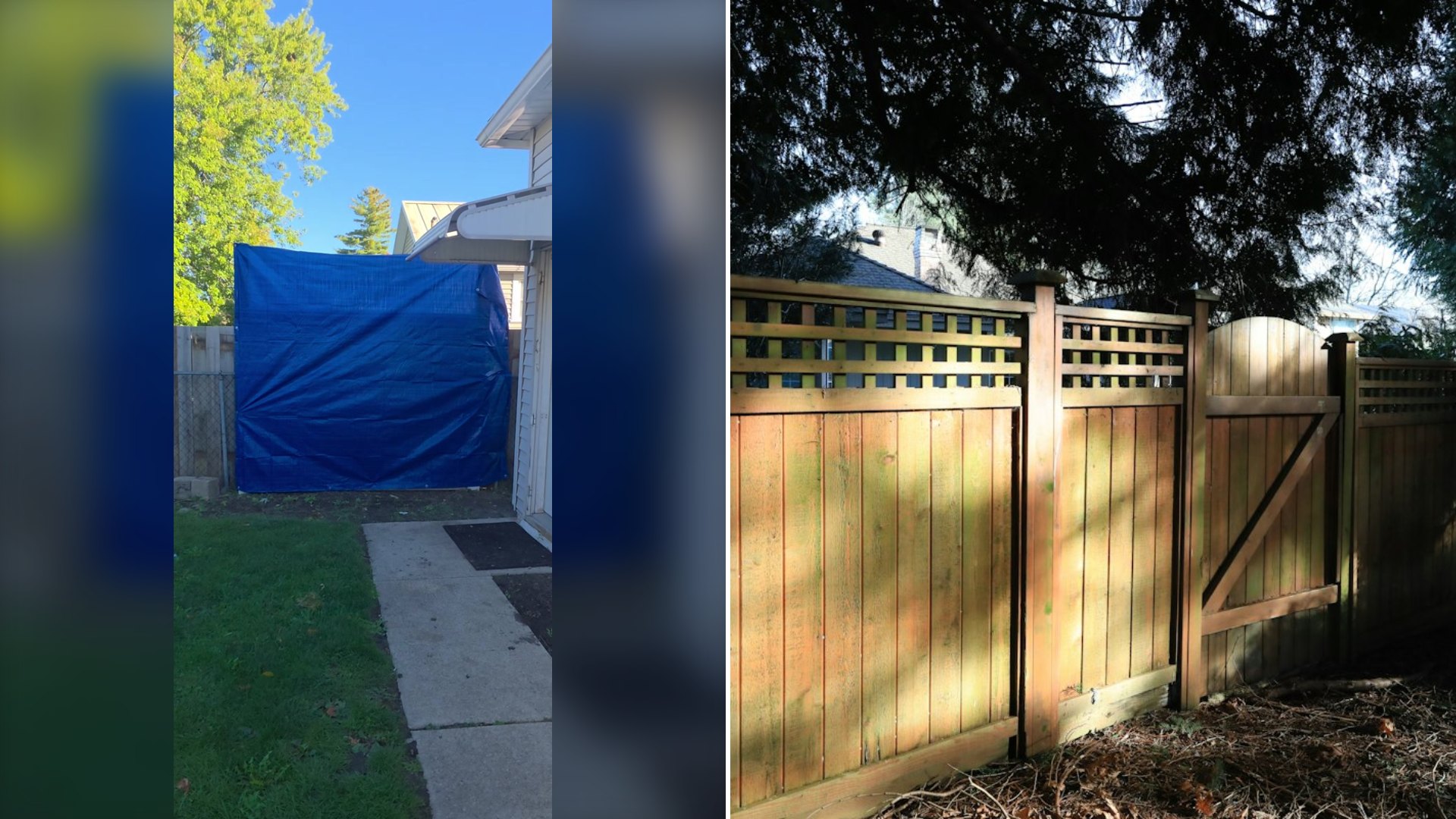
The short video shows the result: a tarp stretched along the fence line, blocking the view between the two properties. He explains that the neighbor has cameras on her house that can pan, and that there are more than just one or two of them. “It’s weird,” he says simply.
His account makes clear this is not a new fight with her. A tarp, he says, is “the extent that we’re gonna have to go to.” His caption sets the tone for what comes next: “LET THE GAMES BEGIN AGAIN.”
He ends the clip the same way. “Let the games begin.”
@mycrazyneighborandi
He does not explain in this video how the feud started, and there is no response from the neighbor. What the clip captures is a feeling a lot of homeowners can understand: stepping into your own backyard and realizing you might be on camera every time you walk out the door.
The detail about the cameras being “lit up” at night is worth explaining. Many security cameras use infrared lights to see in the dark. Those lights often glow a faint red around the lens, which is why a camera that seems invisible in daylight can suddenly look like it is staring right at you after sunset. It also means the camera is actively recording a night picture of whatever it is aimed at. For someone already in a dispute, spotting a row of glowing lenses pointed at the back door can feel less like security and more like surveillance.
Can a Neighbor Point Cameras at Your House?
Home security cameras are everywhere now, and the law has not always kept up. Rules vary by state and city, but here are some general principles.
Recording what is in plain view is often legal. In many places, a person can record their own property and anything easily visible from it, such as a driveway, a street or the side of a neighbor’s house. The thinking is that there is a limited expectation of privacy in areas anyone could see.
Private spaces are different. Aiming a camera into a neighbor’s windows, bathroom or a fenced backyard that cannot normally be seen can cross a legal line. Many states have laws against video voyeurism or recording people where they reasonably expect privacy.
Audio is stricter. Recording conversations can violate wiretapping or eavesdropping laws, especially in states that require everyone’s consent. Many doorbell and yard cameras record sound by default.
Patterns matter. When camera placement is part of a larger pattern of intimidation or harassment, it may support a harassment complaint or court order, depending on local law.
If you believe a camera is recording your private space, talk to a local attorney or call the police non-emergency line to ask what applies where you live.
Ways to Protect Your Privacy
Before reaching for a tarp, there are a few options worth knowing about, many of them better-looking and longer-lasting.
Privacy screens. Fence-mounted privacy screens, reed or bamboo roll fencing and outdoor shade fabric can add height and coverage. Check fence height limits first, since many cities and HOAs cap backyard fences, often around six feet.
Plants. Fast-growing evergreens like arborvitae, tall ornamental grasses or a trellis with climbing vines create a natural screen that also looks good.
Pergolas and shade sails. These can block a camera aimed from a second-story window while making your patio more comfortable.
Window coverings. Light-filtering film or sheer curtains on back doors and windows let light in while keeping prying eyes out.
Outdoor lighting. A motion-sensor light near your back door can make it harder for cameras to capture a clear night picture.
Before you build anything, check with your city and HOA. Some places require permits for fences, and a few states have “spite fence” laws that target structures built mainly to annoy a neighbor.
Keeping a Feud From Getting Worse
Neighbor fights tend to escalate because each side feels the other started it. If you find yourself in one, these steps can keep you on solid ground.
Document calmly. Keep a log with dates, times and photos. Write down only facts.
Communicate in writing. If you talk to the neighbor, a short, polite note or text is better than a heated conversation in the driveway.
Try mediation. Many counties and cities offer free or low-cost community mediation for neighbor disputes. A neutral person can sometimes settle what years of glaring cannot.
Know when to involve authorities. If there are threats, trespassing or anything that makes you feel unsafe, call the police and keep the report numbers.
For now, @mycrazyneighborandi has a tarp, a renewed rivalry and a promise of more to come. Sometimes, though, the best move in a neighbor war is the one that makes the next round unnecessary.
Leave a Reply