Picture spending tens of thousands of dollars on new kitchen countertops, then watching them crack, stain and blister about two years later. According to the Blueprint Only channel, that heartbreak usually has less to do with the stone you picked and more with a handful of details almost nobody asks the fabricator about before handing over a deposit.
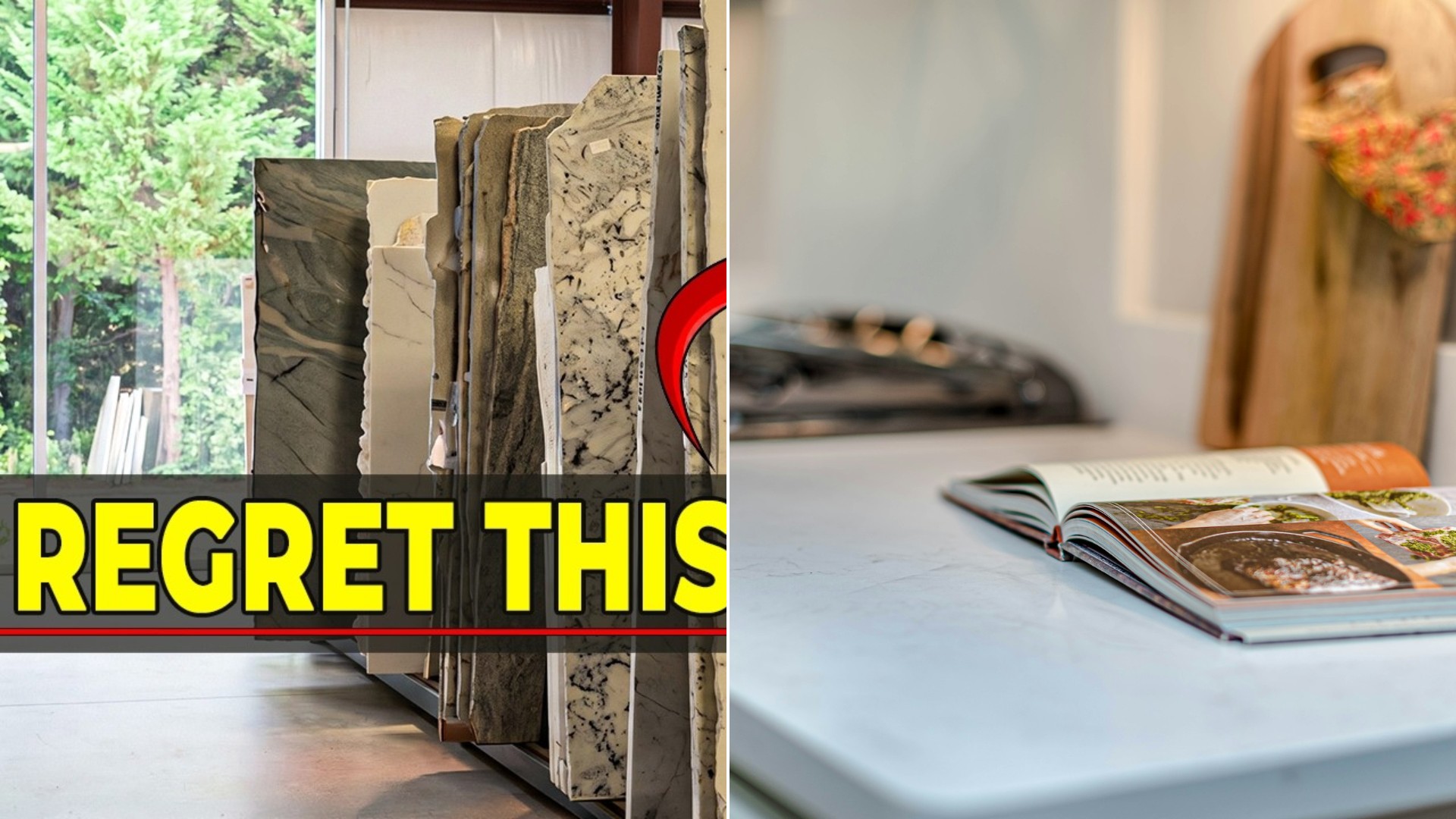
The channel walks through ten things to settle before you buy, from the seven or eight main materials to the unglamorous matters of seams, slab thickness and edges. Some of the findings are surprising, and a few may save you real money. Here is the rundown in plain English.
Quartzite and marble: gorgeous, but each has a catch
Natural quartzite is booming in upscale kitchens, the guide says, because it gives homeowners the luxurious veining of marble without marble’s weak spots. It forms when quartz sandstone is squeezed under extreme heat and pressure, which fuses the grains together. The result is a stone harder than granite that handles hot pots and everyday scratching with ease.
The same structure that makes quartzite hard also makes it brittle. One cut at the wrong angle, or a blade that falls short of standard, can crack an entire slab right in the shop. That is why the guide recommends asking the supplier how many times the shop has actually cut quartzite before you put down a deposit. Material and labor for quartzite rank among the most expensive on the market, and because the stone still has a little natural porosity, it needs a protective sealer from time to time, especially around the sink and cooktop.
Marble is the other showpiece. It is metamorphosed limestone made mostly of calcium carbonate, and that compound reacts with acid. A drop of tomato sauce, lemon juice or vinegar left sitting can leave a dull mark that will not wipe away, a problem professionals call etching. The guide says marble suits homeowners who rarely do heavy cooking and who are happy to treat a few scratches as natural patina. Families with small children, or cooks who lean on acidic and heavily seasoned food, are told to stay far away. For a show kitchen that sees little real use, though, the soft veining and bright white background are still hard to beat.
Butcher block and granite: warm and classic
Wood countertops are often dismissed as a stopgap, but the guide makes a strong case for them. Butcher block is inexpensive, easy to install yourself without professional stone installers, and can be sanded down to look new when it gets scratched. With a food-safe finishing oil you can even chop directly on it, which no stone countertop allows without dulling your knives. Wood also feels warm and dampens the clatter of dishes, a small perk in an open kitchen.
The price of that warmth is attention. Wood expands and contracts with humidity, and without a coat of mineral oil or beeswax every few months, water soaks into the grain. Near the sink, a few weeks of skipped wiping can bring blistering, mildew, cracking and warping. The advice is to use butcher block on an island or eating bar, away from constant water, unless you will wipe it dry after every round of dishes.
Granite earns the title of the most classic choice. It is an igneous rock packed with quartz and feldspar, tough enough to last decades in a heavy-cooking home. Microscopic voids between the crystals can still absorb liquids, which is why granite needs sealing every 1 to 2 years. Skip that simple step and grease or sauce can soak in and leave permanent stains. Granite also handles heat much better than engineered quartz, though its busy speckled patterns make it tough to match a clean, solid white look.
Quartz, porcelain, solid surface and laminate
Engineered quartz shows up in most new and recently remodeled kitchens because it mimics marble veining almost perfectly while avoiding the etching and staining of real stone. It is about 90 to 93% natural quartz aggregate mixed with 7 to 10% polymer resins and pigments. It is non-porous, so it never needs sealing. The catch is that the resin is sensitive to heat and ultraviolet light. Setting a freshly cooked hot pot straight onto the surface can discolor or even crack it, so keep a trivet handy. For the same reason, quartz is not recommended for outdoor kitchens in strong sun.
Porcelain slabs are pulling ahead on heat and sunlight resistance, since they are fired at extremely high temperatures that drive out porosity. They are thin, though, and the edges can chip during fabrication, so ask whether the crew has ever cut and seamed a slab like it. Solid surface, commonly sold under the Corian name, can be sanded, bonded and shaped into a seamless unit with an integrated sink, and light scratches buff out. Just think twice if the main cook sets hot pots on the counter.
Laminate, long dismissed as the cheap option, has come back in sealed-edge versions for tight-budget remodels. It is lightweight, quick to install and far cheaper than quartz, but it cannot tolerate heat or standing water, and once it blisters it cannot be repaired. The guide’s verdict is that laminate makes sense for rentals, secondary kitchens, or buying a few more years before a major renovation, not for a primary kitchen.
The three details that decide how long it lasts
The guide saves its most useful advice for last. First, seams. How a countertop looks, expensive or cheap, depends heavily on where the seams land. Ask for the slab layout and the location of every seam before you pay, and request that none sit directly behind the sink or beside the cooktop, since those spots take the most water and heat. Shops often cut in the way that saves the most material rather than the way that looks best, so a planned seam, with the veining flowing across it, beats one placed out of habit.
Second, thickness. A 1 and 1/4 inch slab is the most common and gives a substantial feel and a deeper overhang. A 3/4 inch slab is lighter and cheaper and can be built up with a mitered edge. Stone is strong when pressed down on but weak when bent, so the longer the overhang, the more stress builds at its base. The guide describes an island corner that cracked wide open after two years even though no one struck it.
Third, edges. An eased or beveled contemporary edge costs far less than classic multi-tiered rounded profiles, and a waterfall edge can consume nearly an extra slab. Settle thickness and edge profile when you choose the stone, and ask the fabricator at how many inches of overhang support brackets are needed underneath before you sign the contract.
Questions to ask before you pay a deposit
- How many times has your shop cut and installed this exact material?
- What is the sealing and maintenance schedule, and how often per year?
- Can I see the slab layout and every seam location before I commit?
- What thickness and edge profile are included, and how far can the overhang go without brackets?
Choose the right material for how your household really cooks and cleans, and you may never have to rip out your countertops after a few short years.
More Stories You May Like
- Woman Shows Her Louisiana Lake House That Started as a 1970s Single Wide Trailer With a Bedroom Addition and Explains Some of the Changes She Has Made So Far
- Landlord Gets the Keys Back After Twenty Seven Years of Renters in the Same House and Walks Through to See Whether the Place Held Up and Calls It a Success Story
- Buying A $300,000 House Means Another $9,000 To $12,000 In Closing Costs And Real Estate Experts Break Down Exactly Where Every Dollar Goes
Leave a Reply