On paper, the deal looked like a gift. A $50,000 house that would be worth $210,000 once it was fixed up, which is a $150,000 spread by the math anyone can do on a napkin. Then investor Cam, from the Cameron Burke channel, walked through the front door of the house he had locked up sight unseen, and the numbers started to fall apart.
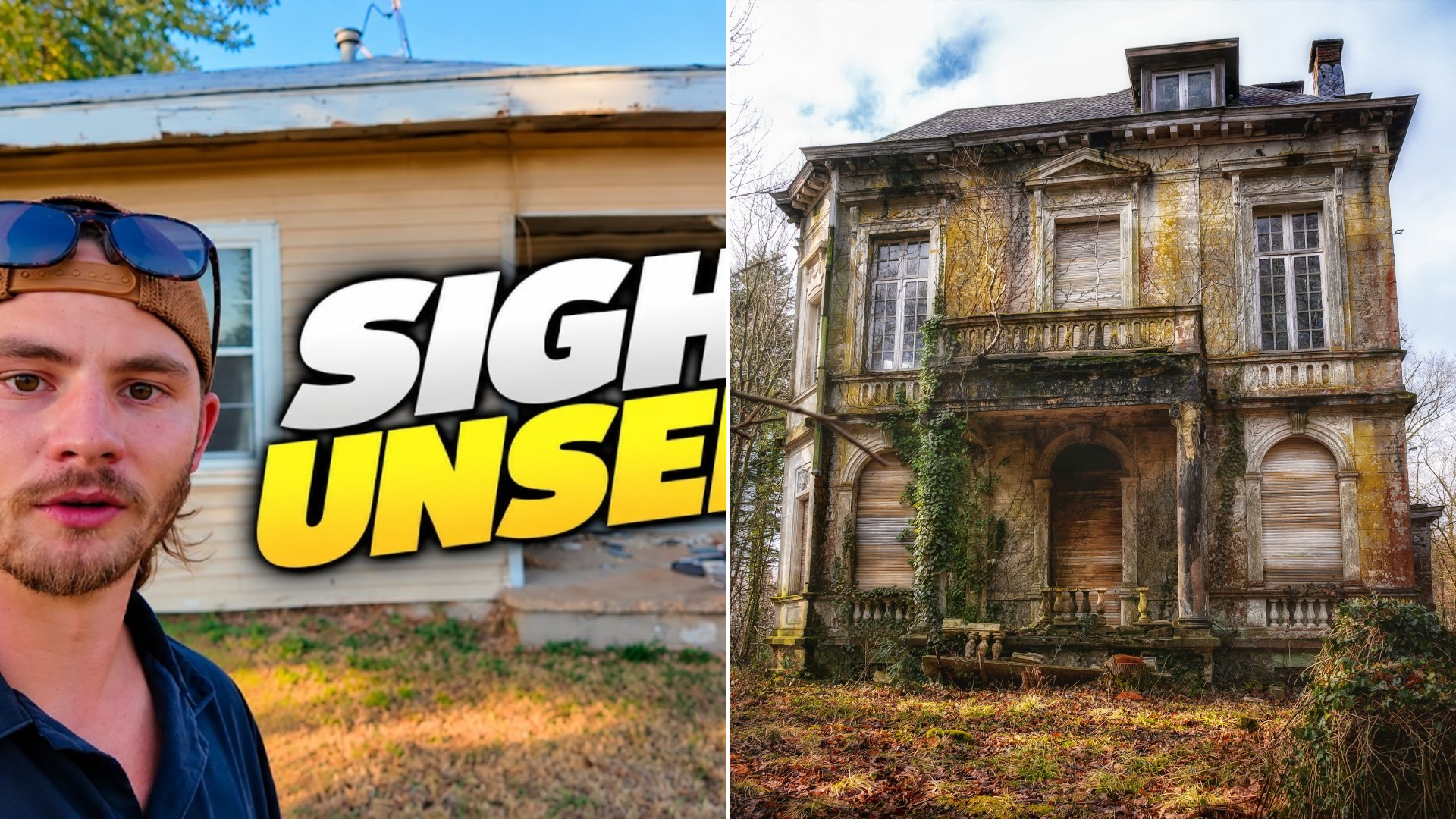
“Some deals aren’t worth the squeeze,” he says as he starts the walkthrough. His reasoning is that a deal is only as good as what you find when you actually look at it. After he adds his agent and closing costs, he figures he is in for about $56,000 or $57,000, and with that 210 ARV, which is the after repair value, the spread looks pretty good.
He says he self-inspects his properties before sending anyone out, looking for clues about what is going on. This one gave him clues right away.
Trouble Before He Even Steps Inside
Outside, the house is sinking, with what he calls big sinkage and some heavy foundation issues. It appears to be a crawl space home with a stem wall, and part of it looks like slab. The roof is old three tab shingles that are sagging in places, and he can tell the decking is shot too. The electric meter has been pulled, which means calling the electric company, who will make him call the city, and the city will inspect the property closely. He calls that city a huge pain to deal with, in Oklahoma.
He admits the lot is attractive. It is half an acre, 31,200 square feet, with a little shop in the back that many buyers like. He says it is his type of deal, and he sees a chance to convert it to a three bedroom, two bath house. But between the roof, foundation, windows, siding and every exterior door, he guesses he would be touching about $25,000 before stepping inside.
The Septic Surprise
Then he spots something in the yard and asks viewers to guess what it is. It turns out to be an old septic tank. That tells him the lot is likely on a well and septic, and the septic is totally shot.
The problem is that, according to him, Oklahoma’s DEQ requirements do not allow a septic tank on less than 0.75 acre, and this lot is 0.5. That means he would likely have to connect to city utilities, and the city may charge a permit fee to do it. Those are the questions he runs through on a walkthrough.
A House That Bounces And Slants
Inside, the floor slants noticeably to one side. The house is a 1955 build on a crawl space, and he likes to do a bounce test on older homes. If you hear a boom boom, there is not enough support underneath. He says it is wise to budget for that support, because when people bring furniture in, floors start to bow.
The layout is strange. The front door opens into a room that looks like it used to be a bedroom, next to an old bathroom with 12 by 12 tiles that could be asbestos, though he stresses you cannot know without testing. The kitchen is a shotgun style layout with no stove or dishwasher. The laundry area has a drop ceiling. All the electrical needs updating, so he would budget for a rewire.
The ceilings are only 7 feet. He is about 5 foot 8 or 5 foot 9 and says that is no good, calling it funky and the kind of feature that makes for a funky flip, since nothing else nearby has 7 foot ceilings. A converted garage section has big cracks, and part of the house sits right on dirt with no slab. There is an old furnace that has to be replaced, and old fire damage on one side.
Running The Real Numbers
At this point he asks in what world this is a deal, and he totals it up. A septic tank is $7,500. A roof is $7,000. Windows are $5,000. Flooring is $3,000 and paint is $3,000. The foundation could easily be $15,000, if it is even fixable, and he stresses there is a difference between a house sinking a little and one that is not structurally sound at all. He could easily see this becoming an $80,000 or $90,000 flip, and before holding costs.
Then he walks through what a newer investor might do. Buy for $50,000, close for about $55,000 all in, and spend six months fixing it for $100,000. That is about $83 a foot over 1,200 square feet, when a full gut usually runs about $65 a foot, and this job is more than a gut because of the foundation and septic. Add $1,200 a month in holding costs for six months, about $7,000, and the total is around $163,000. Subtract selling costs, and there is not much buffer. It is, in his words, a lot of work to go make 20 grand.
Why He Walked Away
Would he have picked it up six months ago? No, he says, because he knows better now. If the house were more structurally sound without the 7 foot ceilings, fire damage and bad septic, he might chase a profit of $35,000 to $40,000. But in this market, with rising inventory, rising days on market, rising inflation and rising bond rates, he is trying to be as conservative as possible.
His verdict is that this is a land value only play, with half an acre minus the cost of scraping the house, and maybe that makes sense for a builder. He thinks he could do it and make $20,000, or he could lose money, and that is not a good bet.
Lessons For Any Buyer
The bigger point applies to everyone, not just investors. A big gap between price and value can be a mirage. Walk the property, price the repairs line by line, include holding and closing costs, and pay attention to the things that quietly drain a budget, like utilities, permits and structural problems. As Cam puts it, the juice is not worth the squeeze, and the difference between a successful investor and one who is not is the framework behind their decisions.
More Stories You May Like
- Waiving The Home Inspection To Win A Bidding War Can Leave Buyers Facing Repair Bills Nobody Warned Them About
- Lawyer Says Your Landlord Is Breaking The Law If They Lock You Out, Walk In Without Notice Or Raise Your Rent After You Ask For Repairs
- Landlord Gets the Keys Back After Twenty Seven Years of Renters in the Same House and Walks Through to See Whether the Place Held Up and Calls It a Success Story
Leave a Reply