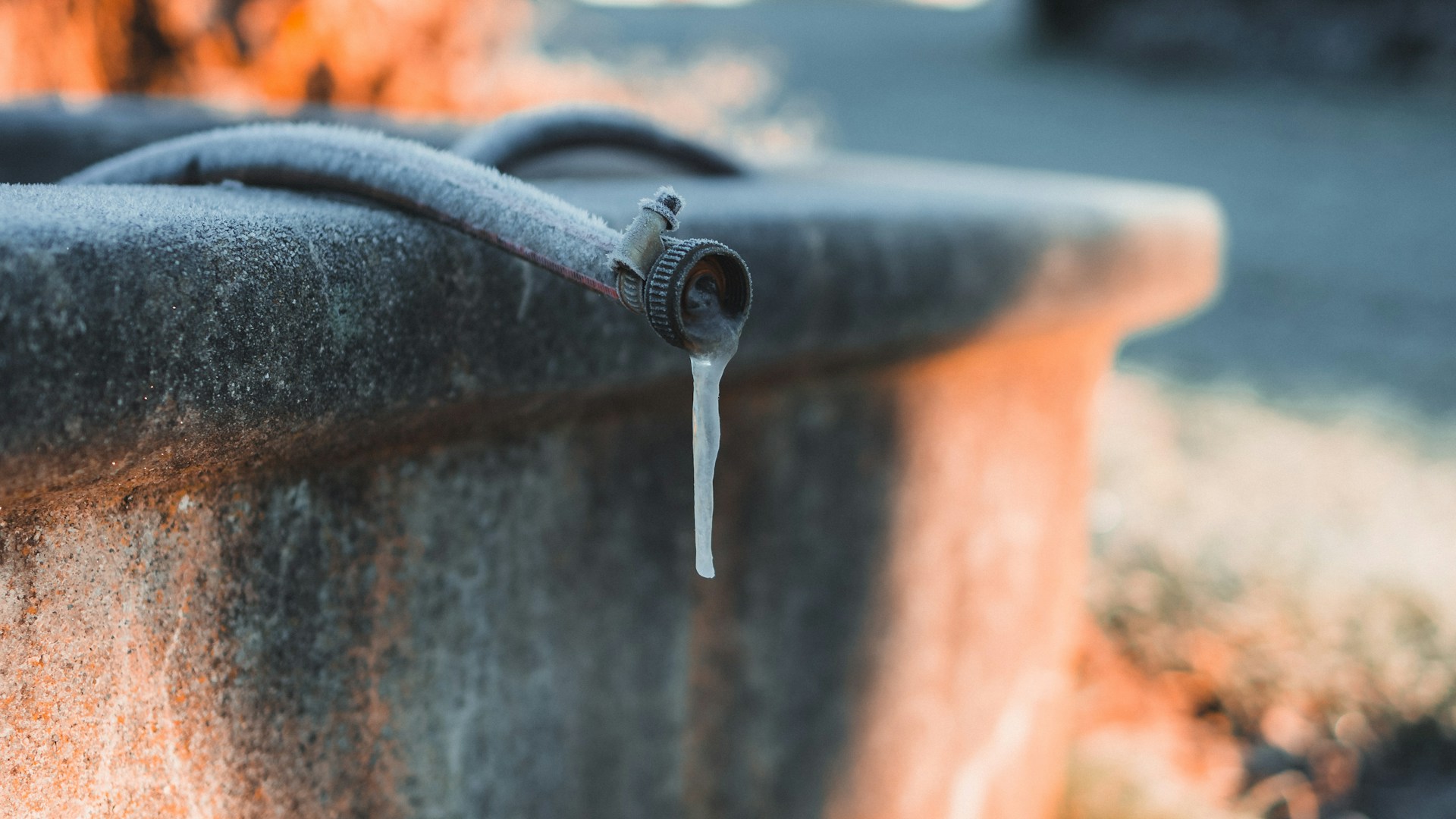
A garden hose left attached to an outdoor spigot can look harmless in the cold. A master plumber says it is one of the most common ways a house ends up with a burst pipe.
Nathan Simcox told the Philadelphia Inquirer that homeowners should winterize before Halloween. His reasoning is practical: do the small jobs while the weather is still mild.
The advice appeared in an October 24 Inquirer story by Denali Sagner, and it applies well beyond Philadelphia.
A Date On The Calendar
In Philadelphia the median first freeze comes on November 10, which is today. Halloween has passed, so if the hoses are still hooked up, the plumber’s advice now comes down to one word: today.
Simcox’s advice is short: “Do the cheap, easy stuff first, and do it now.”
Start With The Hoses
Disconnect every outdoor hose from its spigot. A hose that stays connected can trap water in the faucet and the pipe behind it. When that water freezes, it expands and can crack the pipe inside the wall.
Drain the hose and store it indoors. It will last longer, too.
Cover The Faucets
Foam faucet covers are inexpensive and take seconds to put on. They give an outdoor spigot an extra layer against the cold.
Seal The Air Leaks
Cold air that sneaks into a basement, crawl space or garage can chill pipes there. The plumber recommends sealing gaps with spray foam or caulk, especially where pipes enter the house.
Look for holes around cables, vents and old pipe openings. A gap you can fit a finger into is large enough to cause trouble.
Protect Heat Lines And Exposed Pipes
Pipes along exterior walls, in unheated spaces or under sinks on cold walls are the most likely to freeze. Foam pipe sleeves are cheap and slide on easily.
- Open cabinet doors under sinks on cold nights so warm air reaches the pipes.
- Let a faucet drip slightly during a hard freeze.
- Keep the thermostat set, even if you are away.
- Know where your main water shutoff is.
Why Burst Pipes Cost So Much
A frozen pipe is a nuisance. A burst pipe can pour out gallons of water in minutes, soaking floors, walls and belongings. The repair bill is often far larger than the pipe itself, while the prevention is a few dollars of foam and caulk.
If A Pipe Freezes Anyway
If a faucet gives only a trickle in freezing weather, a pipe may be frozen. Keep the faucet open and gently warm the pipe with a hair dryer, starting near the faucet and moving back. Never use an open flame.
If you see a pipe has burst, shut off the main water valve at once and call a plumber.
Check Your Shutoff Before You Need It
Many people have never turned their main valve. Go find it this week and turn it a quarter turn to be sure it moves. Show everyone in the household where it is.
Walk The House From Top To Bottom
Start in the attic and look for gaps around plumbing vents and wiring. Warm air leaking out of the house is a waste of heating money, and cold air getting in chills the spaces around your pipes.
Move to the main floor and check the windows and doors for drafts. A thin line of light around a door, or a flame that flickers near a window frame, shows a leak. Weatherstripping is inexpensive and easy to install.
Finish in the basement or crawl space. Look closely at the rim joist, which is the area where the house sits on its foundation. It is a common spot for air to sneak in, and it is often right next to water lines.
What To Buy At The Hardware Store
- Foam faucet covers for each outdoor spigot.
- Foam pipe insulation sleeves in the size of your pipes.
- One or two cans of spray foam made for gaps.
- A tube of exterior caulk.
- Weatherstripping for doors and windows.
The whole list should cost far less than a plumbing call-out, and it fits in one bag.
Sprinklers And Outdoor Lines
If you have an irrigation system, have it blown out before the first hard freeze. Water left in the lines can crack them just like water in a house pipe.
Shut off the interior valve that feeds any outdoor faucet, then open the outdoor faucet to drain what is left. Close it again once it stops dripping.
Do Not Forget The Garage And The Shed
Water lines in an unheated garage are easy to overlook. If you have a utility sink, a washer hookup or a spigot out there, treat them the same way as the rest. Insulate them and keep the garage door closed on cold nights.
A small space heater should not be used as a fix. Fire risk goes up with any makeshift heating, so use insulation and proper weatherproofing instead.
If You Travel This Winter
Leave the heat on, set it no lower than a modest level, and ask someone to check the house every few days. Some people turn off the water at the main and drain the pipes for long absences.
If you do that, check with a plumber first, especially if you have a water heater or a fire sprinkler system.
More Stories You May Like
- One Forgotten Hose And A Chilly Vacant Room Are All It Takes To Burst A Pipe So Winterize Faucets Hoses And Travel Plans Before The Freeze
- Pest Control Upsells Can Lock You Into Year Long Contracts So Seal The Entry Points First And Read The Cancellation Terms Before Fall Mice Move In
- Mom Says the City Told Her a Neighbor Has Every Right to Decorate His Yard for Halloween After Her Daughter Became Too Scared to Play Outside and He Added Even More
Leave a Reply