Two years ago, Luke of the @MIgardener channel filled a raised bed halfway with wood. He loaded the bottom half with logs and branches at least an inch and a half across, so he would not need as much soil to fill a deep bed.
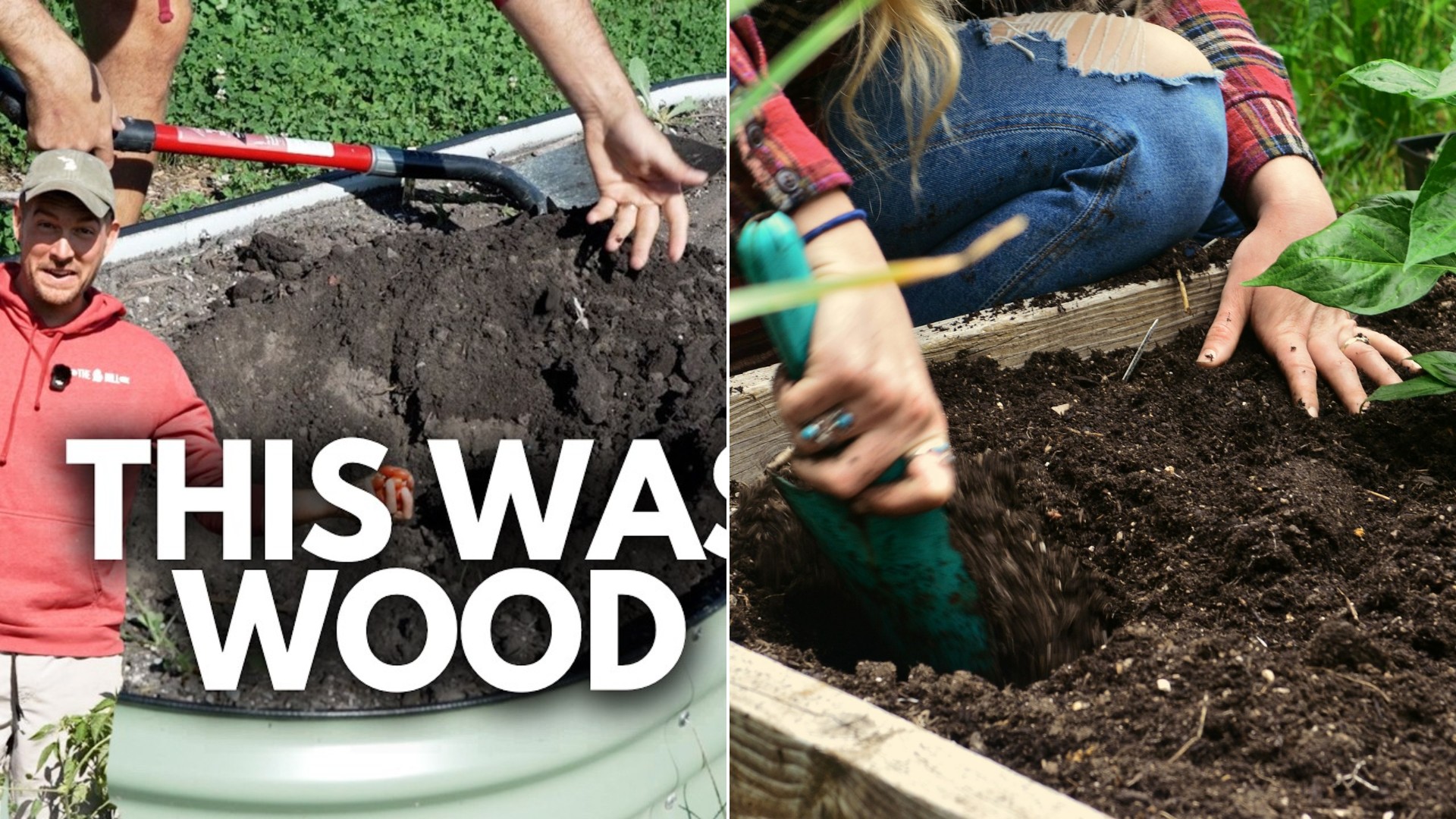
The goal was simple. Plants do not need 18 inches of pure soil, and cutting the amount he had to buy cut the cost.
Then he dug it up to see what was down there. “Spoiler, it’s pretty freaking amazing,” he says.
“Look At How Beautiful And Crumbly” The Soil Was A Full Shovel Down And Beyond
He dug a full shovel depth and found no wood at all. “Look at how beautiful and crumbly and gorgeous that soil is,” he says. He kept going deeper, expecting to hit sticks, and the soil stayed loose and crumbly the entire way down.
Only at about 18 inches did he reach the native clay the garden was built on. In that bottom layer there were just little wood fragments you have to look for.
In just two years, half a bed of branches an inch and a half to two inches wide had turned into what he calls incredible, beautiful soil. He credits earthworms, soil microbes and bacteria.
Why Sticks Vanish In Two Years Above Ground But Could Last Centuries Below It
Luke explains that the difference comes down to oxygen. Aerobic bacteria need an oxygen-rich environment, anaerobic bacteria prefer none, and the two do not coexist. Worms and plant roots also love oxygen, and in that kind of environment organic material breaks down much faster.
It is the same reason people flip a compost pile, he says. Flipping adds oxygen to stimulate the oxygen-loving bacteria, which he says account for probably 80% of the breakdown in a hot compost pile.
His raised bed did not get hot, since the wood is nearly all carbon and he was not adding nitrogen. It simply broke down quietly and quickly, leaving behind humus, which he describes as the sponge of the soil. Humus adds fluffiness and air, and it holds moisture and nutrients that plant roots can use.
The Same Wood Buried In Compacted Clay Would Still Be Recognizable In 5 To 10 Years
To show the contrast, he points to hard, compacted ground nearby and calls it lifeless. Bury the same sticks there, he says, and some breakdown would happen from anaerobic bacteria, but it would be a very different process.
It could take many years, even decades or centuries. He says you could come back in 5 to 10 years and still find a softer, punky but identifiable version of the wood.
He compares it to fossilized wood and peat bogs, where material is preserved for thousands of years because oxygen is missing. In an oxygen-rich bed, he says, the worms are “nature’s rototiller,” working through the soil and doing the tilling for you.
One Grape Tomato Plant Gave Him About 7 Pounds And Is “Just Getting Started”
The payoff shows up in the plants. Luke shows a single Supernova grape tomato plant filling its whole raised bed, wide and bushy, with roots that have dived deep for water and nutrients. Each cluster is loaded with fruit, and the foliage is vigorous and disease-free.
So far this year, he says, that one plant has given about 7 pounds of grape tomatoes, and it is far from finished. Next to it is a Sugar Rush Stripey pepper plant that he estimates has roughly 200 peppers on it.
He also says deep watering and rich soil mean he waters significantly less, because the humus holds on to moisture. Plants produce more because nutrients stay in the soil instead of washing away.
“Do Not Skimp” On Compost, And Never Mix The Wood Into The Top
Luke’s rule for anyone copying the idea is to fill the bed halfway with organic material and halfway with good quality compost. A garden does not have to be crazy expensive, he says, but it should cost a little to get good quality. He adds that you should keep amending the soil with all-purpose fertilizer and beneficial bacteria and fungi.
He is firm on one more point. Do not mix or turn the bed once the wood is at the bottom, because mixing it in will sequester and steal nitrogen from your soil. Leave the layers alone, let them work naturally, and reapply more when the wood has completely broken down.
His timeline is two to four years, depending on the size of the material you add. Leaf material breaks down quickly, while larger pieces take longer. He used branchy material from the forest line because he did not have access to big logs.
What To Do When The Wood Is Gone: Dig A Trench Through The Middle
Because the bed he opened had little wood left to decompose, he plans to refill it with trench composting. He will not excavate the whole bed, which would be a ton of work. Instead, he digs a central channel through it and fills it with old dead plant material, more wood, sticks and other debris.
That keeps the beneficial bacteria and fungi thriving and starts the process all over again, right where the plants grow. In his words, it does all the work of a compost pile without needing a compost pile somewhere else.
He also lists other ways people take up space in a bed, such as gravel or small rocks for drainage, or Styrofoam, which he does not recommend. His view is that sticks and twigs you find around the yard are one of the most affordable fillers of all.
A Simple Checklist Before You Try It
- Fill about half the bed with branches and sticks at least an inch and a half across, or leaf material that breaks down faster.
- Top it with good quality compost for the other half, and expect the level to settle in the first year, so top it off each spring.
- Amend the soil with all-purpose fertilizer and beneficial bacteria and fungi.
- Do not turn or fluff the bed once the wood is in the bottom.
- Give it two to four years, then refresh the bottom with a central trench of fresh organic material.
Luke says what he saw is exactly what he would expect in a very healthy, oxygen-rich environment. He closes by encouraging gardeners to create natural systems that work for them, so they can spend less time working and more time enjoying the garden.
More Stories You May Like
- Couple Races to Gut a Fixer Upper Nobody Has Lived in for 20 Years Before Their January Baby Arrives, and Then a Tree Limb Lands on the Fresh Roof
- Clogged Gutters Quietly Rot Your Fascia Flood Your Basement And Hurt Your Foundation So Clean Them Twice A Year And Point The Downspouts Away
- Dryer Sheets Vinegar Hacks Cheap Bulbs And Covering Vents Are Money Saving Tricks That Can Backfire So Here Is What To Do Instead
Leave a Reply