Gutters are easy to ignore. They sit up high, out of sight, doing their job quietly until the day they stop. When leaves, twigs and grit pack them full, the water has nowhere to go, and it starts finding its own way into places it was never meant to reach. The damage is slow, which is exactly why so many homeowners miss it until the repair is large.
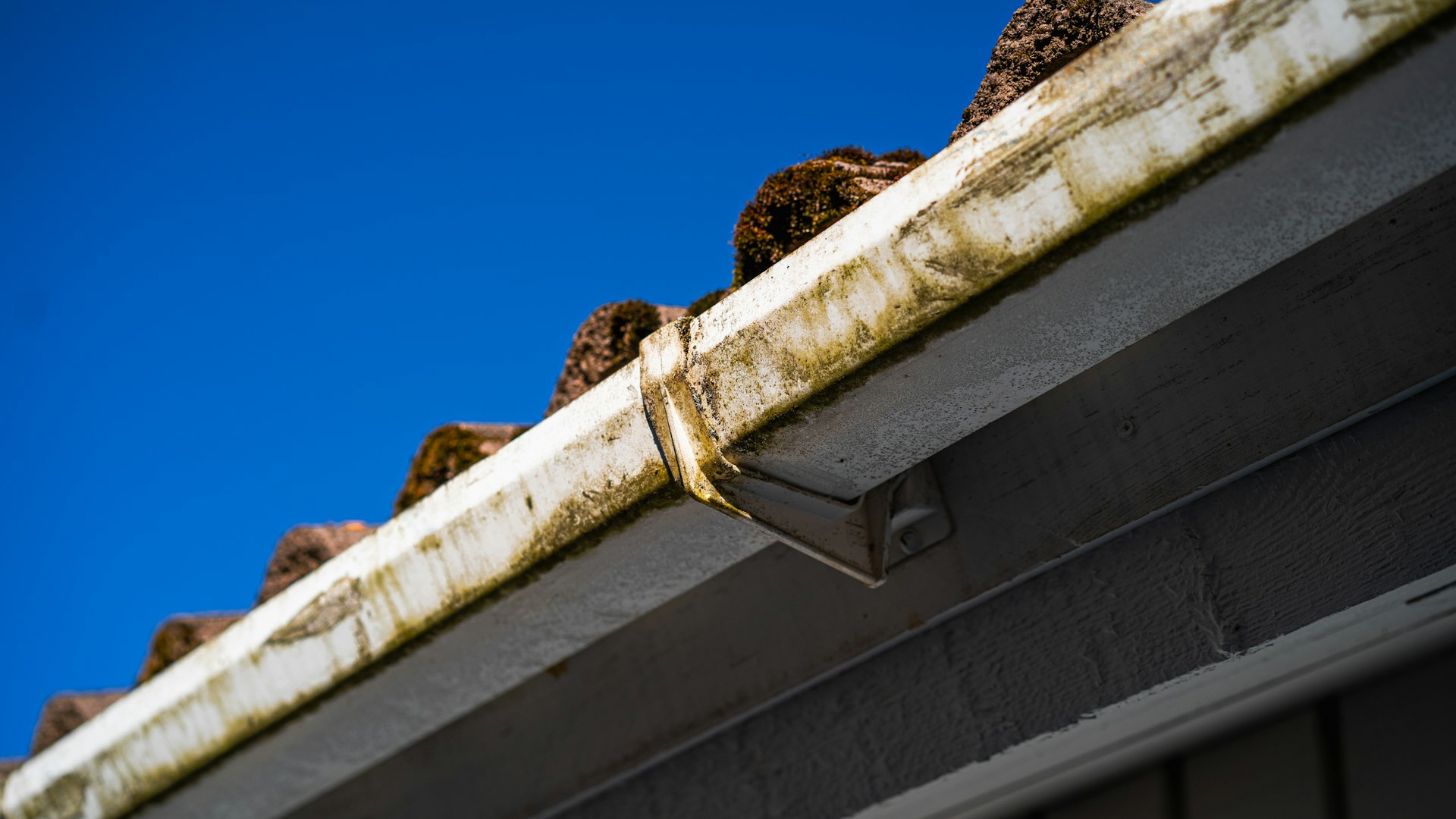
The good news is that the fix is cheap and simple compared with the damage. Clean the gutters twice a year, send the downspouts well away from the house, and use a ladder the safe way. That plan covers most of what you need.
What a Clogged Gutter Actually Does
A gutter is meant to collect rain from the roof and carry it to the downspout. When it is clogged, water spills over the edge or backs up behind it. From there, trouble spreads in a few directions.
- Rotting fascia. The fascia is the board that runs along the roof edge, right behind the gutter. Water that sits against it or runs down it keeps the wood damp, and damp wood rots. Peeling paint, soft spots and dark staining along the edge are warning signs.
- A wet basement. When overflow drops straight down beside the house, the soil near the foundation soaks up far more water than it should. That water can work its way through cracks and seams and show up inside as damp walls, musty smells or puddles on the floor.
- Foundation trouble. Constant saturated soil around a foundation can contribute to settling and cracking over time. It is not a quick process, but it is a costly one to repair.
- Other surprises. Clogged gutters can also give pests a place to nest and can stain siding with long streaks where water has been spilling down.
Clean Them Twice a Year
A solid rule is to clean your gutters twice a year, once in spring and once in late fall after most of the leaves have come down. If you have large trees close to the house, you may need to check them more often, especially after a big storm. The goal is to keep water moving freely every time it rains.
While you are up there, look at more than just the debris. Check that the gutters are still attached firmly and that they slope slightly toward the downspouts so water flows the right way. Look for sagging sections, loose brackets, gaps at the seams and rust spots. Small repairs now keep a small problem from becoming a bigger one.
Run water through the system with a garden hose once you have cleared it. Watch that it moves toward the downspout and drains freely. If water pools in one spot or dribbles out of a seam, you have found something worth fixing.
Point the Downspouts Away
Cleaning the gutters only solves half of the problem if the downspouts dump water right at the base of your house. Extend each downspout so the water is carried well away from the foundation before it reaches the ground. Simple extensions and splash guards are widely available, and many are easy to install yourself.
Look at the ground near each outlet, too. The soil should slope away from the house, not toward it. If water collects in low spots near the walls after a rain, it is worth regrading the area or asking a landscaper for advice. Pay attention to how things look during a heavy storm, since that is when problems show themselves most clearly.
Ladder Safety Comes First
Gutter cleaning sends a lot of people up a ladder, and falls from ladders cause real injuries. A few habits make the job far safer.
- Choose the right ladder. Use one that is tall enough that you are not stretching or standing on the top rungs, and check its weight rating against your weight plus your tools.
- Set it on firm, level ground. Never prop it on soft soil, uneven pavers or anything that can shift.
- Keep three points of contact. Two hands and one foot, or two feet and one hand, should be on the ladder at all times.
- Do not overreach. Keep your belt buckle between the rails. If you cannot reach the next spot, climb down and move the ladder.
- Bring a helper. Have someone steady the base and be there if something goes wrong.
- Watch for hazards. Stay far away from power lines, and never work on wet, windy or icy days.
- Use a bucket and a hook. Hang a bucket from the ladder so you are not carrying heavy debris back and forth.
If you are not comfortable on a ladder, or your home has steep or very high rooflines, hiring a professional is a sensible choice. Paying for an hour of safe work beats an emergency room visit.
A Simple Seasonal Routine
Put it on the calendar. Mark one weekend in spring and one in late fall as gutter days. On each one, clear the debris, flush the system with water, check the slope and the fasteners, confirm the downspouts are still extended, and walk the foundation to look for pooling water or damp soil.
If you find soft or discolored fascia, press on it gently with a screwdriver tip. Wood that gives way is a sign of rot, and it is better to know now than after the damage spreads under the roof edge. Getting a contractor to look early keeps repairs smaller and cheaper.
Gutters are not glamorous, but they protect the most expensive things you own. A couple of weekends a year, a few extensions and a careful climb are a small price for a dry basement and a solid foundation.
More Stories You May Like
- Homeowner Cleaning Out The Basement Notices A Damp Spot, Pulls Off A Section Of Wall, And Finds A Hidden Door Framed In Wood Behind The Block
- Appalachian Grandmas Fed Whole Families From Flour, Grease And A Cup Of Water During The Depression And One Meal Even Kept A Family From A Deadly Disease
- Home Inspector Finds A Gas Meter With A Broken Top Held Together With Tape, Then Learns Nobody Ever Called The Gas Company To Fix It
Leave a Reply