Cleaning out a basement is usually a dusty, forgettable chore. For the homeowner behind @ram_seynolds, it turned into the kind of discovery people dream about. The caption says it simply: I found a hidden door behind my basement wall.
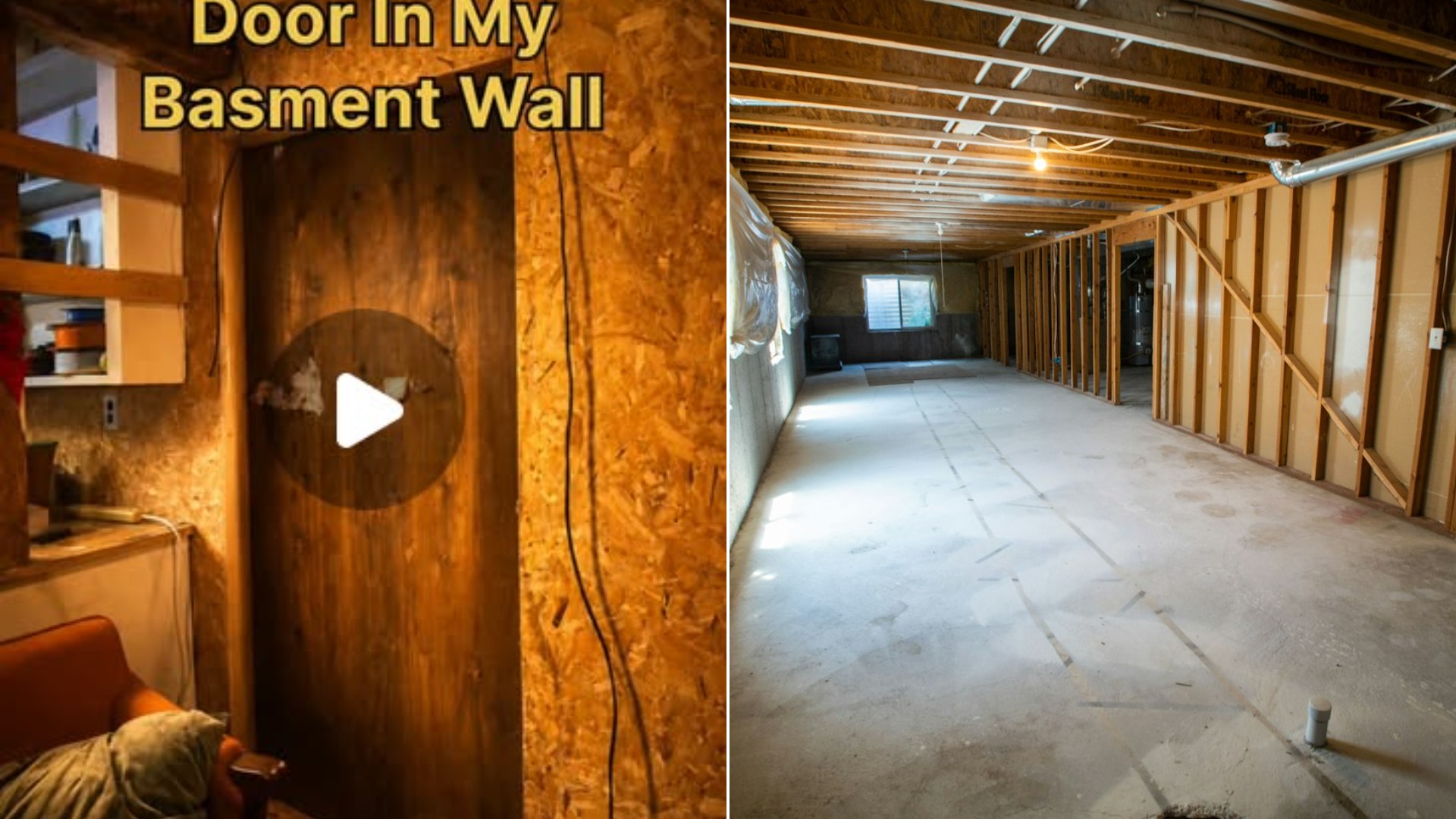
According to the video, the creator was organizing the basement when a little wetness caught their attention. To see whether the area was damp, they took off a section of the wall and pulled the insulation back. They expected to find blocks, since basement walls are typically made of block. Instead, they found a piece of wood framed like a door. The reaction in the video was one of pure astonishment, and the language was a little salty, so we have left it out here.
Here is the catch: the clip ends before the big reveal. We do not know what is behind the framing, whether it opens, or why it was sealed, so we are not going to guess. It is the kind of cliffhanger that has people hitting replay. What we can do is look at why homes sometimes hide spaces like this, and what a smart homeowner should do if they stumble onto one.
Why Homes Hide Spaces
Older houses, especially, can hold surprises. Over decades, owners remodel, finish basements, close off rooms, add walls and change their minds. Spaces such as storage nooks, old coal chutes, crawl access, utility openings or sealed doorways can end up behind new walls or insulation. According to many renovation guides, a hidden opening does not always mean something mysterious. Often it is just a leftover from an earlier layout. Still, until you know what it is, it is wise to be careful.
Start With the Dampness
It is easy to get excited about the door and forget what started this whole discovery: a damp spot. Moisture in a basement should always be taken seriously. Here are common steps people take, offered as general guidance.
- Find the source. Dampness can come from groundwater, a plumbing leak, condensation, poor exterior drainage or clogged gutters.
- Check outside. Make sure downspouts carry water away from the house and the soil slopes away from the foundation.
- Watch for mold. Musty smells, dark spots or fuzzy growth on insulation or wood call for caution. For larger areas, many experts suggest hiring a professional.
- Dry things out. A dehumidifier and good air flow can help while you track down the cause.
- Replace wet insulation. Insulation that stays wet can hold moisture against the wall, so it often has to be replaced once the leak is fixed.
If You Find a Hidden Door or Space
Before you grab a crowbar, a few precautions can save you trouble. These are general tips, not steps from the video.
- Stop and take photos. Document what you found before changing anything. Photos and video can be useful later.
- Think about what could be behind it. It could be a utility space, an old storage area, or a space with no air flow. Sealed spaces can have poor air quality, stale air, mold or pests.
- Check for wires and pipes. Do not cut or drill into a wall until you know what runs through it. If you are not sure, a licensed electrician or plumber can help.
- Open it carefully. Wear gloves, safety glasses and a dust mask, and use a bright flashlight. Do not step into a space you cannot see into.
- Test the air. If the space is enclosed, let it air out before going in. If you smell gas or sewage, leave and call a professional.
- Look up your home’s history. Older plans, permits or neighbors who have been there for years can sometimes explain why a space was closed off.
- Check for structural concerns. If a wall may be holding weight, ask a contractor or structural engineer before removing it.
- Ask about permits. If you plan to turn the space into something usable, check with your local building department.
Do Not Forget Safety With Old Materials
In houses built decades ago, some old materials, such as certain insulation, paint or flooring, may contain substances that need special handling. If your home is older and you are planning to disturb walls, many experts recommend testing for things like lead paint or asbestos before sanding or tearing out material. Rules and testing options vary by location, so a local professional can point you in the right direction.
The Fun Part
There is something wonderful about the idea of a secret door in your own basement. Many homeowners report that the best surprises come from curiosity and patience. If you find a hidden space, you might be able to make good use of it, whether that is storage, a workshop, a pantry or a cozy nook, once it has been checked and made safe.
We hope the creator shares what was on the other side. Until then, the lesson for the rest of us is to look closely at those damp spots, ask questions about our homes, and be careful when opening up a wall.
More from Willow and Hearth
- Inspector Nearly Cuts His Hand on the Railing of a $1.7 Million Home, and That Is Only the Start of the Hidden Defects He Uncovers Room by Room
- He Says He Scared Off Thieves By Charging At Them Waving His Arms Like An Orangutan, Then Leaving His Off Grid Land Unsecured Cost Eight Years Of Progress
- She Tore Up The Carpet To Reveal Hardwood Stairs, Hit Day Six Of Scraping Paint, And Now Says The Mistakes May Cost $8,000 To Fix
Leave a Reply