Plenty of home projects begin with a hopeful guess. You lift a corner of old carpet, spot real wood underneath and picture a gorgeous staircase. The creator behind @s.s.training did exactly that, and by day six her caption admitted she did not think her wrists could handle any more scraping. Her opening line says it all: she accidentally ruined her staircase, and it might cost her $8,000 to fix.
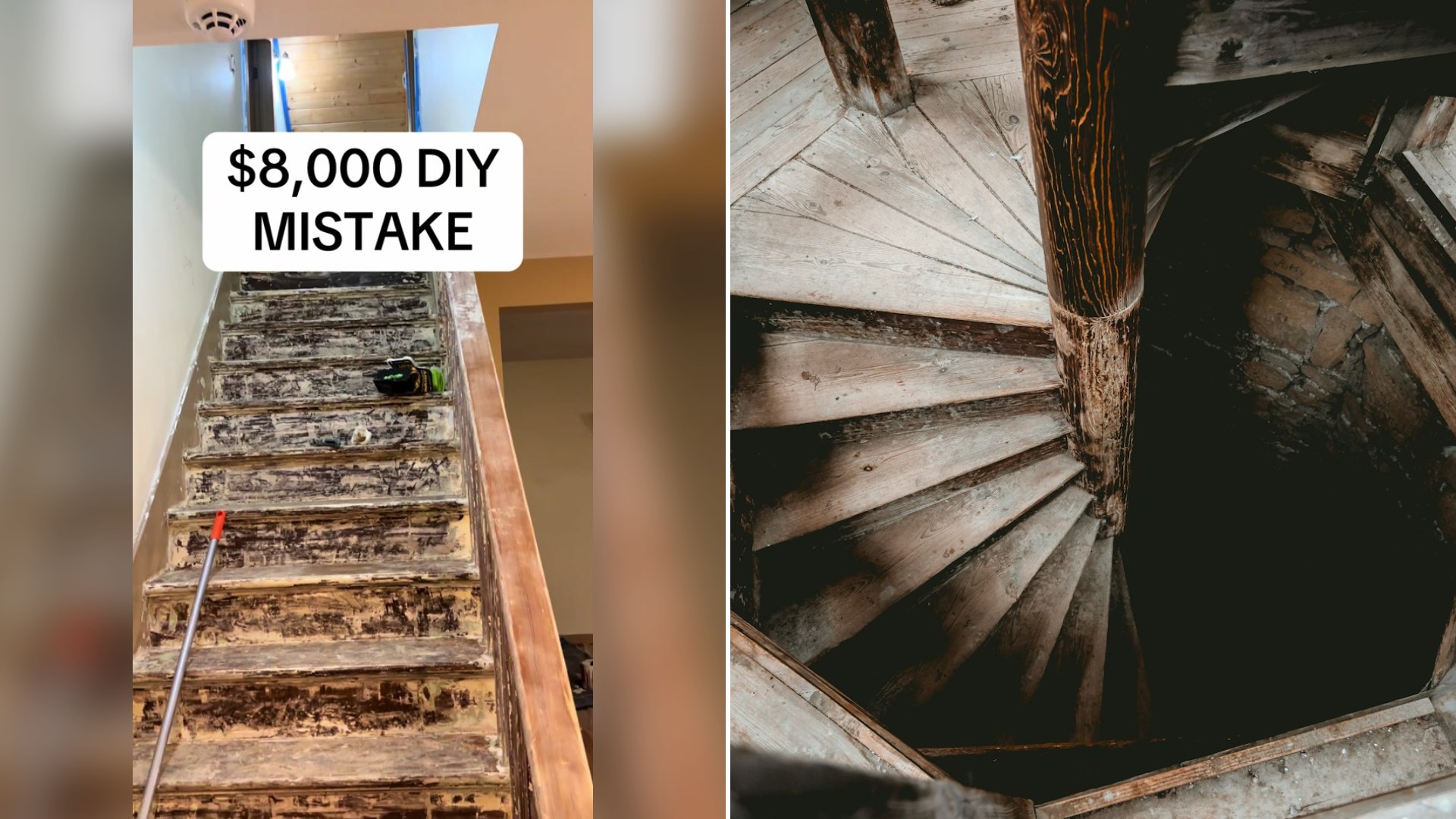
@s.s.training
Her story is a useful one for anyone who has ever wondered whether to tackle an old house project alone. She tells it with honesty, a little humor and a request for help.
The Plan
The creator says she hated the carpet and the color of the stairs. She could see the real hardwood underneath and wanted to reveal it. Ripping up the carpet turned out to be much harder than she expected, and it left a huge amount of dust. She also found a large number of staples in the wood, and they were super thick. She says no one at the home improvement store recognized them, so she gave up on pulling them out and moved on to stripping the paint.
The Paint Problem
After a day and six coats of ordinary paint stripper, she says, she realized the job was going to take forever. She called a professional to ask what it would cost. Because her house is 100 years old, she says, the quote would be 10 times the normal price, given the possibility of lead paint.
The professional did recommend a product that safely removes lead paint. At first it worked super well, she says, which gave them a lot of hope, so they went all in. Then they ran out of the special paper that goes on top of the product. They substituted parchment paper, and it did not work. When they came back the next day, everything had hardened and crusted over.
They spent another day applying another layer and were able to make some progress. The stairs started to look a bit better, so they went ahead and treated every step. But when they took it off the next day, the wood was still not where they needed it to be, and there was a lot of scraping left to do.
Where She Landed
At the end of her post, she says she is debating whether to simply paint over everything and accept a lumpy finish, though she knows it would look horrible. She is open to suggestions. She does not want to pay the $8,000 to have it fixed, but she does not know what to do next.
People did offer ideas. One said the project was not ruined, just half done. Another asked why she was letting the product dry, noting that the stripper should be removed while still wet. A third urged her to test the paint to find out whether it contains lead. One recommended sandblasting, and another suggested working in smaller sections instead of trying to do too much at once. Those are suggestions from strangers, not professional advice, but they line up with a few widely shared best practices.
Things To Know Before You Strip Old Paint
If your home is old, the first step is to find out what you are dealing with.
Test for lead. Homes built before 1978 may contain lead based paint, and a house a century old is a strong candidate. Inexpensive test kits are available at hardware stores, and a certified lab can give more precise answers. In the United States, the Environmental Protection Agency has guidance on lead safe work practices, and professionals who disturb lead paint in older homes are generally expected to be certified.
Protect your household. Dust is the main hazard. Keep children, pregnant women and pets away from the work area, seal off doorways with plastic sheeting, and clean up with a HEPA vacuum and damp cloths rather than dry sweeping. Wear a properly fitted respirator rated for lead dust, not just a paper mask.
Avoid dry sanding and heat guns. Sanding and high heat can release lead dust and fumes. Chemical strippers are often safer for lead paint, as long as you follow the label.
Follow the directions exactly. Many strippers rely on a specific cover, whether paper or plastic, to keep the product from drying out. The creator’s experience with parchment paper shows how a substitution can undo a day’s work. If you run out of something, it may be worth pausing until you have the right supplies.
Work in small sections. Do a few steps at a time so that each section can be treated, scraped and neutralized on schedule. This also keeps the project from taking over your house.
Know when to bring in help. Some jobs are worth hiring out, especially when lead is involved. If the cost seems too high, get more than one quote and ask whether a partial service, such as final sanding or refinishing, would save money.
What You Can Learn
The staircase may not be a lost cause. Hardwood is durable and can often be sanded and refinished, and half done work is not the same as ruined work. Still, her story shows how quickly a weekend idea can grow into a week of scraping, dust and uncertain costs.
For anyone eyeing an old staircase, the lessons from @s.s.training are practical ones. Test before you start, follow the product directions, work slowly, and keep a budget for surprises. If you do take on a project like this, share your plan with someone who has done it before. As this creator discovered, a little advice early can be worth a lot of scraping later.
Leave a Reply