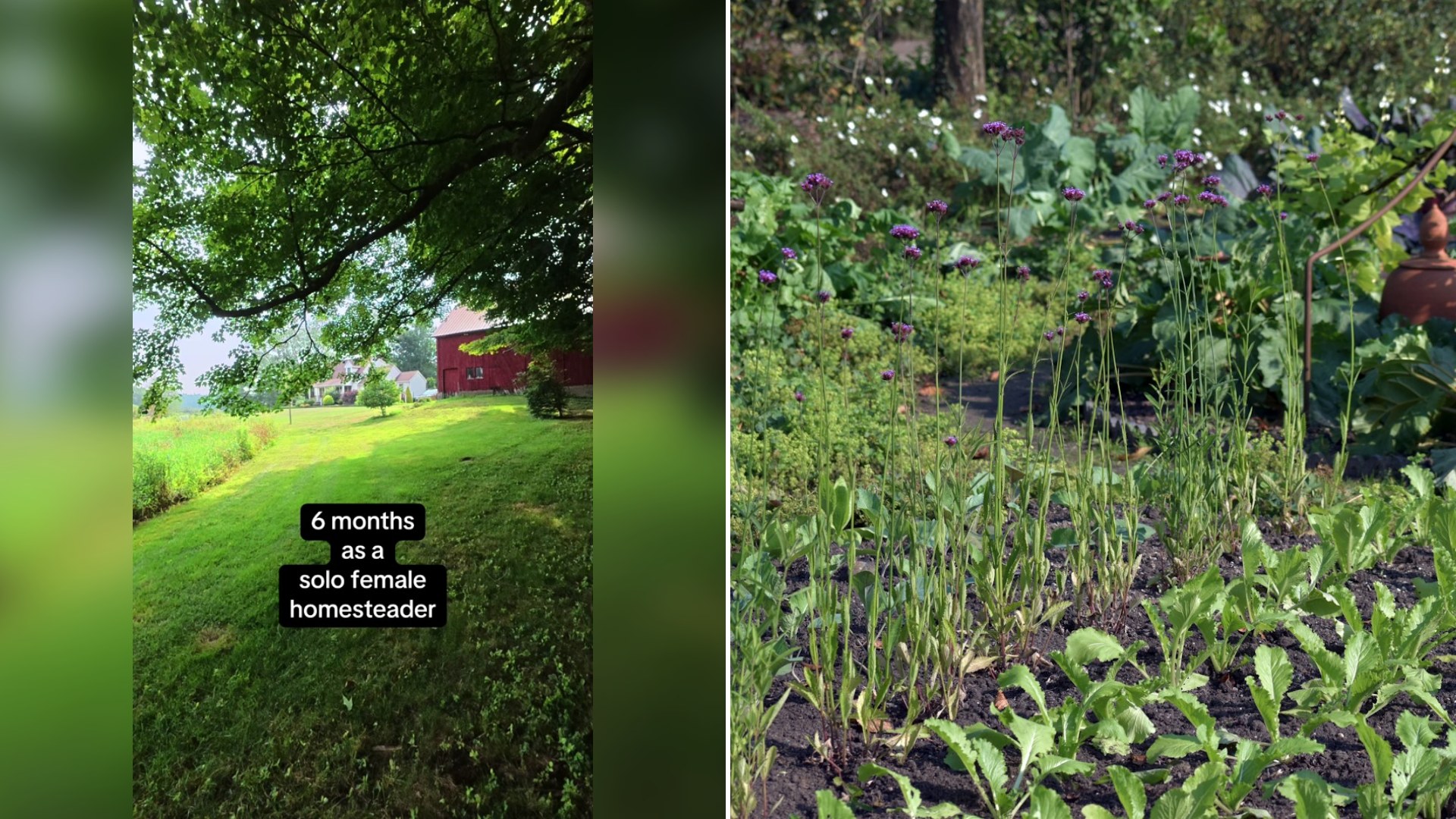
Six months can change a lot when you are building a dream from scratch. The creator behind @farmninetysix says she bought a 10 acre farm at the age of 30 with the goal of turning it into the homestead of her dreams. She shared a rundown of everything she got done in her first half year, and the list is a handy map for anyone daydreaming about a similar move.
@farmninetysix
Starting With What Was There
She says a previous owner had built a cold frame, but nature had reclaimed it. She used a scythe to carve it out of the field, replaced some rotting boards, filled it with soil, and has enjoyed a steady stream of fresh greens through the fall and early winter.
Next to the cold frame she built three raised beds, each 8 feet by 4 feet, filled with composted horse manure and surrounded by wood chips. She says she got both for free. Despite the short time frame, she says she had a good fall harvest of carrots, radishes, peas and tomatoes. The beds now hold garlic and strawberries, with the third bed ready for asparagus in the spring.
Berries, Mushrooms And Wild Grapes
She also planted blueberries, blackberries and raspberries in various spots around the property. While exploring, she says, she foraged several species of wild berry, two species of edible mushroom and several gallons of wild Concord grapes. She built a simple compost bin using completely reclaimed materials.
Where The Frugality Ended
She is cheerful about the point where her thrifty streak stopped. She installed a mini split system for air conditioning and backup heat, along with a 12 panel solar array to power it. She also collected and processed as much firewood as she could. Chimney updates were completed, and she replaced the antique wood stove with a modern, much more efficient one that is now her primary source of heat.
She prioritized outdoor jobs while the weather was nice, but still found time to update the bedroom and living room with paint and personal touches. And yes, she says, six months later she is still finding popcorn ceiling dust everywhere.
A Dream She Calls Lucky
She says she cannot find the words to describe the joy of living this dream and that she feels incredibly privileged and lucky. The craziest part, she adds, is that this is only the beginning.
What We Can Learn From Her First Six Months
Her list is more than a highlight reel. It shows an order of operations that other new landowners can borrow.
Start with what already exists. Reviving a cold frame meant she did not have to build a structure from nothing. Before you buy materials, walk the property and look for old beds, fences, outbuildings, fruit trees or vines that can be rescued.
Use free local resources. Horse manure and wood chips are often available for the hauling, and they are among the most useful things a new gardener can find. Composted manure feeds the soil, while wood chips suppress weeds around beds. Fresh manure can burn plants and may carry weed seeds, so let it age or compost before planting.
Plant for the long term. Berries, asparagus and fruit trees take time to establish, so planting them early pays off in later years. Perennial plants need a bit of patience, since many berry bushes and asparagus give little the first year.
Extend the season. A cold frame protects greens from frost and lets you keep harvesting after beds have been put to rest. Cool season crops such as lettuce, spinach and kale are good candidates.
Foraging With Care
Wild berries, mushrooms and grapes can be a treat, but foraging calls for caution. Never eat a wild mushroom unless you are completely sure of the identification, ideally confirmed by an experienced local forager or a regional guide, because some edible species have toxic look alike species. For berries and grapes, learn the local species and avoid anything sprayed with chemicals. Go slowly, take only what you can use and leave plenty for wildlife.
Heating And Power Choices
Her heating decisions are a good example of spending money where it counts. A wood stove can cut heating costs, but it comes with responsibilities.
Have the chimney inspected and cleaned before use, which is a sensible step whenever you inherit a stove, as she did when she had her chimney updated. Burn seasoned firewood, which is wood that has dried for a year or more, since wet wood makes more smoke and creosote. Install working smoke and carbon monoxide detectors, and keep a safe clearance between the stove and anything that can burn. Older stoves are often less efficient than modern certified ones, which is part of why replacing an antique can pay off.
A mini split heat pump is an efficient choice for both cooling and backup heat, and pairing it with solar panels can help offset its electricity use. Before investing, get quotes from several installers and ask about incentives that might apply where you live.
Pacing A Big Move
She says she focused on outdoor tasks while the weather was nice, then moved indoors to paint and decorate. That seasonal rhythm is useful for anyone with a new property: do the weather dependent jobs first and save the interior touches for colder days. Small cosmetic wins, like fresh paint in a bedroom or living room, make a house feel like your own long before the big projects are done.
Perhaps the best lesson is her attitude. She sounds grateful for the chance rather than weighed down by the work, and she frames the first six months as the start. For anyone planning a farm of their own, that spirit may be as helpful as any checklist.
Leave a Reply