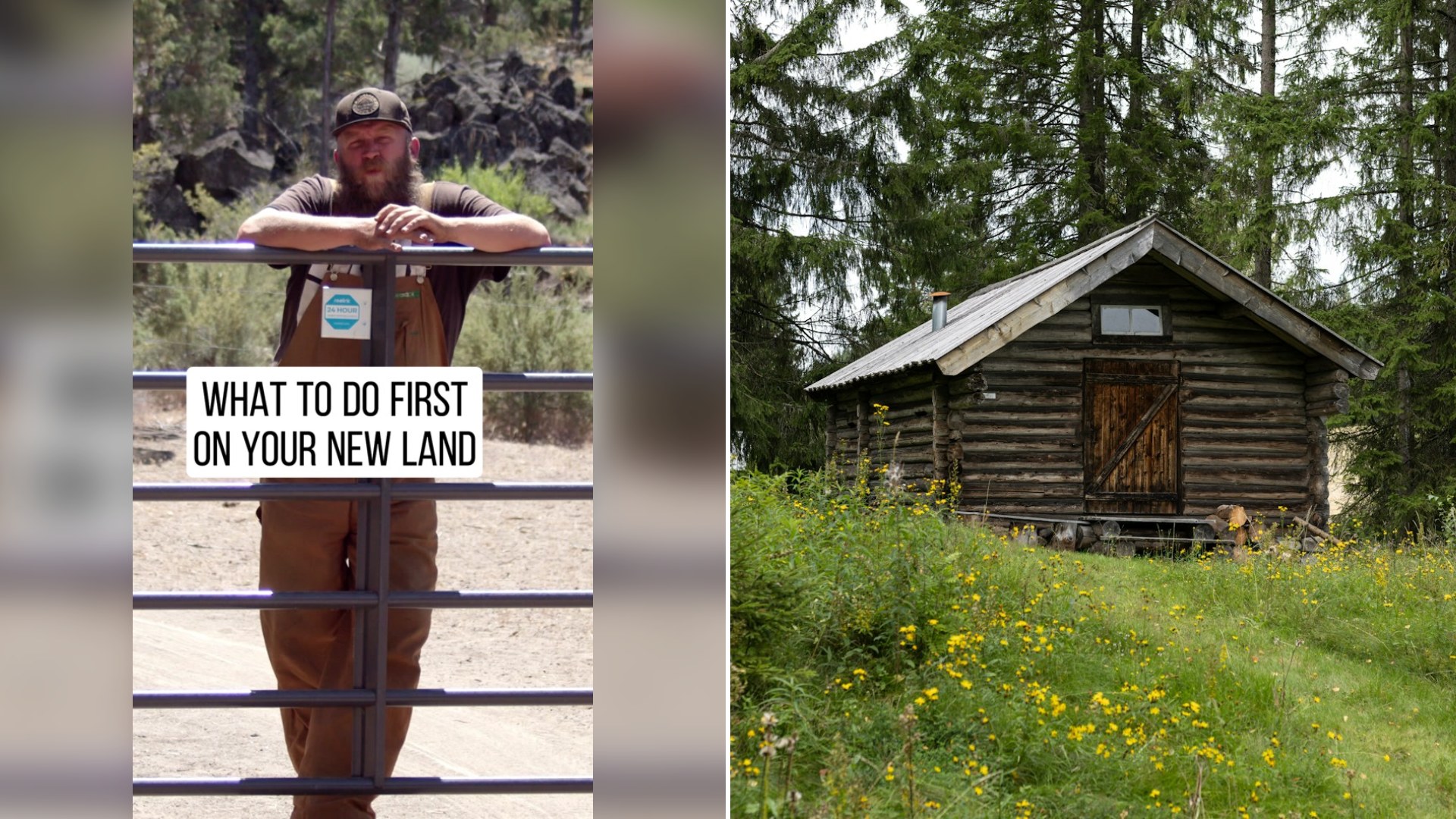
Some lessons cost a few dollars. The one the man behind @7kinhomestead shared on social media cost, in his words, “the better part of eight years of progress” on his off grid homestead, and it happened practically overnight. In a story time post about what to do first on a new piece of land, he says he wants to spare other people the same mistake, because time is the most valuable and scarcest thing any of us has.
@7kinhomestead
A Quiet Place That Changed
When his family first moved out, he says, the area was nearly empty. A few neighbors lived far apart, and they traded goods and lent each other a hand. Then, over a couple of years, he says dozens of nearby properties sold and became large commercial operations, and the following year hundreds more did, until most land for miles was used that way.
He describes a seasonal pattern. Because of the harsh winters, he says, those operators showed up in early spring and were gone by mid to late fall. When they left, he says, thieves came “like clockwork” and ransacked the empty properties, taking anything they could resell, including water tanks, pumps, generators and travel trailers.
The Orangutan Defense
He says he was never too worried, because his place always looked lived in. There were fresh tracks, smoke from the wood stove and his near constant presence. Then one day, while he was working in his shop, he saw an older crew cab pickup full of men coming up his driveway.
His response was not subtle. He ran straight at the truck with his arms flailing, a move his family calls “the orangutan,” a name that came from a family wrestling match. He is a big man, by his own description about six foot three and 250 pounds. The driver threw the truck into reverse and fled, and he says the men never came back. He jokes that a rumor probably spread among them about a great white Yeti living out there.
The Mistake That Cost Eight Years
The trouble came later. A few years afterward, he says, he took a job in a city twelve hours away, working three weeks on and one week off. He then rented a house and moved his family there for two years, from 2020 to 2022. The family left most of their belongings at the homestead, planning to go back in a matter of weeks. They did not.
When they finally returned, he arrived about thirty minutes ahead of his family in a rental truck. What he found, he says, was devastating. Essentially everything built or acquired over eight years had been stolen, damaged or destroyed. The water system was gone and the tank broken. All of his tools had vanished. The house had been gutted, with windows and doors kicked in, and a snow drift that had piled up in the front room had damaged the floor. A 40 foot fifth wheel trailer with four slide outs was gone as well.
Rebuilding and the Real Lesson
He says that in the year and a half since coming home, the family has made more progress than they did in the previous eight years. Even so, he says lost time cannot be bought back, and he puts the blame on himself for not taking security seriously. His answer to the question of what to do first on a new property is “safety and security.”
His specific advice is to install a gate, run a fence across the front of the land, post no trespassing signs and mount cameras on poles, some in plain sight and some hidden. He is honest that none of this is foolproof. The point, he says, is to signal that this property is not the easiest target on the road. He adds that his next post will cover safety in more depth.
Practical Ways to Protect Rural Land
His story lines up with common advice from law enforcement and rural property experts. Whether you live full time on your acreage or only visit, a few steps make a real difference.
Secure the entrance first. A sturdy gate with a good lock, set back far enough that a vehicle cannot simply pull in, slows down anyone who does not belong. Clear signs that state the land is private and posted give law enforcement a clearer basis to act.
Layer your cameras. Visible cameras discourage casual trouble, and hidden ones capture evidence if someone ignores the warning. Cellular models can send alerts without a wired connection, which helps on remote land. Check batteries and storage regularly.
Record what you own. Keep a list of tools, equipment and trailers with serial numbers and photographs, stored somewhere off the property. Police can only recover what they can identify, and insurers ask for the same details.
Talk to your neighbors. Neighbors who trade phone numbers and look out for one another are often the best alarm system. Agree on what to do when someone notices strangers or an open gate.
Do not leave land unattended for long. If you must be away, ask someone you trust to visit often, move valuable items to secure storage and leave nothing worth stealing in plain view. Check your insurance policy too, since vacant or seasonal properties are sometimes treated differently.
Report everything. Even small incidents should go to the local sheriff, because patterns of reports help law enforcement see what is happening in an area.
A Story Worth Hearing
What makes the story land is that it is told with humor but ends with a hard truth. The same man who laughs about charging down a driveway like an orangutan also says he lost most of what he had worked for. For anyone dreaming of land and self reliance, the takeaway is simple: before the garden, before the cabin, think about who might come up the driveway when you are not there.
Leave a Reply