Most of us treat outlets and extension cords like furniture. They sit on the wall, they work when we need them, and we rarely look twice.
That is exactly why small mistakes pile up. The U.S. Fire Administration’s electrical appliance fire safety card lists 15 tips, and these are the 12 that most homeowners can act on today.
None of these need special tools, and most take less than a minute. They are the kind of habits that make a house feel safe to come home to.
Walk through the house with this list and a cup of coffee. You will probably find one or two surprises.
Never Overload An Outlet
The U.S. Fire Administration’s card starts with a simple rule: do not overload outlets. Plugging too many things into a single wall outlet is one of the most common household habits there is.
If you find yourself stacking adapters to make room, that is the signal to rethink where things are plugged in.
Never Leave A Plug Halfway In
The card says to push plugs fully into sockets. A plug that sits partway out can feel fine, but it is not seated the way it should be.
Give each plug a gentle check as you go through the house, especially behind the sofa and the bed where nobody looks.
Never Force A Three-Prong Plug Into A Two-Slot Outlet
The card says plainly never to force a three-prong plug into a two-slot outlet. That third prong is there for a reason, and snapping it off or jamming it in defeats the design.
If your older home has two-slot outlets, a licensed electrician can tell you what your options are.
Never Live With A Loose Outlet
The U.S. Fire Administration says to replace wall outlets when plugs fit loosely. A plug that falls out or wiggles is a sign the outlet has worn out.
It is a cheap part, but the work belongs to a qualified electrician unless you are experienced.
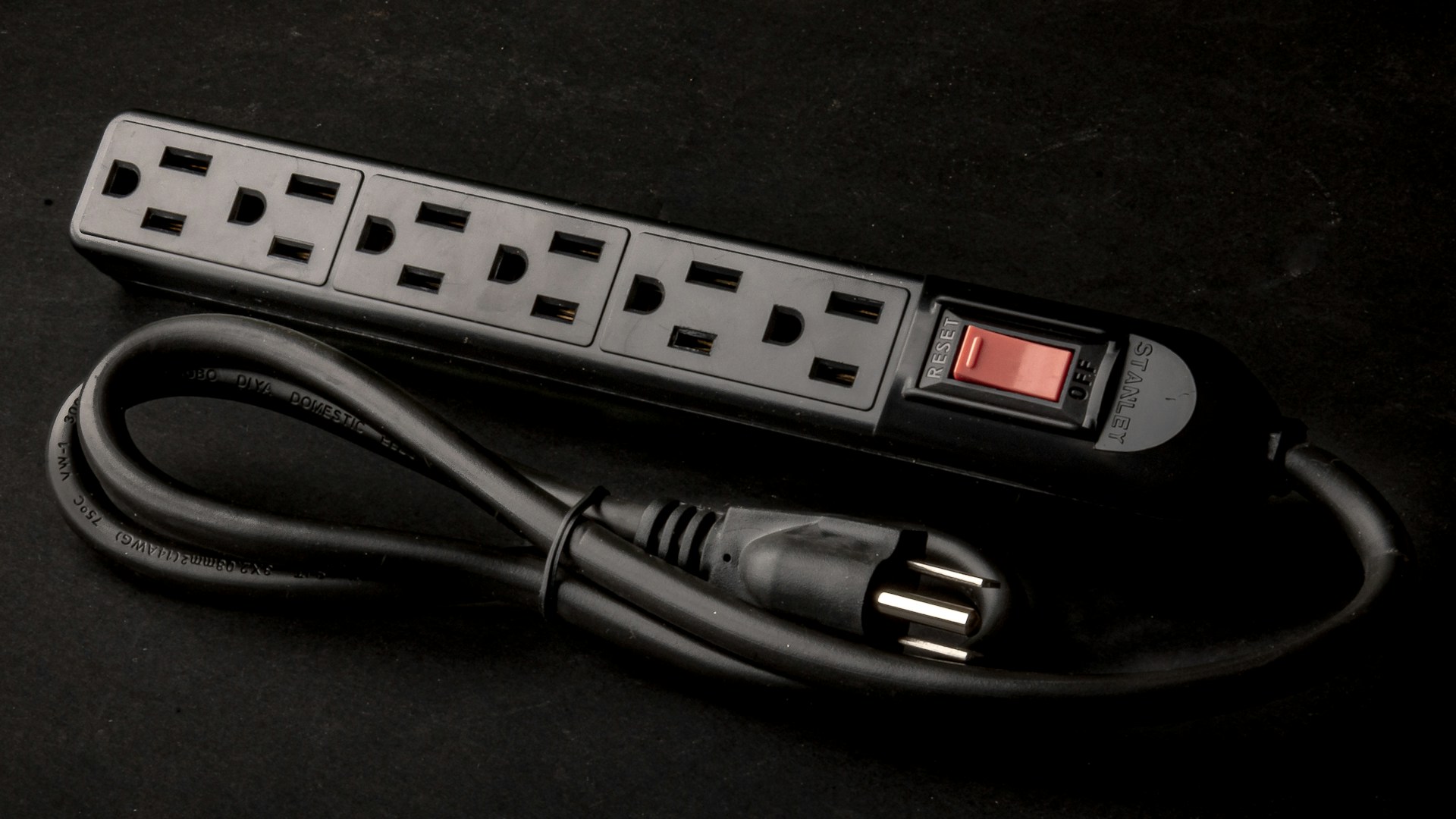
Never Overload A Power Strip
A power strip makes it easy to plug in many things at once, and that is the problem. The card warns not to overload power strips.
Look at the strip under your TV or desk. If it is crowded with chargers and gadgets, move a few to another outlet.
Never Buy A Power Strip With No Overload Protection
The U.S. Fire Administration recommends power strips with built-in overload protection. That feature is part of what makes a strip safer than a bare adapter.
Check the packaging or the strip itself before you buy, and replace older strips that lack the feature.
Never Keep A Worn Or Damaged Extension Cord
The card says to promptly replace extension cords that are worn, old or damaged. A frayed or cracked cord is not worth saving to avoid a few dollars.
The card says the same about appliances: replace any appliance with a cracked, damaged or loose cord. Give your cords a once-over this weekend.
Never Run Cords Under Rugs Or Where They Get Pinched
The U.S. Fire Administration advises keeping cords out of places where they could be damaged or pinched, such as under carpets or rugs. A cord hidden from view can be crushed by foot traffic and furniture without anyone noticing.
Give your cords an open path along the wall instead, where you can see them and nobody trips on them.
Never Plug A Major Appliance Into An Extension Cord
The card says to plug major appliances, such as refrigerators, stoves, washers and dryers, directly into a wall outlet. It is blunt about the next part: never use an extension cord with a major appliance, since it can overheat and cause a fire.
That rule applies even if the cord only has to cover a short distance. If the outlet is too far from the appliance, the answer is a new outlet, not a longer cord.
Never Leave Small Appliances Plugged In When You Are Done
The U.S. Fire Administration says to unplug small appliances when you are not using them. Think of the toaster, the coffee maker and the curling iron.
It is a good habit before a trip, too. Unplugging also gives you a quick chance to look at the cord and plug for any damage.
Never Set Flammable Things Near Lamps And Bulbs
The card says to keep flammable materials away from lamps, light fixtures and bulbs. A scarf draped over a lampshade or a stack of papers pushed up against a bulb may look harmless.
Move them, and give every light some breathing room.
Never Use The Wrong Wattage Bulb
The U.S. Fire Administration says to use bulbs that match the wattage recommended for the lamp or fixture. Look on the lamp or fixture for a label, then match it.
If you cannot find the label, check the manual before you screw in a bulb that is stronger than the lamp is rated for.
The card also suggests tamper-resistant outlets if young children live in the home, which is worth knowing for grandparents who host little ones.
These twelve habits take little time and cost almost nothing. Pick a room, go through it today, and you will have done more for your family’s safety than most people do all year.
More Stories You May Like
- Inspector Finds A Water Heater Sitting On Bricks, A Garage Door Opener On An Extension Cord And Mold Everywhere In The Attic Of An Old House
- Lawyer Says Your Landlord Is Breaking The Law If They Lock You Out, Walk In Without Notice Or Raise Your Rent After You Ask For Repairs
- Holiday Hosting Blows Up The Grocery Bill When You Cook Too Much And Buy Premade Trays So Plan Portions And Start A Potluck Signup
Leave a Reply