When a home inspector pulled up to a 1950s house, he found he had company. Three home inspectors showed up for the same job, because someone had booked all three for the same house.
“There’s definitely some miscommunication,” he said. He was the one who got to carry on with the inspection, and he called himself “the lucky one.” What he found as he walked the property, which he shared on the @HomeInspectionNightmares channel, reads like a checklist of what to look for in an older home.
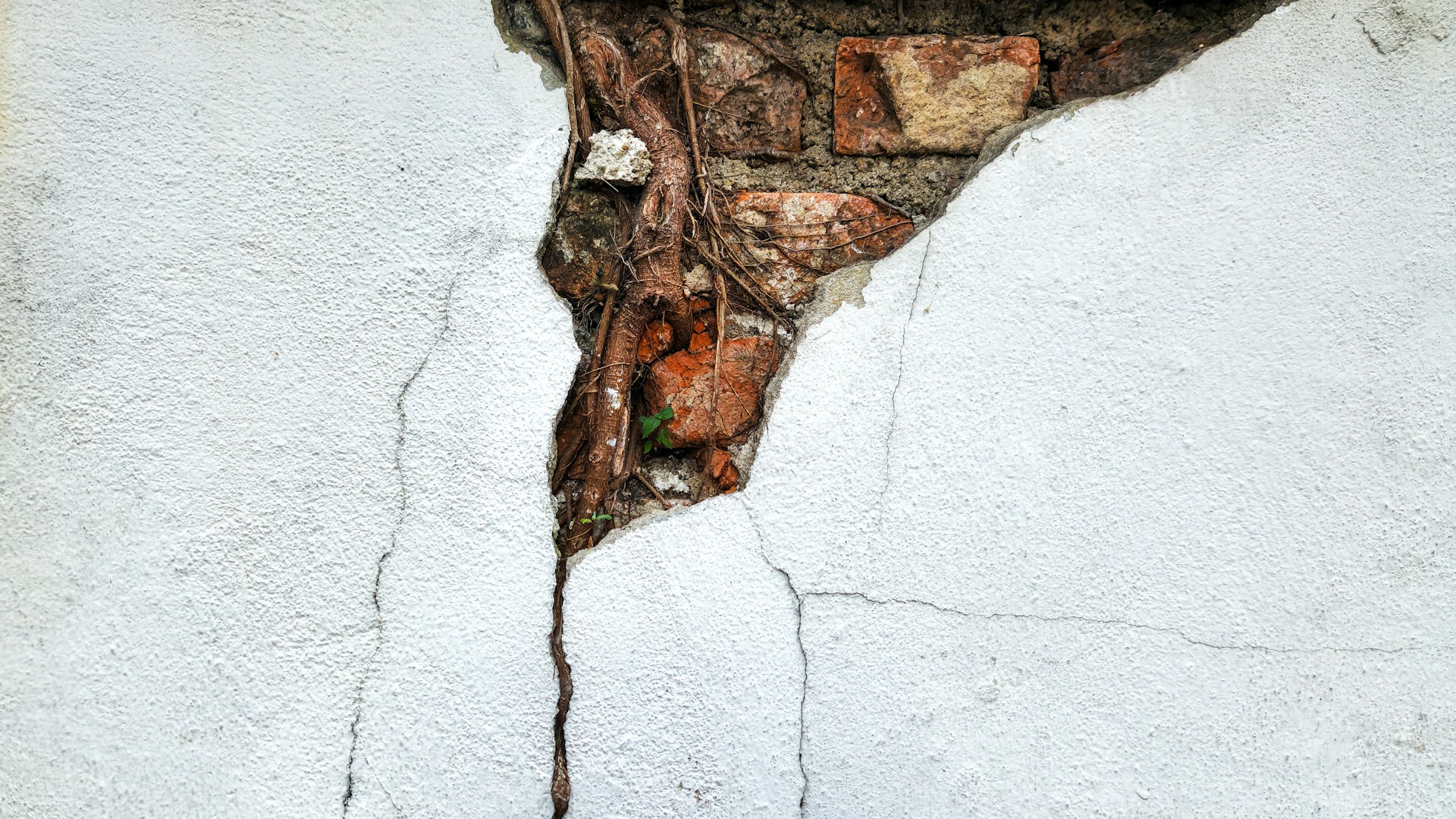
Foundation Cracks At Every Corner Of The House
The trouble started outside. The inspector spotted a very large foundation crack at one corner, then another corner crack, and then another, and he kept counting them as he went around the house.
One of the exterior chimneys was sealed with aluminum tape, which he said probably should be looked at. He also noted that the sill joint was not sealed properly and was a little loose, and he found the same problem at a second spot.
In general, a crack at a foundation corner deserves a careful look from a professional, because a very wide or growing crack can point to settling or water problems. Narrow, stable cracks are common in older homes, but only someone who studies the pattern can tell the difference.
A Duct Taped Downspout And A Garage Light On An Extension Cord
The exterior kept delivering. A GFCI outlet was not tripping when tested, a window screen was damaged, and the air conditioner was so old that its data label had worn away. He guessed it could date from the 1970s and said it was “definitely time for an upgrade.”
The downspout extension did not look like it would work well, and then came a favorite find. Someone had secured a downspout with duct tape. “If you need to secure a downspout, just use some duct tape,” he joked.
He also found a damaged roof vent, no exterior light at the rear door, and carport posts that were all out of plumb and sloping the same way. The garage light was plugged into an extension cord, which he called spectacular.
A GFCI outlet matters in damp spots such as garages, kitchens and outdoors, because it shuts off power quickly if electricity strays. Most can be tested with the built-in test and reset buttons, and one that will not trip should be replaced by an electrician.
“There Should Be Balusters To Prevent A Child From Falling Through”
Inside, the safety items piled up. There was no handrail on the top steps, and the handrail on the bottom basement stairs had no balusters. “There should be balusters to prevent a child from falling through,” he said.
He also pointed to the jack posts in the basement. “I’m not a fan of jack posts just because they’re known to fail, especially at the top there,” he said. His advice is to put a solid post next to each one just to be safe.
One thing impressed him. The basement held about 18 brand-new furnace filters, and he said it is good to be stocked up.
Rust, A Blocked Vent And A Cold Room That Raised Questions
The mechanical areas told more of the story. He found a little rust on top of the water heater, and the floor drain was covered by flooring. That needs to be removed, he said, in case of a flood.
The cold room vent was blocked, and he asked whether a stained spot looked like mold. The cold room door was only a thin wood door, but it is supposed to be insulated, otherwise it creates a cold zone.
Some wires were touching a duct, and he said there should be insulation separating the two. A few of the old lights still worked, but another did not, and it was painted over.
All of the bathroom exhaust fans were not working, one bathroom was missing its shower head, and the attic bathroom exhaust vent was not insulated.
The Furnace Was 29 Years Old
The biggest number of the day came from the furnace. It was 29 years old, so he said it was time to start thinking about an upgrade, adding that they last on average about 20 years.
That fits what most heating pros say. Many furnaces last roughly 15 to 20 years or more with good maintenance, and age alone is not a reason to panic, but it is a reason to budget for a replacement.
What Buyers And Owners Can Learn From His Walkthrough
An inspection is only as good as the follow-up. Read the report, sort the findings into safety items, big-ticket items and small fixes, and ask for estimates before you close or before you spend your own money.
Anything involving electricity, gas or structure belongs with a licensed professional. Missing handrails, open balusters, blocked vents and unprotected wiring are items you should fix first, because they affect safety.
Cheaper fixes can wait. Sealing sill joints, extending downspouts so water drains away from the house, and replacing a damaged screen are weekend jobs for a handy owner.
Finally, book one inspector and confirm the appointment time, address and access in writing. As this house showed, a mix-up can bring three people to one front door.
More Stories You May Like
- Home Repair Costs Jumped 76% In A Decade, And The Median Project Done By A Pro Costs $4,103 Versus $845 When You Do It Yourself, But Some Jobs Can Send You To The ER
- LA Landlords Are Turning Tenants’ Parking Spaces Into New Apartments, And A Judge Halted One Project Converting 20 Spaces Into Nine Units While A 70 Year Old Renter Says Parking Is Her Freedom
- Home Prices Just Fell Nationwide For The First Time In More Than Three Years, But Rents Rose Too And The Median Mortgage Payment Hit $2,786, Up 10.7% From Last Year
Leave a Reply