Neil Heuer just wants to put on a show. His home near Waxhaw, North Carolina, runs about 60,000 synchronized LED lights, lasers and music broadcast to car radios, and his homeowners association has fined him $100 and now finds itself in court over it.
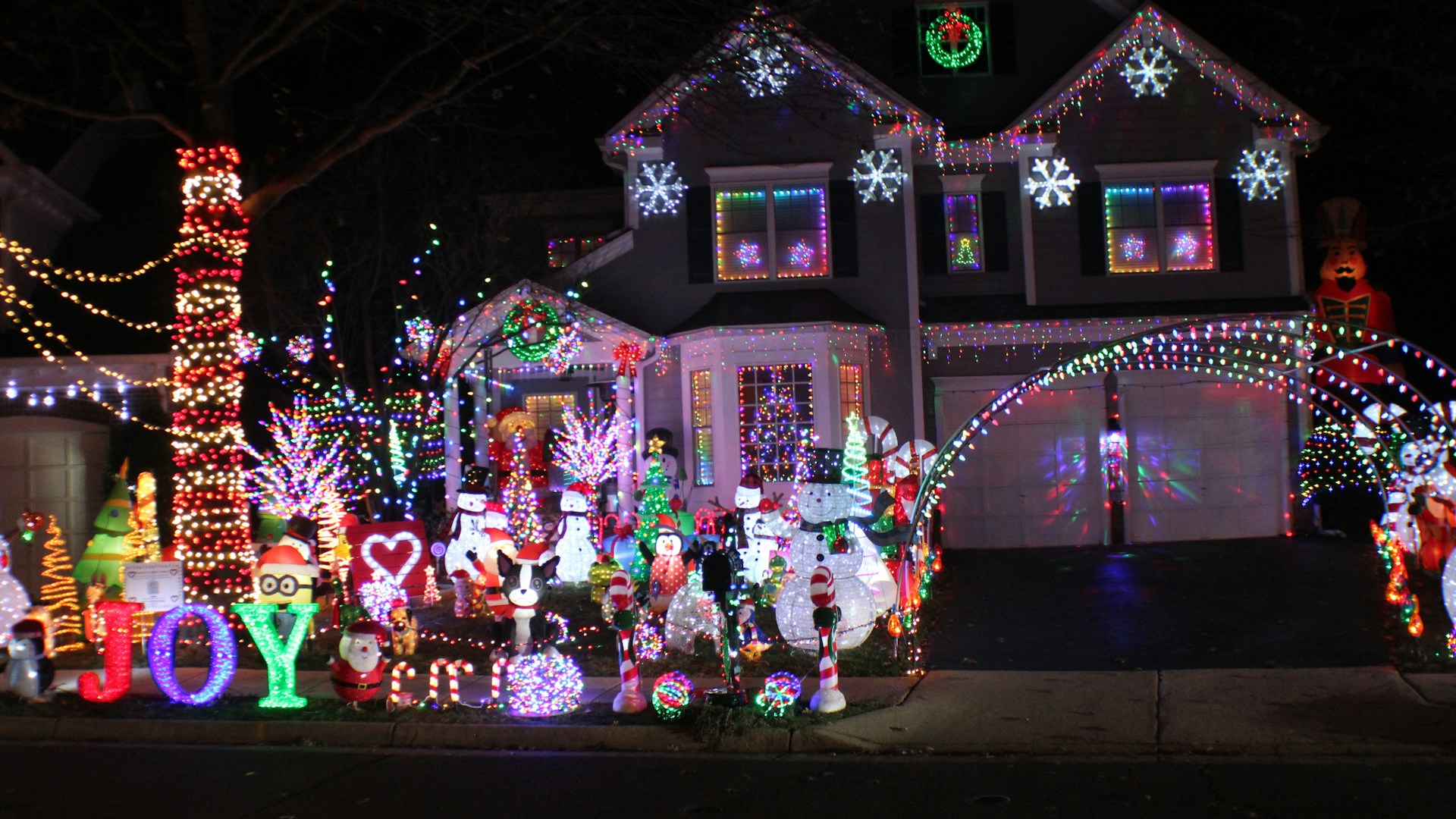
The fight started in September and has turned into a lawsuit, a vote of the whole neighborhood and a mountain of neighborly tension. It is a story about holiday cheer, private roads and who gets to decide what a yard can look like.
The HOA Warned Of $100 A Day Fines, Then Heuer Offered To Dim The Lights To 30%
Heuer lives in the Aero Plantation neighborhood, which has just over 100 homes, private roads and an airstrip. His display, called High Flying Lights, ran in 2025.
In September, the HOA ruled that the display violated restrictions on exterior lighting and signs. It warned of fines of $100 per day for future violations.
On September 16, Heuer’s attorney, Shira Hedgepeth, offered a compromise. The display would run at 30% of maximum brightness, and Heuer would remove the powerful moving-head lights, a yard sign and a banner.
The Board Rejected The Offer After A Fine Landed
On September 28, Heuer allegedly tested a powerful light fixture meant for his Halloween display. The next day, the HOA’s attorney imposed a $100 fine.
Three days after that, the board rejected the compromise. So there was a fine, and no deal.
Heuer Sued On October 6
On October 6, Heuer sued the Aero Plantation Association in Union County Superior Court. He asks a judge to invalidate the $100 fine, block improper enforcement and clarify the HOA’s authority.
His lawyer points to the covenants, which bar exterior lighting “directed outside the boundaries” of a lot. She argues the HOA is treating lights visible from the street as if they extended beyond the property.
The suit also says the governing documents allow 20 days to correct a violation, while the HOA threatened daily fines beginning after six days.
Traffic, Privacy And A Backup Of Six To Eight Cars
The neighbors have complaints too. Visitors have caused traffic and privacy concerns on the private roads.
In a November 2 letter, Heuer acknowledged the traffic. He estimated the longest backup stretched six to eight vehicles past his property, and he now posts a suggested driving route on his website, entering from New Town Road.
Three days after the lawsuit, the HOA adopted new parking and road-use rules, citing traffic, security, privacy and trespassing. The association’s president, David Arno, declined to discuss the dispute in detail in an October 30 email.
Two Amendments Could Change The Rules For Everyone
On October 29, the HOA sent out two proposed amendments. One would bar promoting properties as public attractions, or activities likely to generate substantial traffic from nonresidents.
The other would bar flashing, strobing or pulsing lights visible from neighboring properties, ban certain high-intensity beams and let the board set brightness limits and holiday display periods. It does not expressly exempt ordinary blinking Christmas lights.
Each amendment is voted on separately. Passing requires written approval from at least two-thirds of all lots in the association, not just two-thirds of the ballots returned, and signed ballots are due by 5 p.m. January 30, 2027.
Heuer Says It Feels Personal And Plans To Light Up Anyway
Heuer believes the restrictions are aimed at him. He says, “It’s very apparent that these people don’t want us to live here.”
He urged neighbors in his November 2 letter to vote against the amendments, and he says the couple plans to move after their youngest daughter graduates in June 2029. He says he intends to hold this year’s display despite the threat of more fines. “I just want to put on a show,” he says.
Know Your HOA Rules Before You Hang A Single Bulb
You do not need 60,000 lights to run afoul of a homeowners association. Plenty of neighborhoods have rules on when decorations can go up and come down, how bright they can be, and whether they can blink.
Read your covenants, conditions and restrictions, often called CC&Rs, before you buy new decorations. They are usually available from the management company or the county records office.
If you want to do something big, ask in writing before you start. Keep a copy of the reply, and ask who has authority to approve it.
If you get a violation notice, read it carefully. Many associations must give you written notice and time to fix the problem before a fine, and the time allowed is set out in your own documents and your state’s law.
Talk to your neighbors early. A friendly note, a map of where to park and a set time when the lights go off at night can calm complaints before they turn into a lawsuit.
If a dispute does grow, consider mediation, which is often cheaper than court. An attorney who handles community association cases can tell you where you stand. In North Carolina, homeowners associations are governed in part by the state’s Planned Community Act, and other states have their own laws.
More Stories You May Like
- After Over 5 Years With Only A Mini Fridge, Mobile Home Owner Gets A Refrigerator For $150, And The Total With Tax And Delivery Is Just $200
- Mobile Home Woman Turns A Food Pantry Haul Into A Fancy Pumpkin Cookie Display On A $3 Thrift Cheese Tray, After Staff Sold The Dome And Base Together For One Price
- Homeowner Rips Out His Own Pop Up Downspout Drain After Fearing Snow And Ice Would Freeze It Shut, Then Swaps In A Basin That Snaps Together With No Glue
Leave a Reply