Every fall the same argument breaks out over backyard fences. Do you rake it all up, or do you leave the leaves? A garden pro who posts as @powers_plants says there is a lot of confusion, and she has a clear answer: leave what you can.
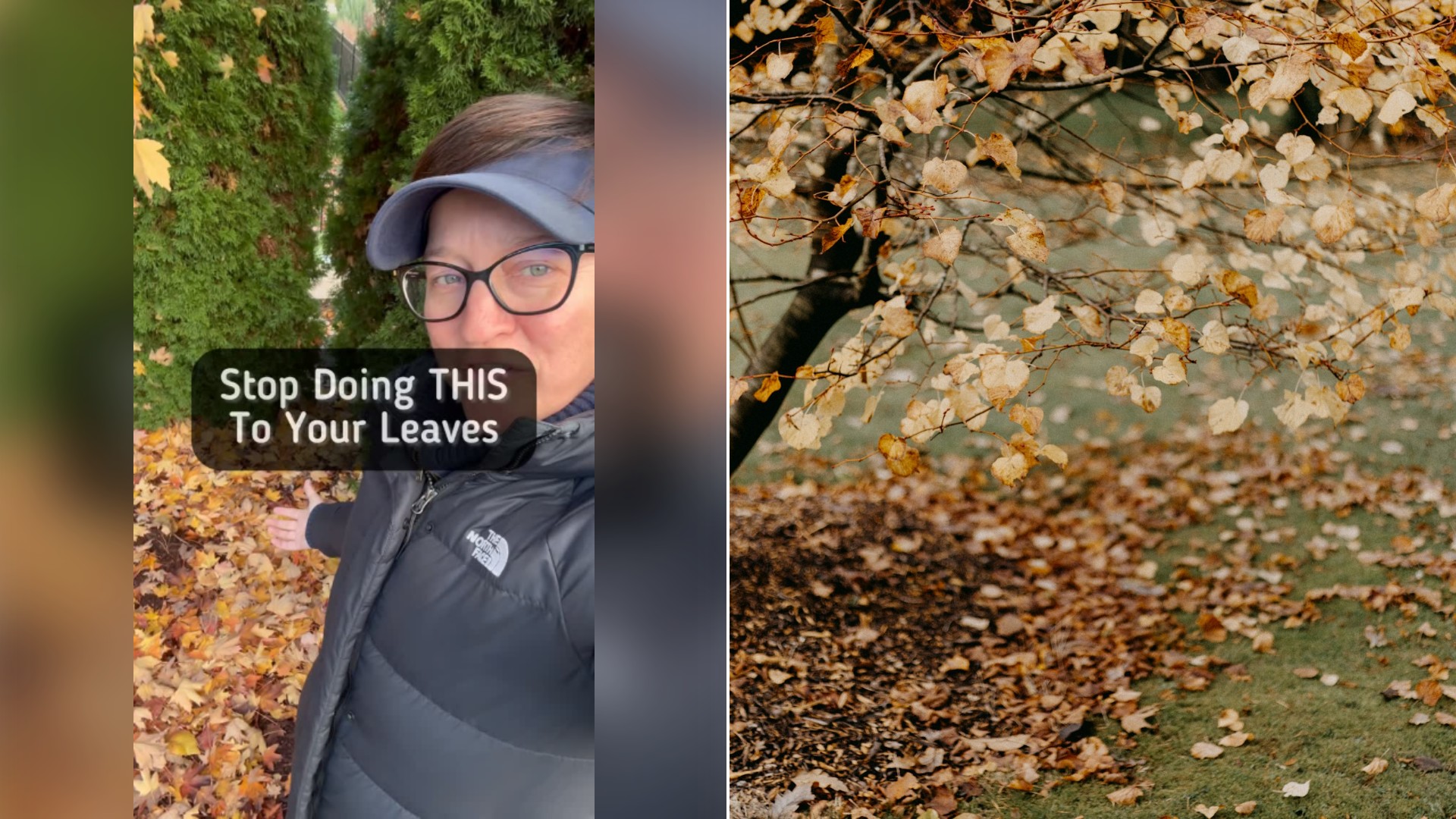
Her answer starts with a simple question, what is a leaf, and it ends with a surprising limit on how many should stay on your lawn.
View this post on Instagram
Every Leaf Is Packed With Nutrients The Tree Pulled Out Of Your Soil
A leaf, she explains, is built by the tree from nutrients its roots pulled from the soil, things like nitrogen, phosphorus, calcium, magnesium and even carbon. In nature those leaves fall and cycle back down into the ground so the tree can use them again next year.
Bag them up and haul them to the curb, and you break that loop. The nutrients leave your yard, and you may end up buying them back in a bag of fertilizer.
Leaves Turn Into A Sponge That Holds Water Through A Drought
Leaves are organic material, so microbes like bacteria and fungi break them down, along with invertebrates like earthworms. As they decompose they release nutrients and create humus, the organic matter that gives soil its structure.
That matters in practice. She says humus helps aerate the soil, and it holds water like a sponge, which helps through drought periods. Leaves on top also work as a mulch, keeping some warmth in the soil and insulating plant roots.
Bugs Spend The Winter In Your Leaf Pile, So Do Not Chop Them Up
The next big benefit is insect habitat. She says insects overwinter in the leaf litter in various forms, as eggs, larvae or even adults.
That leads to her one request. If you can, do not run the leaves through your mower to chop them up first, because you will be killing the insects hiding inside.
University of Wisconsin-Madison Extension in Dane County makes the same point in its guidance on leaving leaves. It says many local insects overwinter in leaf litter, and that mowing leaves into the lawn does recycle nutrients but kills any insects overwintering in them. The extension educator there considers raking leaves into garden beds the better choice.
A Loose 3 To 5 Inch Layer In Every Bed, But No More Than 15% On The Lawn
Here is her rule of thumb. Anywhere you have a bed that does not have turf grass, leave your leaves. She wants a 3 to 5 inch layer that stays nice and loose, so air and water can get through to the soil.
Lawns are different. “Don’t leave any more than about 15% leaf cover on your lawn or you will end up with lawn disease issues,” she says. If you have too many huge trees and not enough beds to hold the leaves, she says that is okay, and you should just leave what you can.
The Wisconsin extension backs up the lawn caution. It says to avoid deep drifts of leaves on lawns, and it points to a University of Wisconsin turfgrass disease lab study that found more snow mold under deeper leaf litter in lawns. Its own gardener spreads leaves 3 to 4 inches deep in front-yard garden beds as mulch.
Thick, Waxy Leaves Like Oak And Magnolia Take Their Time
She adds that some leaves are very thick and waxy, like certain oak leaves, sweet bay magnolia and some hickory species. Those take a long time to break down.
Her trick is to blow them into the back of the beds, where you do not have to look at them and they can stay for a long while. You might want to keep some of those leaves and not all of them. She admits there is some nuance.
The Wisconsin extension makes a similar distinction. It recommends leaves from oak, sugar maple, silver maple and birch because they curl into a fluffy layer, while large flat Norway maple leaves can form a thick mat over plant crowns.
Where Leaving Leaves Does Not Work
The same extension lists a few exceptions. Beds with invasive jumping worms, which eat fallen leaves, are one. Areas with many slug-prone plants such as hostas are another, and so are alpine plants in rock gardens. It also suggests taking diseased leaves, such as those from scabby crabapples or rusty lilacs, to a yard waste facility unless you diligently hot compost.
That also answers the common worry about looking untidy. A tucked-in layer of leaves under shrubs and across a bed reads as mulch, and it saves the weekends many homeowners spend raking, blowing and bagging every autumn.
Start With One Bed And See What Happens
Her bottom line is simple: “Leave what you can.” If you are new to it, she suggests trying just one bed and seeing what happens.
The payoff, in her words, is that it is good for your soil, good for your plants, good for insects and cheaper. You skip the bags, the trips to the curb and the fertilizer, and the wildlife in your yard gets a winter shelter. Spring cleanup can wait until the weather settles, since the Wisconsin extension advises holding off removing leaf litter until at least the third week of May in its area.
More Stories You May Like
- Homeowner Says Installing A 7,000 Plus Capacity Bat Roost Is The Funniest Way To Get Back At Your HOA Because Bats Are Federally Protected And Cannot Be Removed
- 17 Fall Garden Chores That Quietly Pay Off Come Spring
- Investor With 2,000 Property Deals Says Never Buy A New Build, Because A Home Worth £200,000 Gets Priced Near £260,000 Then Falls To Resale Value
Leave a Reply