Lawn guy Doc of How To with Doc was up in his hunting stand, sitting back and relaxing, when his phone buzzed at 8:15. It was a text from his wife: there were four cows on his front lawn.
Only problem was he does not own any cows.
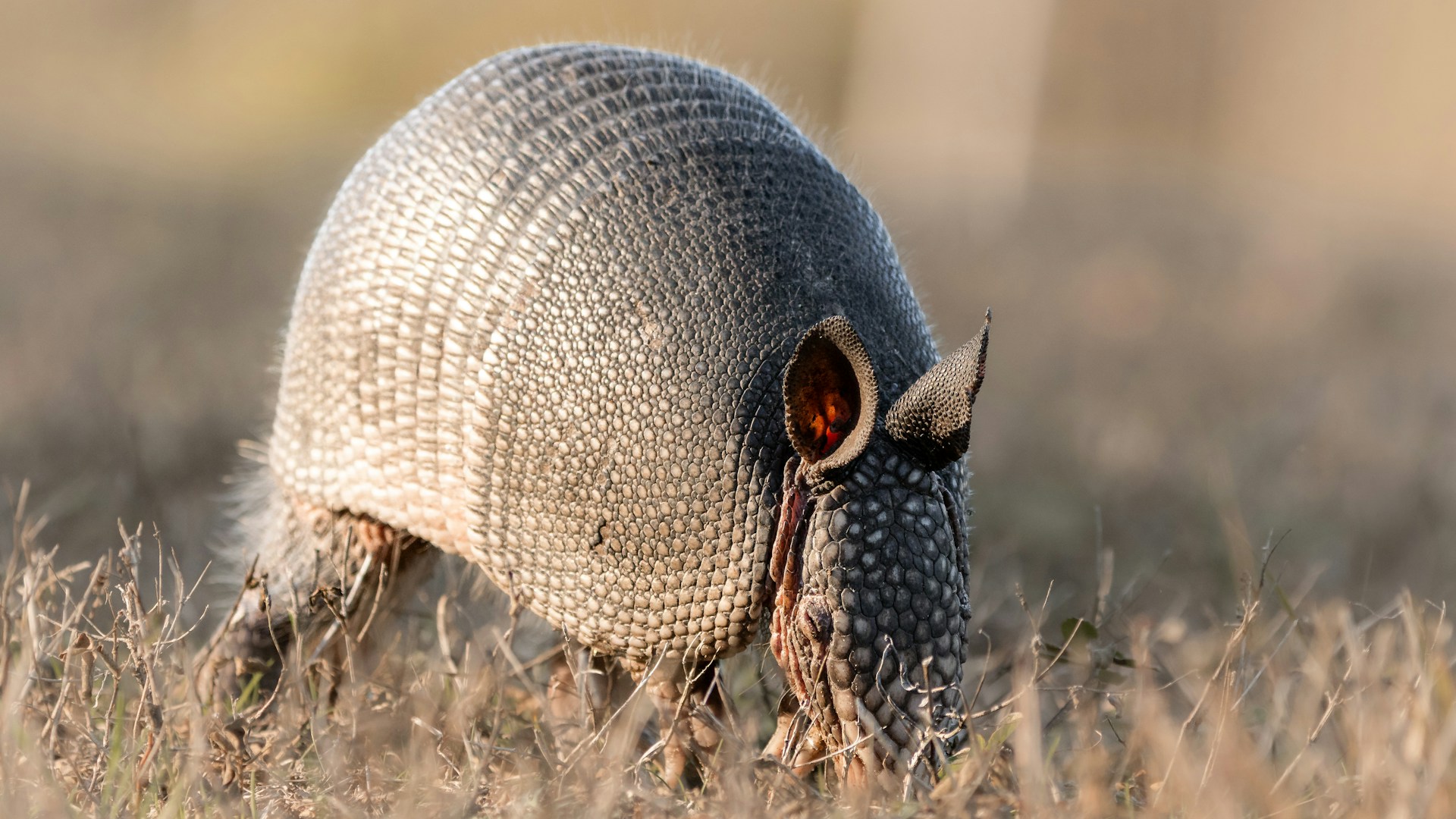
It is the kind of story that could only happen in the country, and it landed on a lawn that was already having a rough season. Before the cows arrived, an armadillo had been working over the same grass every night.
“It Looks Like Someone Took A Machine Gun” To The Lawn
Doc says the armadillo showed up every night and dug 10 to 15 big holes, until the yard looked like a minefield. Each morning his wife would tell him the critter had been out there again.
The holes were a clue. When you see deep, V-shaped holes in a lawn, Doc explains, you probably have grubs, and an armadillo digging them up. It could be a skunk, but it is usually an armadillo.
He had held off putting down grub treatment near the pond, but the damage finally got bad enough that he started working on it. In one of his fields, he found a big armadillo burrow and, in his words, pulled out some massive grubs.
His warning is short and useful: grubs eat your roots and kill your grass. If you still have time this time of year, he says, get the grub killer out.
Four Cows Munched His Bermuda, And The Reason Was The Drought
When he got down from the stand, the cows were chomping his Bermuda grass. He says you can still see the bite marks, because when cattle bite the turf they pull the roots up. Even after several cuttings, there were holes all through the lawn.
So where did the cows come from? A neighbor keeps young cows in the next field. The trouble, Doc says, is the drought. When the ground is bone dry, you do not get a good ground connection for an electric fence, so the fence does not shock the animals. They simply step over.
It happened twice that month, with cows on his pond berm and then on his front yard. He takes it in stride. You live in the country with farms all around, he says, and there is no reason to get upset. You just go with it.
A 7 Minute Watering Trick Kept The Grass Alive Through The Worst Drought In 60 To 80 Years
Doc says the property is in the worst drought it has seen in probably 60 to 80 years. A hurricane brought a nice 2 inches of rain, but his pond is still low. That matters because he uses the pond water to pump up to his fields for wildlife plantings and the garden.
His lawn kept going on short-cycle watering. Every morning at 4:30, he says, each of the two stations ran for 7 minutes. That is all the lawn got, and it looked great. He also put down a complete fertilizer and a grub treatment in that area.
Cooler temperatures are coming, too. He expects highs in the 70s and lows in the 40s over the next 10 days, which is the signal that fall lawn decisions are at hand.
Warm Season Lawns Should Go To Sleep, Cool Season Lawns Get A Nitrogen Push
For warm-season grasses, his advice is to shut everything off once the temperatures settle into the 70s. Let the lawn go to sleep naturally. Do not put down winterizers, do not do any treatments, and cut it at whatever length you like while it goes dormant.
Cool-season lawns are the opposite. This is when you do your fall nitrogen push, he says, with light coats of fast-release nitrogen every two or three weeks, then let the lawn rest.
Doc is not a believer in winterizers. They usually push one nutrient, either phosphorus or potassium, and without a soil test there is no reason to add more. More is not necessarily better, he says, so do not fall for them.
Why He Is Overseeding Even Though He Usually Says Don’t
He says he is not a believer in overseeding warm-season lawns with annual ryegrass. He likes the break when the lawn goes dormant, with no cutting for a while, so you are excited to get out there in the spring.
This year he is making an exception. Because he expects heavy winter rain, if not snow and ice, he wants active roots in the ground to prevent soil erosion. He has 400 pounds of annual ryegrass on a pallet and plans to seed the whole property.
What Every Homeowner Can Take From The Cow Story
Funny as the cows are, the lawn lessons hold up anywhere. Holes in the turf are a sign of what is happening underground, so treat the cause rather than just filling the holes. Grubs are a good place to start, since that is what drew the armadillo in the first place.
Watch your water as well. Short, early-morning cycles kept Doc’s grass alive when rain would not come. And match your fall care to your grass type: warm-season lawns rest, cool-season lawns get a light nitrogen feeding.
As for fences, a dry summer can turn an electric fence into a suggestion. If you have livestock next door, a friendly word with the neighbor before the cows come calling may be easier on the lawn.
More Stories You May Like
- After Over 5 Years With Only A Mini Fridge, Mobile Home Owner Gets A Refrigerator For $150, And The Total With Tax And Delivery Is Just $200
- Vancouver Landlords Crammed 17 Tenants Into 21 Makeshift Sleeping Rooms In A Single Family House And Now Face $93,800 In Penalties After An Order To Vacate
- Mom Signs On Her First Ever Home Buying It By Herself Four Years After Moving To Texas, Finally Giving Her Kids A Forever Home After Moving Every Two Years
Leave a Reply