When the leaves start to fall, plenty of homeowners roll the mower into the shed, wipe their hands and call the lawn season over. Lawn pro Daniel Hibbert says that is the worst thing you can do, because autumn is when your lawn needs you most.
Hibbert, who runs the Daniel Hibbert Lawn Expert channel, shot his lawn on the final days of October to show what a little effort does. He calls the results “mighty fine,” with crisp edges, tidy stripes and thick grass even in the shady, wet corner of the garden.
His advice boils down to five habits, and the first one has nothing to do with grass at all.
Keep The Mower Handy, And Book The Repair Shop Before Everyone Else Does
Hibbert’s first tip is to keep your mower accessible. A rotary mower, he points out, is more than a grass cutter. It doubles as a vacuum cleaner for leaves and twigs, and fitted with a roller it puts stripes in the lawn that make it look good this time of year.
It also helps with morning dew. A quick pass takes the moisture off the blades and, he says, keeps disease at bay.
Then comes his free-of-charge tip, and it is a good one. When the mower has finished its year, get it to the service shop for any repairs. The shop will appreciate the business, and your machine will be ready to pull out when you need it.
Wait until April and it is a different story. You pull the mower out, it will not start, and the shop says, in his words, “Sorry, we’re busy,” because everybody else has the same idea.
Leaves Left On The Lawn Block The Light And Invite Disease
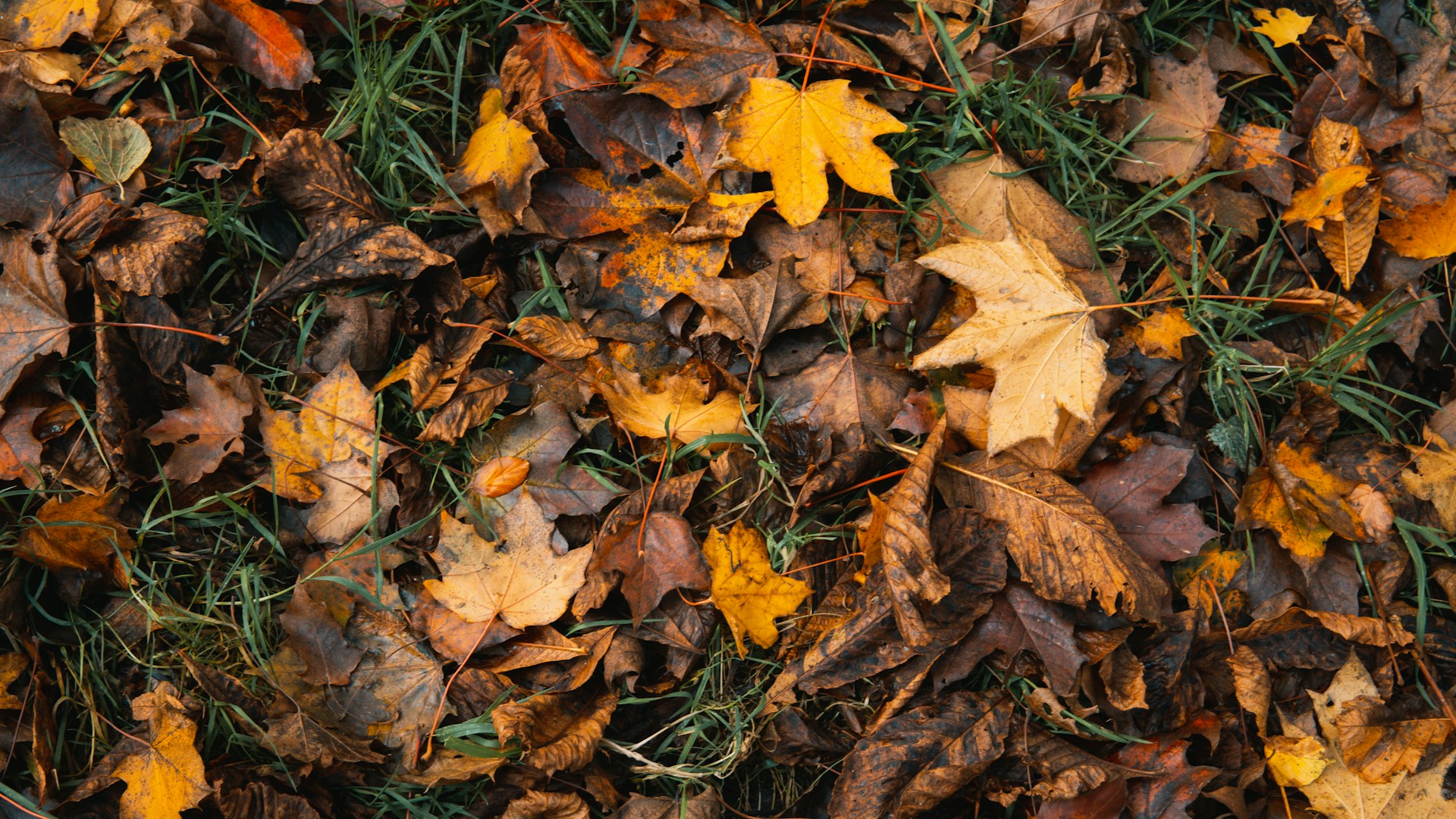
Tip number two is to keep the leaves off for as long as you can. Left in place, they block the light and trigger disease. Hibbert says you can end up with orange and yellow spots across the grass.
They also bring worms up to the surface. The worms pull the leaves down into the grass, and when you finally mow, the leaves sit half in the lawn and half out, which Hibbert says is not a good look.
Anything else sitting on the grass counts too. Plant pots and kids’ toys should come off for the same reason, since they leave marks and the grass beneath will not recover.
On camera, he gets the leaves up with the mower itself. One pass vacuums, cuts and puts in the stripe. He found it did a decent job because the leaves were dry, but small bits still sat deep in the grass.
So he swapped in a cartridge with prongs and set it high, just to comb the top of the lawn without digging into the soil. When he checked what came out, there were plenty of tiny leaves the mower had left behind, even though the lawn had looked clean. A blower, rake or brush will also do the job, he says.
Listen For “A Crunch” On The Edging Tool To Find The Paving Edge
Tip number three is to sort out untidy edges now, because they will last longer. Hibbert compares the lawn to a sheet of pastry that you keep rolling out with the mower, which spreads grass further and further. Over time, the grass creeps over the paving flags, sometimes an inch or two.
His trick is to listen for a crunch on the back of the edging tool. That sound tells you that you are right at the edge of the flag, so you are not cutting away more lawn than you need. Then he tidies up with a strimmer for a crisp finish.
Seen from the end of the garden in fading light, the edge looks lovely, and he says the striping adds to the effect. Edging in autumn is a smart time to do it, because the shape holds through the quiet months.
Keep Feeding It, And “Don’t Let The Weather Beat You”
Tip number four is to keep your lawn feeding program going. Hibbert lists a few key ingredients for this time of year: a little nitrogen, iron, magnesium, phosphate to help against disease and a compound called 5-ALA, which he says helps in low light conditions. He says it is already paying off, with the color in the grass looking absolutely beautiful.
Tip number five costs nothing. It is very easy, he says, to look outside at the wind, rain and cold and stay in. Go out and do what you have to do anyway. It is great for your mental health, and the lawn will appreciate it too. His motto is simple: keep going.
Not everything is perfect on his lawn. There are worm casts, some of them as big as his hand, and he says he tried several remedies that reduced their size but not their number. Those spots will need reseeding in the spring, but he is happy with how it looks for the end of October.
What This Means For Your Own Yard
The general consensus, Hibbert says, is that lawn care ends when autumn arrives, but it carries on. If you take only one thing from his advice, make it the routine: keep leaves moving off the grass, tidy the edges, keep feeding and show up when the weather is gray.
A few practical habits fit right in. Clear the leaves in small, regular passes rather than letting them pile up for weeks, and avoid dragging heavy furniture or planters across the turf. Mow only when the grass is dry, and raise the cutting height a notch as growth slows.
And before you put the mower away for the winter, call the shop. A quick service in the quiet season costs the same as one in April, but you will not be standing in a line of people with the same bad idea.
More Stories You May Like
- Home Buyers Face A $2,004 Monthly Payment, Up 12.8% In A Year, As Newly Pending Listings Fall 16.8% In The Steepest Drop Since 2023
- Meg Ryan Sold Her Montecito Home For $16.8 Million, Then The Buyer Relisted It At $21.9 Million, And Now It Has Finally Sold For $18 Million
- Travis Kelce Pays $7,500 To Repair A Damaged Sewer Line To Be A Good Neighbor, Then Neighbors Warn His 50 New Evergreens Will Wreck The 100 Year Old Clay Pipe
Leave a Reply