Ten guests had just checked out of her Airbnb after four days, and the laundry was piling up. Short-term rental host @emmeworks went to start the first load and found the washer would not run.
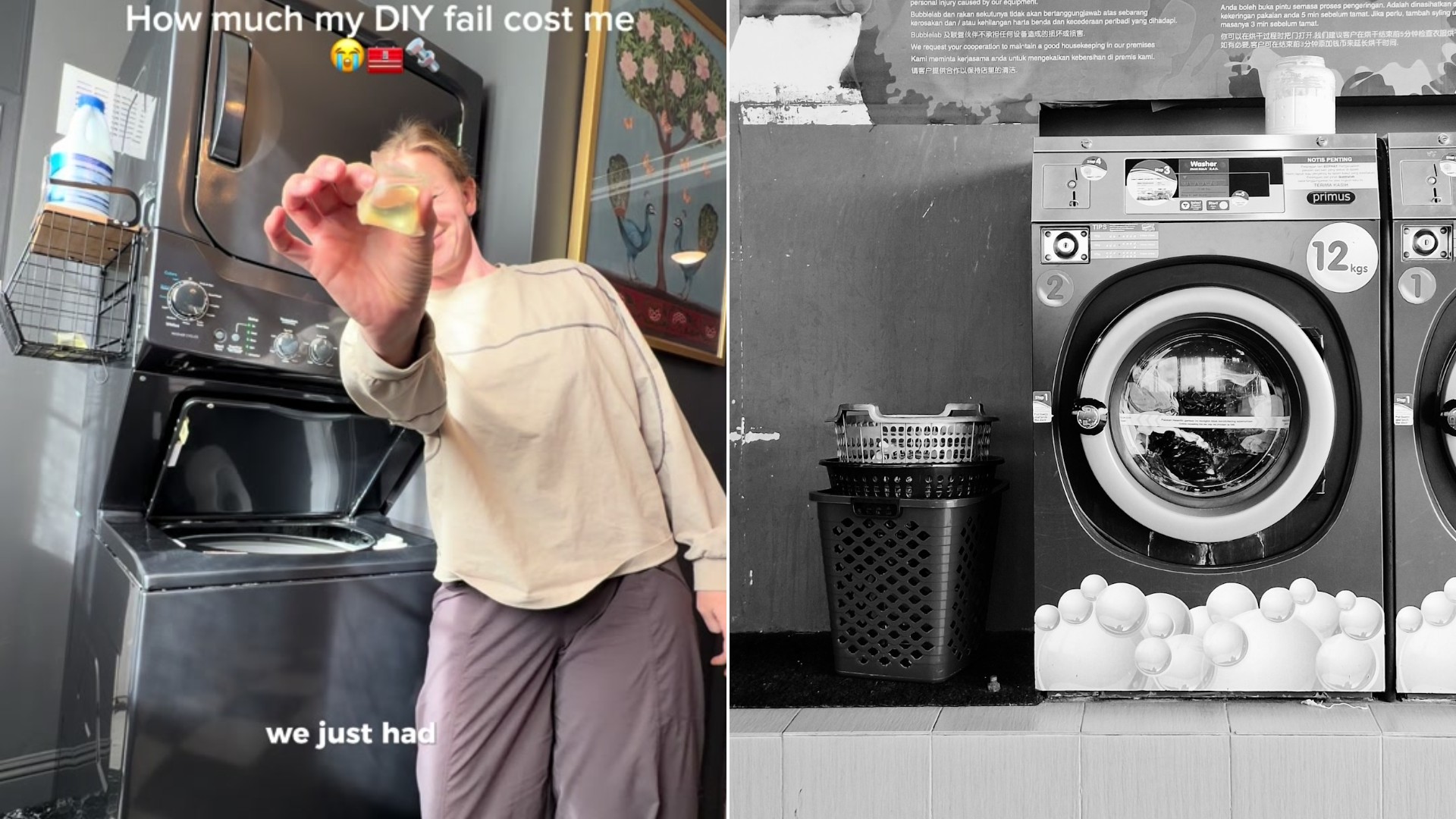
“Insanely inconvenient” is how she describes it, since the whole place had to be turned over within the next 48 hours.
What happened next is a lesson in how fast a small repair can turn into a big bill when the clock is ticking.
@emmeworks
The Lid Would Not Lock, So She Tried Everything Short Of A Repairman
Her diagnosis was quick. The washer seemed to be refusing to start because the lid would not lock. She unplugged it first, hoping it would simply reset itself, but “that clearly didn’t work.”
So she opened it up. “At this point, I was feeling very confident that I could fix this,” she says.
She read the manual, which said she could hard reset the machine, and she did exactly that. It made no difference, so she took the washer apart.
After A Few YouTube Videos, She Was Sure The Whole Lock Assembly Had To Go
Watching a few repair videos convinced her that “the whole lid locking mechanism needed to be replaced.” Inside the machine she found what she describes as a sock and a dog treat, but clearing them out and resetting everything “did nothing.”
The part itself, she says, costs less than $70, and it “looked so easy to fix.” The trouble was timing. She was leaving town the next day and had no time to order it and wait for it to arrive.
Ten Guests Without A Washer Was “A Recipe For Disaster”
With guests about to check in, she did the math on the alternative. “10 guests without a washing machine is a recipe for disaster,” she says, so she called a maintenance company.
Then came the number. “The quote to fix it is over $500,” she says. She adds that she is annoyed because she knows she could have fixed it for under $100.
Her closing line will ring true for plenty of homeowners. “It’s just always shocking how much more expensive it is,” she says. “But at least the washer’s fixed now.”
Why A Washer Lid Lock Is A Common Culprit
Most modern washers will not start a cycle, and certainly will not spin, unless a switch tells the control board that the lid or door is closed and locked. That safety feature keeps the drum from spinning while someone’s hand is inside.
The lock assembly takes a lot of abuse. It gets opened and slammed thousands of times, and it can be gummed up by detergent residue or jammed by small items that slip past the drum. If the machine cannot confirm the lock, it simply stops.
That is why a washer can look perfectly healthy and still refuse to run. Often the machine is fine and a single small switch is the problem, which is exactly why the part is cheap.
The Real Price Gap Is Time, Not Parts
Look closely at her numbers and the story is not that the repair company charged too much for a $70 part. It is that she was buying speed. A same-week service call, labor and a rush on the part all land on a single quote.
Hosts and landlords run into this constantly. The cost of waiting a few days for a part is often a few days of lost laundry. The cost of not waiting is the premium for somebody to show up now.
How To Decide Between Fixing It Yourself And Calling Someone
Before you pick up a screwdriver, always unplug the machine, and never bypass a lock or safety switch to force it to run. Those parts exist to protect hands and fingers.
Check the simple things first. Make sure nothing is caught in the lid area, wipe the latch clean, and look up the machine’s model number to see what the error code or behavior usually means. Many manuals list a reset procedure, as hers did.
If you do decide to replace a part, order it the moment you diagnose the problem, and confirm the part number against your exact model before you pay. A near match that does not fit costs you more time than it saves.
Finally, if you run a rental, think ahead. Keeping a spare lock assembly for your most-used machine, or having a local repair company’s number saved before something breaks, can turn a $500 emergency into a routine fix.
A Few Habits That Keep Turnover Days From Becoming Emergencies
Short-term rentals run on tight schedules, so laundry is one of the first things to break the rhythm. A second set of linens for every bed means a broken washer does not stop a check-in.
Many hosts also keep a laundromat or a nearby laundry service in mind as a backup. Even one afternoon of outside laundry costs far less than a rush repair quote.
Finally, keep the model number, serial number and manual for each appliance in one folder. When something fails, the first question any repair company asks is what machine it is, and having the answer ready saves a day.
Her experience also shows a good habit for any property owner. When the turnaround window is tight, decide early how much your time is worth, because the decision gets a lot more expensive on the last day.
More Stories You May Like
- Woman Buys A Second $300 Skeleton Horse For Her Christmas Yard, Then A Neighbor’s Letter Calls It Halloween Junk And Ends With My Name Is Not Karen, So She Fires Back You Just Earned That Name
- Jensen Beach Mom Returns To A House Filled With Sewage 4 To 6 Inches Deep, Has No Flood Insurance Because The Area Is Not A Flood Zone, And Says Officials Told Her Water Pumped From Port St. Lucie Added To The Flooding
- Tulsa Nonprofit Opens 75 Furnished Cottages On 23 Acres Donated By Catholic Charities Five Years Ago After Raising More Than $26 Million, And The First Residents Moved In On Friday With Gardens, Orchards And Chickens Still To Come
Leave a Reply