Most buyers picture a brand new house as a clean slate, with nothing to worry about and nothing yet gone wrong. Home inspector @inspector.jordan pulled up to one such new build and found a very different scene, with water going places water should never go.
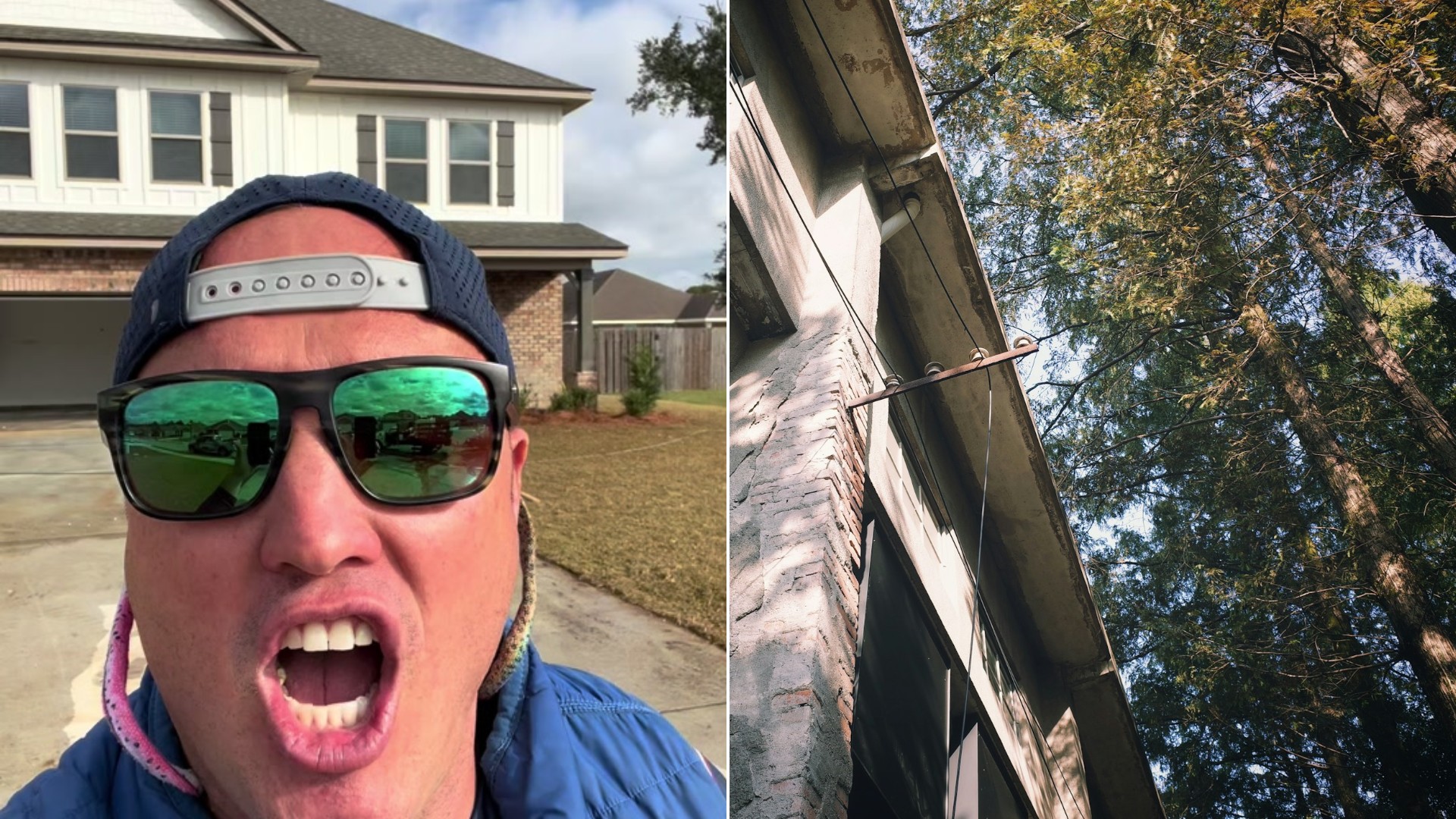
Power washers were running on site, cleaning the house, when he arrived. “Love it when you pull up to a new build inspection like the one behind me and there’s power washers on site cleaning the house,” he says, before adding, “let’s have some fun.”
What followed was a walk through a house that was getting soaked from the outside in, and he narrates every step with a dry sense of humor.
@inspector.jordan
Water Was Pouring In Through The Front Door, The Glass And The Back Door
Inside, the inspector eyes the water on the floor and jokes that it is “a great spot for all the duckies.” Then comes the real trouble. “Water is just pouring right in from the front door,” he says.
A moment later he points out that it is “even coming in through the glass,” and then through the back door as well. His quip about the doors is that they could at least have picked the same color.
That is a lot of leaks for a house nobody has lived in yet. Exterior doors and glass are supposed to shed water, and a pressure washer is one of the few things that tests them harder than a rainstorm does.
Siding Crew May Have Hit The Refrigerator Line, So They Cut A Hole In The Wall
Further in, the inspector notices a section of wall that has been cut open. His read is that the siding crew “might have hit this refrigerator line,” which would explain why the opening had to be made.
He keeps the jokes going, noting that you might have to move the toilet paper holder over a little, but think of all the toilet paper you could store in the opening. Then he looks at the water on the floor and says, “at least it’s soapy water.”
A Light Switch Trick And Concrete Splatter Even The Pressure Washer Missed
Not every problem involves water. In the hall, he shows the switch for the hall light and explains that “if you want this one to work you got to make sure this is in the down position.”
A switch that only works when it sits in one particular position is the kind of detail a new owner would find out about the hard way. He also points to concrete splatter on surfaces, saying “not even the pressure washer” could get it out, and then spots more of it in other places.
Cracked Brick Columns And Weep Holes That Are Nowhere To Be Found
Outside, the inspector says he is going to need a ladder. In the back he finds cracking on the brick columns, and he counts them out: “one, two.”
Then he turns to the weep holes. He finds a couple of them “right on the ground,” but along another stretch of brick there are none at all. “Where’s my weep holes?” he asks.
He also notes that the layout usually looks more centered on the column. Up on the roof line he sees a missing strip of shingle, and the video wraps with him asking what a certain piece of the house is even for.
What A Weep Hole Does And Why Inspectors Hunt For Them
Weep holes are small openings, usually left in the mortar joints along the bottom course of a brick veneer wall. Their job is simple. Water inevitably gets behind brick, and those openings let it drain out instead of sitting inside the wall.
When they are missing or buried, moisture can stay trapped behind the brick, which over time can lead to damp framing, mold and deteriorating materials. That is why an inspector who finds a long stretch of brick with no openings at the base will point it out.
Why Pressure Washing A New House Is Riskier Than It Looks
A power washer feels harmless on a driveway, but on a house it can push water behind siding, around window and door trim and into wall cavities. Siding makers generally advise a low-pressure rinse, wide fan tips and spraying downward rather than up under the laps.
Water that gets behind the siding is not always visible right away. It can soak insulation and sheathing and show up weeks later as stains or a musty smell, long after the builder has moved on to the next lot.
Doors deserve the same care. Weatherstripping, thresholds and the sealant around glass are built to handle rain falling, not a concentrated jet fired at close range.
What Buyers Should Do Before Closing On A New Build
Hire your own inspector, even for a brand new house. A builder’s final walkthrough is not the same as an independent inspection, and problems like missing flashing, loose fittings and drainage gaps are far cheaper to fix before you own the place.
Go along if you can. Ask the inspector to explain anything you do not understand, and ask for photos of every issue in writing so that you have a record to hand the builder.
Run through the basics yourself too. Flip every light switch, run every faucet, check the corners of ceilings for stains and look at the base of the brick for those small drainage openings.
Finally, read your builder warranty and mark the date when it expires. Many builders cover problems for the first year, so a second inspection near the end of that window can catch issues that only show up after a few seasons.
A new house is supposed to be the easy one. As this inspector’s walk-through shows, the easy part ends the moment somebody points a power washer at the front door.
More Stories You May Like
- HOA Tells Elderly Neighbor To Re-Sod Her Yard For Thousands, So He Scalps The Weeds And Tests The Soil Himself To Get The HOA Off Her Back
- New York Landlords Who Miss The 14 Day Deadline To Return A Deposit Or Send An Itemized Statement Must Hand Back The Entire Deposit, Damage Or Not
- Buyers Who Waived Their Home Inspection To Win The House Say They Are Already Close To $20,000 In Repairs, And One Sewer Problem Alone Was Quoted At $12,000 To $15,000
Leave a Reply