Every older house has them: the little round holes drilled through the hardwood where a cable or phone line once snaked up from the basement. Years later the cable is long gone, the television moved to another wall, and the hole is still sitting there, collecting dust and the occasional dropped earring.
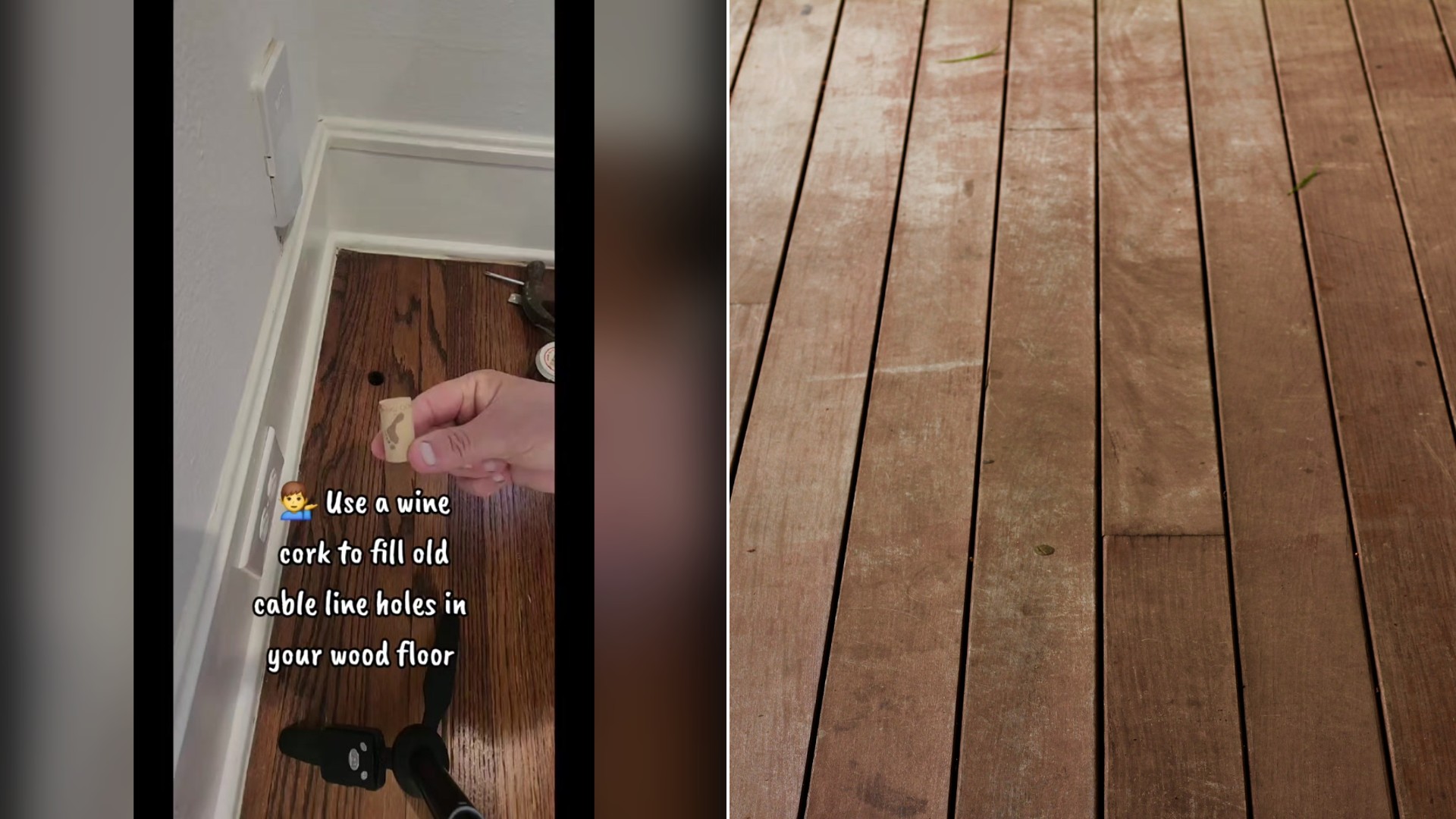
Wood floor specialist @thewoodfloorpro has a surprisingly humble fix for it. In a short TikTok, he shows how an ordinary wine cork can fill those leftover cable holes in a wood floor, a DIY fix that most homeowners can try.
@thewoodfloorpro
A Pro Reaches For A Wine Cork Instead Of A Tube Of Filler
Anyone who has tried to hide a hole in a hardwood floor knows the usual options are not great. Store bought putty tends to shrink, crack, or turn a shade that matches nothing in your house. A cork, on the other hand, is a natural wood product that is already the right size for many of those holes.
That is the heart of the idea. A cork is firm, dense and shaped like a plug, so it fills the space the way a dowel would. You are not smearing something over the problem. You are putting a real, solid piece of material into the hole.
The trick appeals to people for the same reason a lot of old-fashioned household tips do. Most kitchens already have a few corks in a drawer, and nobody has to make a special trip to the hardware store.
Why Those Cable Holes Bother Homeowners More Than You Would Think
A hole in the floor is not just ugly. It lets air from the crawl space or basement drift up into the room, and it can carry dust, damp and even the smell of a musty cellar. In a cold climate that little draft can be noticeable on bare feet in January.
Holes also catch things. Pet hair, crumbs, pennies and the tips of stiletto heels all find them. A plugged hole is simply easier to live with.
There is also the matter of resale. Buyers and inspectors notice details like unfilled drill holes in a floor, and a neat repair says the home has been cared for.
How To Tackle A Cork Plug Repair Yourself
Start by looking closely at the hole. Measure its width with a ruler or a drill bit. Corks come in different sizes, and a standard wine cork is tapered, so one end is slightly narrower than the other. Pick the end that gets you a snug fit.
Clean out the hole with a vacuum and a small brush so there is no grit in the way. A little wood glue on the sides of the cork helps it stay put, but keep it light so it does not ooze out and stain the surrounding boards.
Tap the cork in gently with a small hammer or the handle of a screwdriver. Then use a sharp utility knife or a fine saw to trim the top flush with the floor. Take your time on this step, because a cork that sits proud of the floor will catch socks and a cork that sits too low will collect dirt.
Getting The Finish To Blend In
Cork has its own color and grain, which can stand out against oak, maple or pine. If your floor has a finish on it, a touch of wood stain on the cork top, applied with a small artist brush, can help it blend in. Test the stain on a spare piece of cork first, since cork soaks up color differently than wood.
Once the stain dries, a thin coat of the same finish used on the rest of the floor will seal it. Water based polyurethane is a common choice for homeowners because it dries fast and has less odor. Follow the directions on the can and let it cure fully before you put furniture back.
On an unfinished or well worn floor, you may not need any stain at all. Cork often looks quite natural beside older boards with some character to them.
When A Cork Is Not The Right Tool
Not every hole is a good candidate. Very large holes, say bigger than the cork you have on hand, call for a proper wooden dowel or a patch of matching wood. Holes with cracked or splintered edges may need a little wood filler around the plug to look tidy.
If the floor is nailed down over a subfloor and the hole sits near a heating vent or a plumbing line, make sure the plug will not block access to anything you may need to reach again. A quick look from below, if you have a basement, will tell you what is underneath.
Valuable or antique floors deserve extra caution. If you have wide plank pine from the 1800s or a custom inlay, a floor refinishing professional can match species and age far better than a cork can. Spending a little on an expert is often cheaper than a bad repair that has to be sanded out later.
Other Small Floor Fixes Worth Knowing
While you are down on your knees with a cork and a brush, it is worth checking the rest of the boards. A squeaky spot can often be quieted with a few finish nails or trim screws driven through the board into a joist. Light surface scratches can sometimes be buffed out with a bit of furniture wax or a colored touch up marker.
Felt pads under chair and table legs prevent most of the dents and scrapes that send people shopping for a refinishing crew. Wiping up spills quickly and using a damp, not wet, mop will keep the finish alive for decades.
Professionals who spend their days around hardwood often say that small repairs done early save big repairs later. A single plugged hole will not change your life, but the habit of fixing little things right away keeps a floor looking good for generations.
The Takeaway For Old House Owners
The wine cork trick works because it respects what wood floors are made of. It is cheap, it is neat, and it is something most people can do after supper with tools from the junk drawer.
Next time you pour a glass and pull the cork, do not toss it. You may have just found the free repair part you needed for the hole that has been bugging you for ten years. If it works, you can tell your neighbors you learned it from a pro.
More Stories You May Like
- Plumber Shows A Double Wall Copper Drain In A Custom Utah Home That Steals Heat From Shower Water To Preheat The Cold Line Going To The Water Heater
- Lawn Pro Says Throwing Grass Seed Down In Mid November Is A Trick That Works, But Get The Timing Wrong And You Waste All The Seed
- Texas Town Votes 5 To 1 To Approve An 88 Acre Data Center About 500 Feet From Keller Backyards After A Restraining Order And A Settlement That Adds Noise Limits And $1.8 Million For Monitoring
Leave a Reply