Old farmhouses come with charm, creaky floors and, very often, heating bills that make the owners wince. After a costly winter, the folks behind @themapleacres went looking for where all that warmth was going.
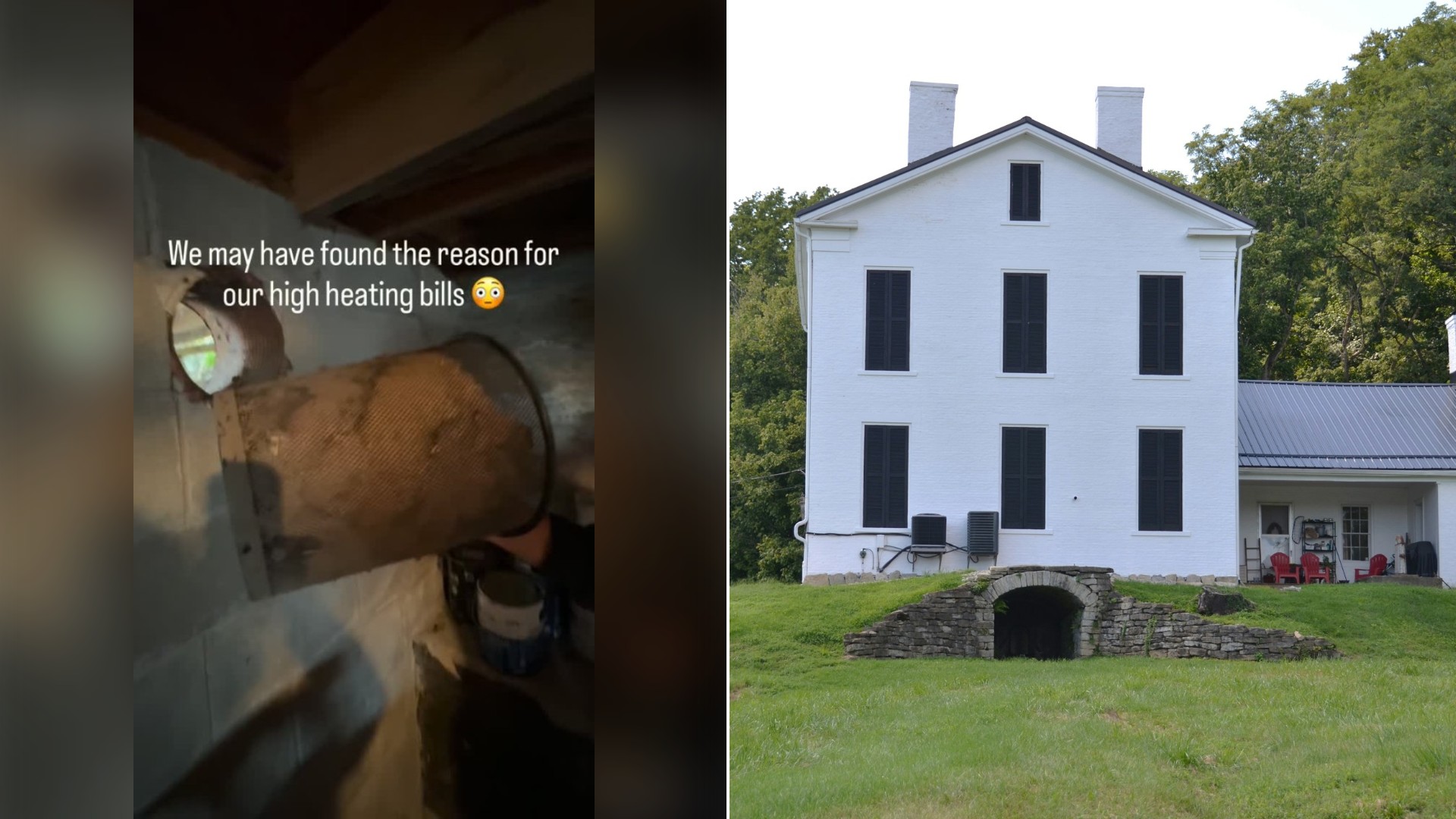
What they found was an old chimney opening down in the basement, sitting there letting heat escape. It is the kind of hidden hole that can sit unnoticed for decades in a house that has been around for generations.
For anyone who has opened a heating bill and wondered how it got so high, the discovery is both a relief and a little embarrassing. The leak was not in the furnace or the thermostat. It was in the bones of the house.
View this post on Instagram
The Hidden Hole Behind A Stubborn Heating Bill
Older homes often have chimneys that once served a coal furnace, a wood stove or an old boiler. When the heating system was swapped out, the chimney stayed, and the little openings that once connected to it, sometimes called thimbles or flue openings, were often left behind.
If that opening is not sealed properly, it is a direct path between the inside of the house and the outdoors. A chimney is built to move air upward, and it does that job whether or not anyone is burning anything.
The owners shared their find with followers who were likely nodding along. Anyone who lives in a house from the early or middle twentieth century knows that odd corners and unmarked openings turn up all the time.
Why Warm Air Leaves Through The Basement
Warm air rises, and in a cold climate that rising air pulls cold air in through low openings to replace it. Building scientists call this the stack effect, and it gets stronger as the weather gets colder.
A basement opening to a chimney is about the worst place for a leak, because it acts like an open door at the bottom of the stack. Warm air that has leaked into the upper floors is pulled out the top, and fresh cold air is drawn in below to take its place.
That is why a house can feel drafty around the ankles, with cold floors and a furnace that never seems to catch up, even when the walls look solid.
What Air Leaks Really Cost
The EPA’s ENERGY STAR program estimates that homeowners can save an average of 15% on heating and cooling costs, or about 11% on total energy costs, by air sealing their homes and adding insulation in the right places. Air leaks are a large part of that savings.
Plenty of the biggest leaks hide in places people rarely look, like basements, attics, rim joists and around chimneys. The U.S. Department of Energy lists unsealed chimney openings and gaps around plumbing and wiring among common sources of air leakage.
A single large opening can cost more than a dozen small cracks put together. Finding it can be the best return on a weekend of work.
How To Look For Your Own Hidden Leaks
On a cold, windy day, walk the basement with a lit stick of incense or a smoke pencil and watch which way the smoke drifts near the chimney, the sill plate and any pipe or wire penetrations. Smoke that bends or gets pulled sideways marks a leak.
A flashlight helps with inspecting the chimney base. Look for cleanout doors that do not close tightly, old openings covered by a loose metal plate, and gaps where the chimney meets the floor framing.
Another trick is to feel for cold drafts on the first floor near the walls and floor registers. A basement leak often shows up upstairs as a chilly spot nowhere near the actual hole.
Seal It The Right Way, And Do It Safely
Before plugging anything, make sure it is not connected to a flue that still serves a furnace, boiler, water heater or wood stove. Blocking a live flue can force carbon monoxide into the house, which is a serious danger.
If the opening is truly abandoned, a metal thimble cap or a piece of sheet metal sealed with high temperature caulk or furnace cement is a durable fix. Foam board and loose paper might slow a draft, but they are not fireproof and they are not a lasting repair.
A licensed chimney professional can tell you what each opening connects to and whether the chimney is safe to close up. Installing carbon monoxide detectors on every level of the house is a smart step either way.
Cheap Fixes That Pair Well With Sealing The Hole
Once the biggest leak is closed, look at the rim joist, the band of wood that sits on top of the foundation wall. Sealing it with spray foam or caulk and adding rigid foam board is one of the most effective upgrades in an old basement.
Weatherstripping around basement doors and windows is the next stop, and it costs very little. Heating and cooling professionals often say the order is to seal air first and add insulation second, since insulation does not stop moving air on its own.
One Small Fix, A Big Change For The Next Winter
Fixing a hole like this will not make an old farmhouse airtight, but it can take the edge off a cold house and a hot bill. Sealing the biggest leak first is the cheapest way to get the biggest result.
If your heating bills climbed last winter, do not just blame the weather or the fuel price. Take a flashlight down to the basement and look at the chimney, because that old opening might be the reason the house never feels warm.
More Stories You May Like
- Family Whose Water And Sewer Bills Ran About $75 To $150 Each Gets Hit With A $1,000 Jump In One Month After A Digital Meter Install, And Inspections Find No Leak
- Tenants Leave Behind An Illegal Wall, Screws Through The Tile And A Filthy King Bed After One Year, So Would You Give Back Their $2,500 Deposit
- Neighbors Sue After A Company Cuts About 250 Trees From A Forest Meant To Shield Their Homes From Buried Coal Ash, And A Federal Jury Is Now Deciding Whether It Owes $3.3 Million
Leave a Reply