A brand new house is supposed to be the easy choice. Nothing to repair, nothing worn out, no previous owner’s shortcuts hiding in the walls. Home inspector @homecheckpro walked through a new construction house sold as top quality and found a list of problems that say otherwise.
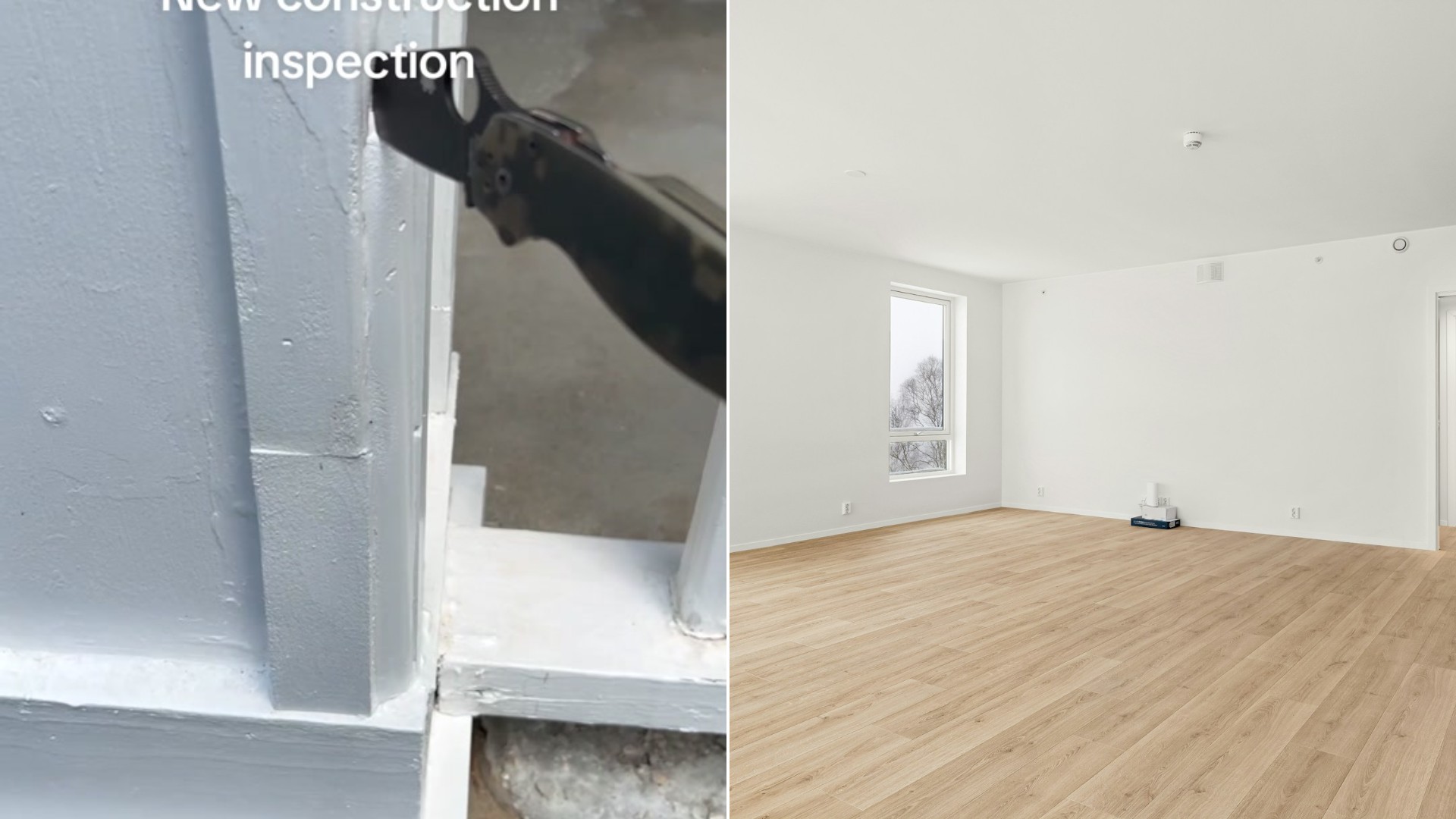
On his walkthrough he points out crooked electrical outlets, messy caulk and floors that do not line up, with gaps of half an inch and a quarter inch where flooring meets flooring.
None of it is exotic. That is the whole point, because these are the everyday details a buyer can see for themselves once someone tells them where to look.
@homecheckpro
Crooked Outlets Are Small, Until You Count Them
An outlet that sits crooked in the wall plate is a cosmetic flaw on its own, and any single one is easy to fix. But the inspector shows it as a sign of how carefully the finish work was done, and a house with crooked outlets in one room often has more of them in the next.
Outlets are installed in two stages. An electrician sets the boxes and wiring before the drywall goes up, and the devices and cover plates go on after painting. Boxes set at slightly different depths, or devices screwed in without leveling them, show up as a plate that tilts.
Check for plates that do not sit flush against the wall too. A loose or tilted device can mean the box was set too deep or too shallow, which is worth having an electrician look at.
Messy Caulk Tells You Who Was Rushing
Sloppy caulk is one of the quickest ways to read the quality of a finishing crew. Wide, wavy lines around tubs, trim and window frames, with smears on the surrounding surface, suggest the work was done fast and never cleaned up.
Caulk is not only about looks. Where it joins a tub to a tile wall, a bead with gaps lets water slip into the wall and cause trouble nobody sees until later.
A good caulk line is thin, even and continuous. If you can see gaps, pinholes or a bead so thick it sits like a rope, ask for it to be redone before you close on the house.
Floors Half An Inch Off Are Not A Rounding Error
The inspector notes floors that are off by half an inch in one spot and a quarter of an inch in another. Gaps and height differences like that are noticeable underfoot, and they are the kind of thing that catches a toe or a vacuum cleaner.
Where two flooring types meet, a transition strip is meant to cover a small height difference. Half an inch is a big step for a floor that was supposed to be level when it was put in.
Uneven floors can also point to a subfloor that was not leveled properly, so it is fair to ask what is underneath. A builder should be able to explain how a difference like that happened and how it will be corrected.
Why New Construction Needs A Second Pair Of Eyes
Many buyers assume the local building inspector has already checked everything. In fact, a municipal inspection looks at whether work meets the building code at certain stages, and it is not a detailed review of finish quality.
A builder’s own walkthrough, often called a punch list inspection, is focused on getting the house closed. An independent home inspector works for the buyer and has no stake in the sale going through.
The American Society of Home Inspectors and other industry groups recommend that buyers of new homes hire an independent inspector. Many suggest doing it before closing, and some also recommend inspections at stages like the framing, before drywall covers the walls.
How To Use The List Once You Have It
Take the inspector’s report and turn it into a written punch list for the builder, with photos and room by room notes. Written lists are harder to ignore than conversations.
Ask for a date by which each item will be fixed, and hold back from closing until the items that affect safety, water and structure are finished. Cosmetic items can often be handled after move in, but get the promise in writing.
Read the builder warranty too. Many builders offer a short term for workmanship, a longer one for major systems and a much longer one for structural defects, and the exact terms vary by company and state.
Walk The House Like An Inspector Would
Bring a small level, a flashlight and a phone to take photos. Hold the level against outlet plates, door frames and counters, and take a picture of anything that looks off.
Turn on every light and faucet, flush every toilet and run every appliance, because many problems only show up when something is in use. A list of small issues is easier to get fixed when it is organized by room.
A New House Is Not The Same As A Perfect House
Nobody expects perfection, and every house has a few flaws. What matters is whether the problems are small and fixable, or signs of a builder who was careless.
The walkthrough shows that being sold as top quality is a promise worth testing. Before you sign, go through the house with a flashlight, a level and an inspector, and see whether the work matches the pitch.
More Stories You May Like
- Inspector Walks Through A Brand New Home And Finds Two Showers That Are Not Watertight, Loose Window Trim And Debris Already In The Drain
- About 265,000 Sharper Image Tabletop Fire Pits Sold For $30 To $50 At Home Depot, Lowe’s, Target And Walmart Are Recalled After Ignited Fuel Escaped And Caused Third And Fourth Degree Burns
- Safety Agency Warns Owners To Stop Using Northlight Tabletop Fireplaces Sold At Target, Walmart And Home Depot For $35 To $90, And The Company Has Not Agreed To A Recall
Leave a Reply