Some do-it-yourself jobs are just messy. Others can put a whole family at risk. A reel from @american_plumbing_academy_ shows a homeowner’s handiwork on a water heater, where a gas line was hooked straight onto the temperature and pressure relief valve.
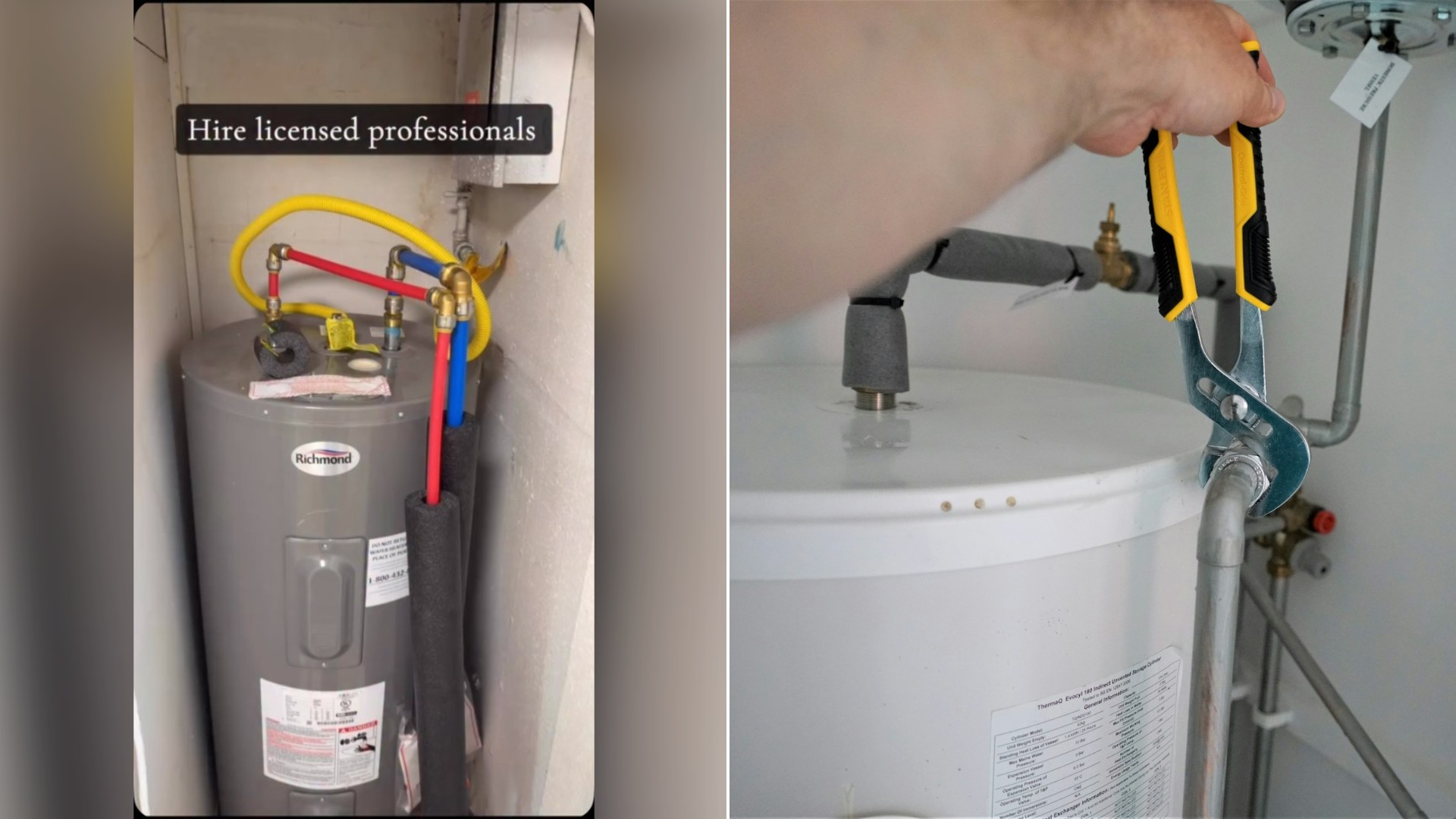
The plumber who found it calls the setup extremely dangerous, and his advice is short and clear. Hire a licensed plumber.
View this post on Instagram
Gas Line On The One Part Built To Prevent An Explosion
To see why the plumber reacts so strongly, you have to know what the temperature and pressure relief valve does. It is the safety device on a water heater, usually a small brass valve with a lever, located near the top of the tank or on the side.
Its only job is to open when the water gets too hot or the pressure inside the tank climbs too high. Common valves are rated to open at 150 psi or 210 degrees Fahrenheit. When that happens, the valve releases water through a discharge pipe so the tank does not rupture.
Connecting a gas line to that valve defeats the whole point. A fitting that must stay free to open and release hot water is instead tied into a fuel line.
“Extremely Dangerous” Is Not An Exaggeration
Natural gas and propane do not forgive improvised connections. Gas fittings need the right materials, correct thread sealant, proper support and a leak test. A mistake can allow gas to escape slowly into a utility room or garage, where a pilot light, a spark or a furnace can ignite it.
A relief valve is also not designed to carry fuel. It is built to open and discharge water. Combine the two, and a safety device may fail to do its work exactly when it is needed most.
That is why the plumbing instructor in the reel does not treat it as a small mistake. For him, it is the kind of work that deserves a clear warning to anyone tempted to try the same thing.
Why Licensed Plumbers Handle Gas Work
In most places, gas piping is regulated work. Many cities and counties require a permit and a licensed professional, and an inspection after the job. Those rules exist because errors with gas can be deadly and are hard to see.
A licensed plumber knows the code for pipe sizing, shutoff valves, sediment traps, venting and the discharge pipe on a relief valve. A trained professional also carries insurance, which matters if something goes wrong.
Many homeowners are surprised to learn that insurance companies may question claims linked to unpermitted work. Doing a gas job yourself can leave you with a hazard and a headache.
What A Water Heater Should Look Like
You can do a quick check of your own water heater without touching a tool. Look at the relief valve and the pipe attached to it.
- The relief valve should have a discharge pipe running down toward the floor, ending several inches above it or at a proper drain.
- That pipe should not be capped, plugged or reduced in size.
- Gas supply piping should connect to the gas control valve on the heater, with a shutoff valve nearby.
- There should be no sign of rust, scorching, soot or heavy corrosion around the burner area or the vent.
- The vent pipe at the top should be attached tightly, without gaps or loose sections.
If anything looks wrong, or if you are not sure, a call to a licensed plumber costs far less than the damage a mistake could cause.
If You Smell Gas
Utilities add a chemical that smells like rotten eggs so leaks can be noticed. If you smell it, do not flip switches, light a match or use a phone inside the house. Get everyone out, then call your gas utility or emergency services from outside.
It is also smart to have carbon monoxide detectors on every level of the home and near sleeping areas. Fuel-burning appliances like water heaters, furnaces and stoves can produce carbon monoxide if they are installed incorrectly or vent poorly, and the gas has no smell.
Test the detectors monthly and replace them according to the manufacturer’s schedule, usually every five to ten years.
What Homeowners Can Safely Do Themselves
There is plenty a homeowner can handle around a water heater. Lowering the temperature setting to about 120 degrees Fahrenheit reduces scald risk and saves energy. Flushing the tank once a year clears sediment that can shorten its life. Testing the relief valve by lifting its lever briefly is a common maintenance step, though many manufacturers advise doing it carefully, with a drain pipe in place, because the water that comes out can be scalding.
Anything that involves cutting, threading or connecting gas pipe belongs to a licensed professional. The plumbing instructor’s warning draws that line clearly.
Know Where DIY Ends
Plenty of home projects are fine to take on yourself, like replacing a faucet, swapping a showerhead or flushing a tank. Gas lines, electrical panels and anything involving safety devices are different.
The lesson from this reel is a simple one. Save money on paint, trim and fixtures, but hire a licensed plumber for anything that touches gas or a safety valve. A shortcut that saves a few hundred dollars is never worth the chance of a fire, an explosion or a poisoning.
More Stories You May Like
- Homeowner Explains Why Buying In An HOA Neighborhood Means Mandatory Dues And Rules Plus A $150 Ticket For Long Grass, And Says He Would Never Live In One
- About 2,960 Cummins Portable Generators Sold For $1,640 To $1,930 Are Recalled Because The Fuel Cap Can Fly Off Under Pressure, And One Owner Got Splashed In The Face With Fuel
- Homeowner Puts Up Signs Saying ‘Your GPS Is Wrong Turn Around,’ But Drivers Using Uber Keep Tearing Across His Front Lawn To Avoid Cars Parked In His Driveway
Leave a Reply