Closing on a house is supposed to feel like a celebration. For the homeowner behind @revealmydiy, it came with a 1920s fixer upper wrapped in awful green siding.
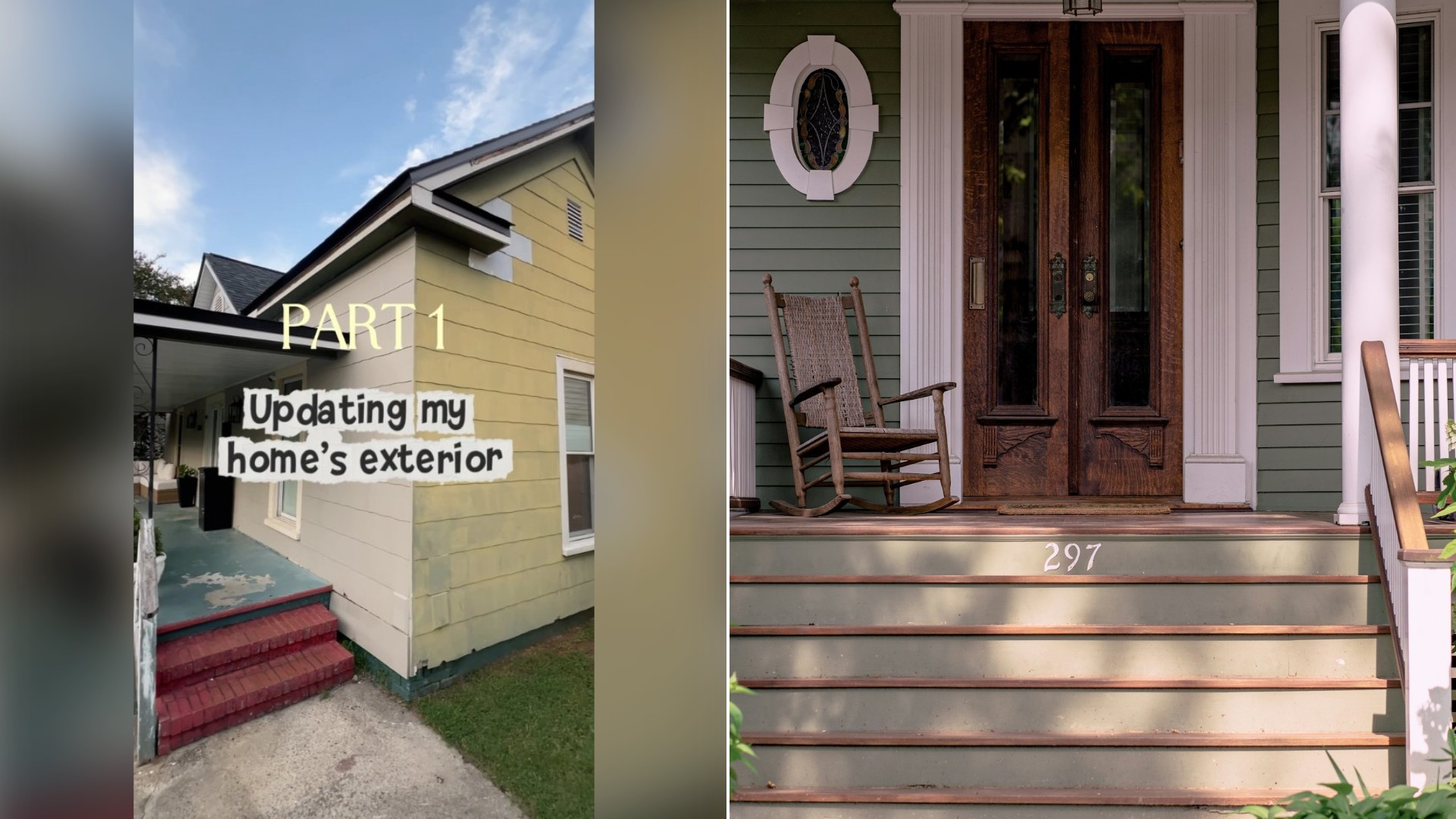
The homeowner closed on the house in December and has now started on the outside. In Part 1 of the exterior makeover, siding gets replaced, a new color gets picked siding, picks a new color and a giant rotting stair turns up at the back door that was not even attached to the house.
Helping with it all is a rescue Bulldog named Chub.
View this post on Instagram
A 1920s Fixer Upper With Awful Green Siding
Houses from the 1920s come with charm and a long list of surprises. Many have solid framing, wide trim and character you cannot buy new, along with a century of wear.
The green siding on this one clearly made an impression. The exterior needed a fresh start, and the first job was replacing the siding before the painters were due to arrive.
A before and after on a house exterior changes the look of the whole street, which is why curb appeal projects are so satisfying.
The Giant Rotting Stair That Was Not Attached
Then came the discovery at the back door. A big stair there was rotting, and it was not attached to the house.
That is more than an eyesore. A stair that is not fastened to the structure can shift, tip or collapse, and a rotted one can give way under a person’s weight.
The homeowner removed it, which was the safe call. Steps and railings are one of the most common places for injuries around a home, and a rotting one is never worth saving.
Older homes often have layers of paint and siding from different decades. Replacing siding lets you check the sheathing underneath for moisture and rot, which is information you can only get when the wall is open.
Picking A Color Called Alabaster
With the old stair gone and the siding replaced, it was time to choose a color. The homeowner chose Alabaster by Sherwin Williams, a soft, warm white.
White and off-white remain classics for older houses, because they show off trim, shadow lines and the shape of the architecture. A warm white also tends to look friendlier than a stark one.
Before you commit, paint a large sample on the house itself and look at it in morning, noon and evening light. Color shifts a lot outdoors.
Still To Come, A Pressure Wash And The Painters
This is only Part 1. Still on the list is a pressure wash for the slab and the driveway, and the painters arrive in Part 2.
That order matters. Cleaning surfaces first lets paint and new finishes stick better, and doing the dirty work before the painters means they are not working around dust and mildew.
Pressure washing a slab and driveway strips away years of grime, algae and stains. It can make old concrete look newer for the price of a rental machine and an afternoon, and it shows exactly what repairs the surface still needs.
It also leaves the finishing touches for last, when the exterior is ready to look its best.
What To Do First On A Fixer Upper
If you have just bought an older house, her sequence is a good model. Handle safety first, structure second and beauty last.
- Walk the property and look for loose rails, rotten stairs, soft wood and rusty fasteners.
- Fix water problems early, such as gutters, flashing and siding gaps, since moisture does the most long-term damage.
- Replace anything rotten rather than painting over it. Paint will not stop rot.
- Prepare surfaces by washing and scraping before you apply new coatings.
Houses built before 1978 may contain lead paint, so take care when scraping or sanding old coatings. Follow the Environmental Protection Agency guidance and use proper dust controls.
Use this checklist as a starting point and adjust it to your own house. A calm, ordered plan keeps a big renovation from feeling like a pile of emergencies.
Keep Your Budget For The Surprises
Every older house hides something, whether it is a stair, a rotten board or old wiring. Set aside a cushion of money for the surprises, since they almost always arrive.
Take photos before you start, and keep notes on what you spent. Those records help you plan the next phase and show buyers someday how much care the house received.
Share your plan with neighbors and family, too. Friends often know a reliable painter or a good source for salvaged lumber, and word of mouth is still one of the best ways to find trustworthy help.
A Fixer Upper Needs A Good Helper
It helps to have company on a long project, and the Bulldog in this story seems to have appointed himself the supervisor. A pet nearby makes hard days lighter.
Just keep animals clear of tools, fumes and open work areas, and give them a quiet spot when the saws come out.
The finished exterior is still to come, but the first part of this makeover is a good lesson. Start with the dangerous things, work in the right order and let the house show you what it needs next.
More Stories You May Like
- Homeowner Hosts 141 Guests During 36 Short Term Stays Despite Neighborhood Rules, Then The State Supreme Court Votes 5 To 4 That Renting It Out Is A Business And Upholds $8,528 In Fines
- Man Adopts His Neighbor’s House With A Blank Check, Spends Around $3,000 On Dumpsters, Then Learns A Truck Would Have Hauled It All For Around $500
- Homeowner Spins His Main Shut Off For 10 Minutes Before A Plumber Finds A Gate Valve From The Reagan Administration, Then Keeps The Electrical Tape As Evidence
Leave a Reply