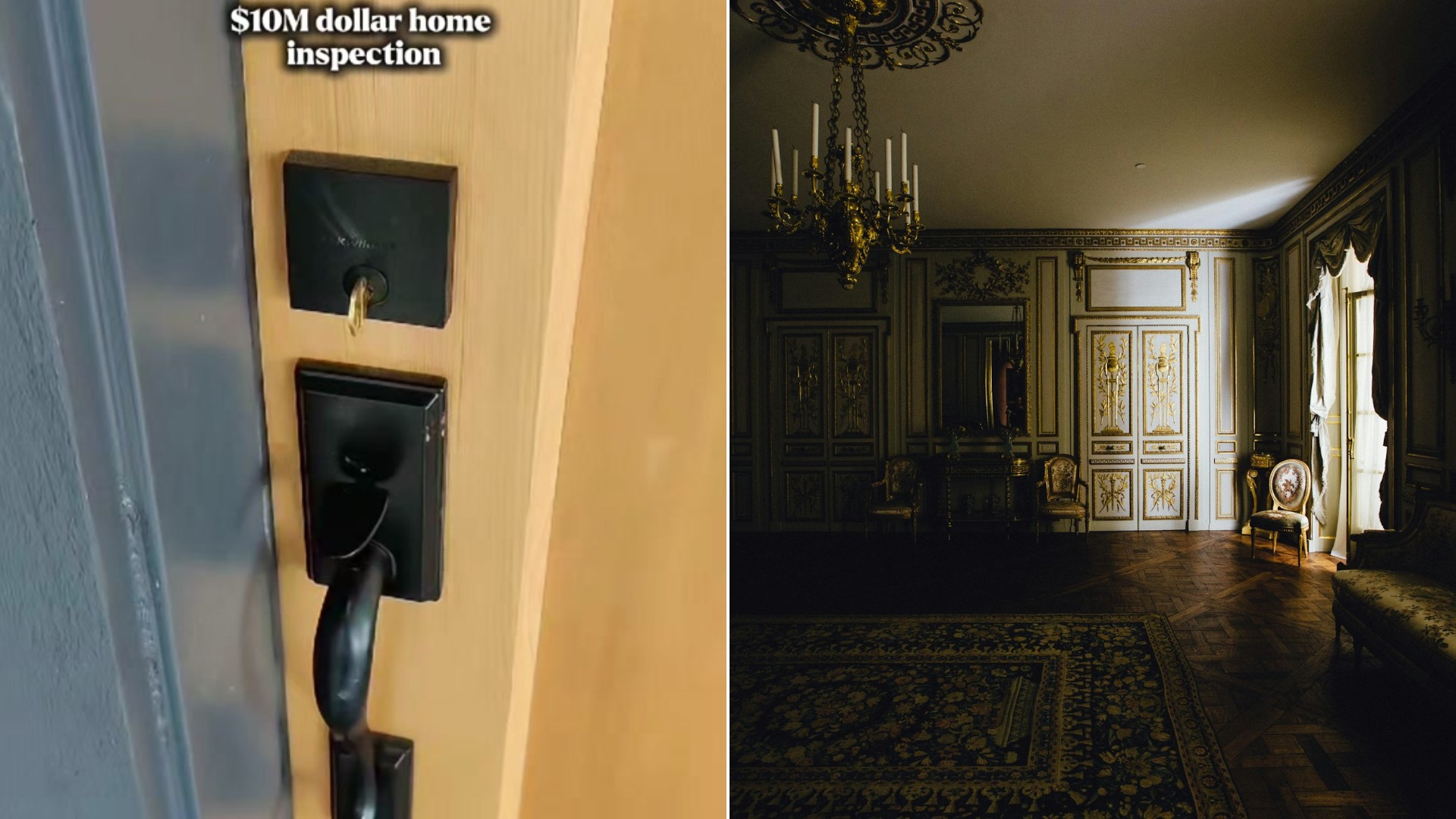
A $10M home should come with a flawless inspection. At least, that is what you would expect when the price tag is that big.
In a video, home inspector @homeinspection03 shows some of what turned up in one, including a door lock that works backwards, a gouged oven and no attic access. Then comes the line that gives the story its edge, when the inspector asks what they are hiding.
A Door Lock That Works Backwards
The first oddity is a door lock that works backwards. It sounds minor, but a lock that turns the wrong way can point to a door or hardware that was installed incorrectly or swapped in a hurry.
In a house at this price level, it is the sort of detail that makes an inspector slow down. Small mistakes can be a sign of larger shortcuts that are not visible at first glance.
@homeinspection03
A Gouged Oven In A Showpiece Kitchen
Next up is the oven, which is gouged. High-end kitchens usually have high-end appliances, and a damaged one stands out.
A scratch or gouge could be cosmetic, or it could be a sign of a rough installation or a replacement that went wrong. Inspectors check that appliances operate as they should and are secured properly, since an unsecured oven or range can tip.
No Attic Access
Then comes the part that stops the inspection in its tracks: there is no attic access. For an inspector, that is a big problem, because the attic is where many serious issues hide.
Inspectors look in attics for roof leaks, damaged framing, poor insulation, ventilation problems, wiring and signs of pests. If they can’t get in, a big part of the house goes unchecked.
Then The Inspector Asks What They Are Hiding
After a lock that works backwards, a gouged oven and no way into the attic, the inspector asks the question on everyone’s mind. What are they hiding?
The inspector’s suspicion is about what might be behind the walls and above the ceiling. That worry is the reason the missing access matters so much.
A sale price of $10M doesn’t guarantee a perfect house. Buyers at any price are still entitled to know the condition of what they are buying.
Why Hidden Spaces Worry Inspectors
Most inspection problems that cost buyers real money live out of sight. A slow roof leak can soak insulation for years before a stain ever shows on a ceiling, and old wiring can run through walls where nobody looks.
That is why inspectors push for access. A hatch, a panel or a crawlspace door costs little to provide, and it lets a trained eye check the areas that matter most.
When a seller makes it hard to see those spaces, it doesn’t prove anything is wrong, but it does leave the buyer carrying the risk. Asking for access is a normal, reasonable request, not an accusation.
Think of the inspection as the one time before closing when someone is paid to look at everything on your behalf. Give that person every chance to do the job.
Why Inspections Matter At Every Price
Many buyers assume that a house at the top of the market is built and maintained better, so they relax during the sale. Inspectors will tell you that expensive houses can have as many problems as ordinary ones, and sometimes more, because of complex systems and custom work.
A big house has more roof, more plumbing, more electrical and more mechanical equipment, and any of those can fail. Custom features also mean fewer standard details that an inspector can rely on.
What To Do If The Inspector Can’t Get In
Missing access is a red flag, and the buyer has choices. Here is what experts commonly recommend.
- Ask the seller to provide access, such as cutting a proper attic hatch, before closing.
- Request a further evaluation by a roofer, electrician or structural engineer, depending on the concern.
- Negotiate. A repair credit or price adjustment is possible if an area cannot be examined.
- Put every request in writing so there is a record.
- Be willing to walk away if the seller refuses to cooperate.
How To Get The Most From Your Inspection
You can help your inspector do a better job. Make sure every room, closet, crawlspace and attic can be reached, and ask the seller to clear stored items away from panels and hatches.
Go along with the inspector and ask questions as they go. Watching how they check things teaches you how your future house works, and the notes you take can guide your first year of maintenance.
After the inspection, read the report carefully and ask about anything you don’t understand. Repair priorities matter, and safety items such as electrical and structural issues come first.
The Lesson From A $10M Walkthrough
The inspection shared by @homeinspection03 shows that a price tag is not a guarantee. A backwards lock, a gouged oven and no attic access are the kind of details that make an inspector wonder, and they are why buyers should never skip the inspection.
Whether you are buying a starter home or a mansion, insist on full access and ask the question the inspector asked: if something is being kept out of sight, why?
More Stories You May Like
- Police Show Up At A 92 Year Old French Woman’s Home After Neighbors Complain About Noisy Frogs In Her Pond, And She Says They Play With Her Fish And Are Her Entertainment
- Couple Buys A Building With An Exceptionally Unsafe Deck That Turns Out To Be Propped Up By A Bike Tire, And The Rebuild Hits Surprises Before The Inspector Arrives
- Beautiful New Texas Home Passes The Eye Test, Then The Warranty Inspection Finds Step Cracks, Missing Soffit Vents And Cracking AC Line Insulation
Leave a Reply