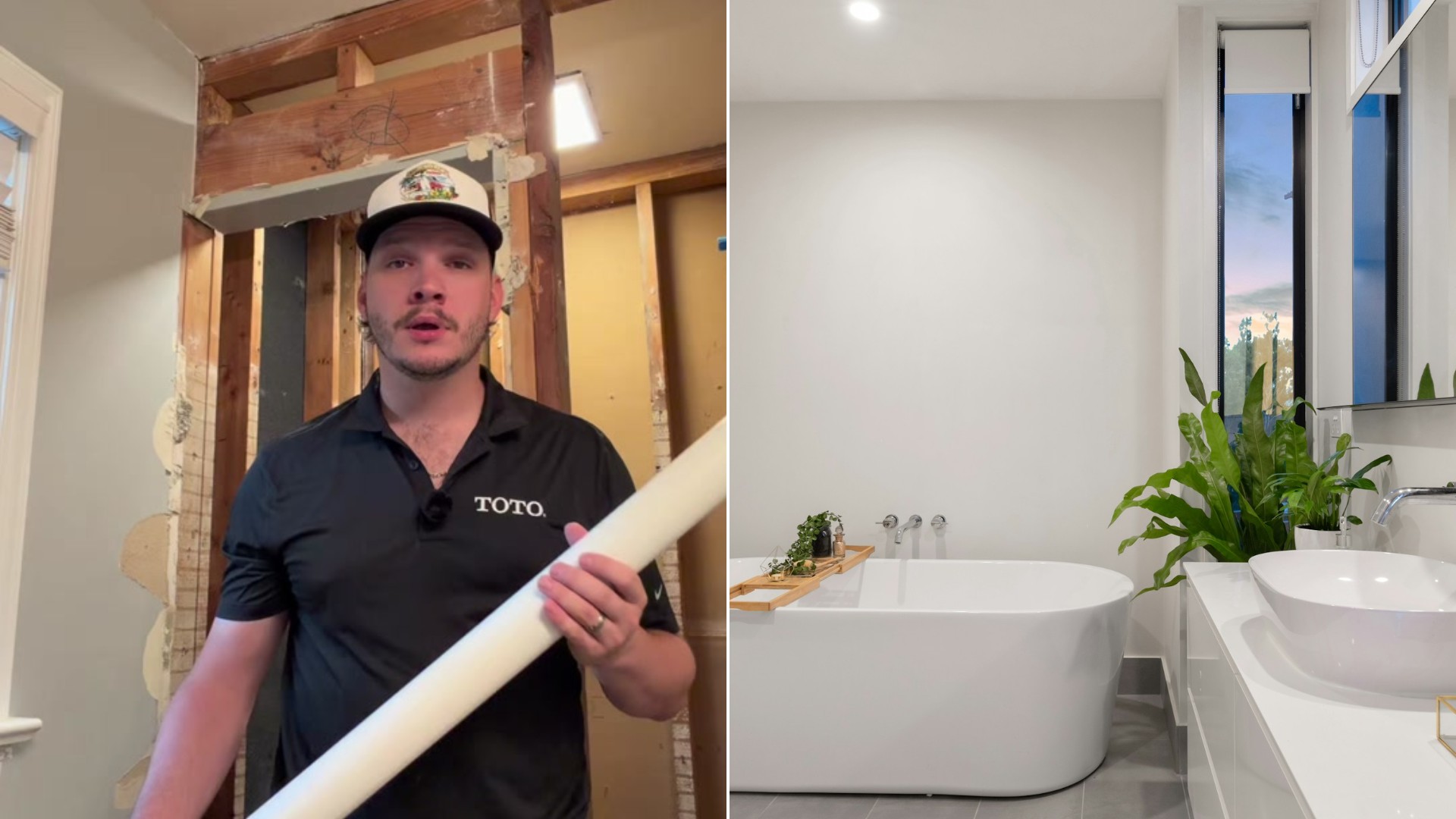
Cutting into your own shower floor is not a decision anyone makes lightly. On TikTok, @torinontap goes there under the name P Trap Pete, cutting open the shower floor to swap the original copper drain for a new P trap, new PEX lines and a double diverter.
It is a big-ticket bathroom job packed into a short video, and it touches almost every part of a shower’s hidden plumbing. If you have an older home, you may be looking at the same project someday.
Here is what each of those parts does and why a plumber would replace them together.
@torinontap
Why Cut Open The Floor At All
The shower drain lives below the pan, tucked into the subfloor or the ceiling of the room underneath. The only way to reach it for a full swap is to open things up, which is why this work often happens during a remodel.
An original copper drain has done its job for decades in many older houses. Over that time, copper can corrode, joints can weep and connections can weaken, and a slow leak below a shower can soak the framing for years before it shows.
Replacing the drain assembly while the floor is open is the kind of move that costs a bit more up front and saves a far bigger repair later.
The P Trap That Keeps Sewer Gas Out
A P trap is the curved section of pipe under a drain. It holds a small amount of water, and that water forms a seal that blocks sewer gas from rising back into the room. Every sink, tub and shower needs one, and building codes require them for exactly that reason.
If a shower is rarely used, the water in the trap can evaporate, which is why a guest bathroom sometimes smells until someone runs the water. A correctly installed new trap is a major part of a bathroom that stays fresh.
Installing it properly means getting the slope of the drain line right, so wastewater flows steadily away. Too little slope slows the flow, and too much can let water outrun solids and cause clogs.
PEX Lines Take Over The Supply Side
The PEX lines in the project handle the water coming in. PEX is a flexible plastic tubing that has become popular for supply plumbing. It bends around corners, which means fewer fittings, and it is resistant to the corrosion that attacks metal pipe over time.
That flexibility is a big reason plumbers like it for remodels. They can run a line through a wall with fewer joints, and fewer joints means fewer places where something can go wrong.
Hot and cold lines to a shower valve need to be secured and tested, and the connections must be made correctly before anything is closed behind tile.
What A Double Diverter Does
A double diverter is a valve setup that lets one shower system send water to more than one outlet. Think of a showerhead and a handheld sprayer, or a showerhead and a tub spout, with a handle that picks where the water goes.
It is a favorite upgrade in remodels because it makes a basic shower far more flexible. Rinsing a pet, cleaning the stall or washing a child’s hair becomes much easier with a handheld option.
Because the diverter sits inside the wall, it belongs in the plan while the wall is open, not after the tile is up.
Before You Pick Up A Saw
The video is entertaining, but a project like this is serious. Cutting a shower floor can hit framing, wiring or water lines, and a mistake can be expensive. Start with a clear plan and a look at what lies below.
- Turn off the water supply to the bathroom before any cutting begins.
- Check what sits under the floor, from basement joists to the ceiling of the room below.
- Pull a permit if your town requires one. Many places do for plumbing changes, and inspectors check the work.
- Test every connection under pressure before you close the walls and floor.
- Run a water test in the pan to check for leaks before tile goes down.
Know When To Hire It Out
Skilled homeowners tackle plumbing, and many enjoy it. But a drain replaced under a shower combines cutting, soldering or crimping, and waterproofing, and each step has to be right.
If you hire a plumber, ask for the scope in writing, including the drain, the trap, the supply lines and the valve. Ask whether the price includes patching the floor, since that step is often a separate trade.
A modest amount of homework pays off. Photograph the work before it is covered, and keep receipts for fittings and valves. If you sell the house, buyers and inspectors like to see proof that the hidden parts were done right.
The Takeaway From P Trap Pete
What stands out about the project is how much happens out of sight. A new P trap, PEX lines and a double diverter will never be seen by a guest, and yet they decide whether a shower works well for the next thirty years.
That is the quiet value of plumbing. When it is done right, you forget about it. When it is not, you remember every time you step into the shower.
More Stories You May Like
- Homeowner Cuts A Hole In The Side Of The House To Insulate The Attic In One Day Because The Free Blower Rental Only Lasts 24 Hours And The Hole Goes Through The Gable Wall Instead Of The Ceiling
- Homeowner Buys A Rat Infested House For Siblings To Live In, Then Finds Water Damage Behind Mirrors, No Waterproofing Behind Shower Tile And Termite Damaged Walls
- Plumber Shows A Double Wall Copper Drain In A Custom Utah Home That Steals Heat From Shower Water To Preheat The Cold Line Going To The Water Heater
Leave a Reply