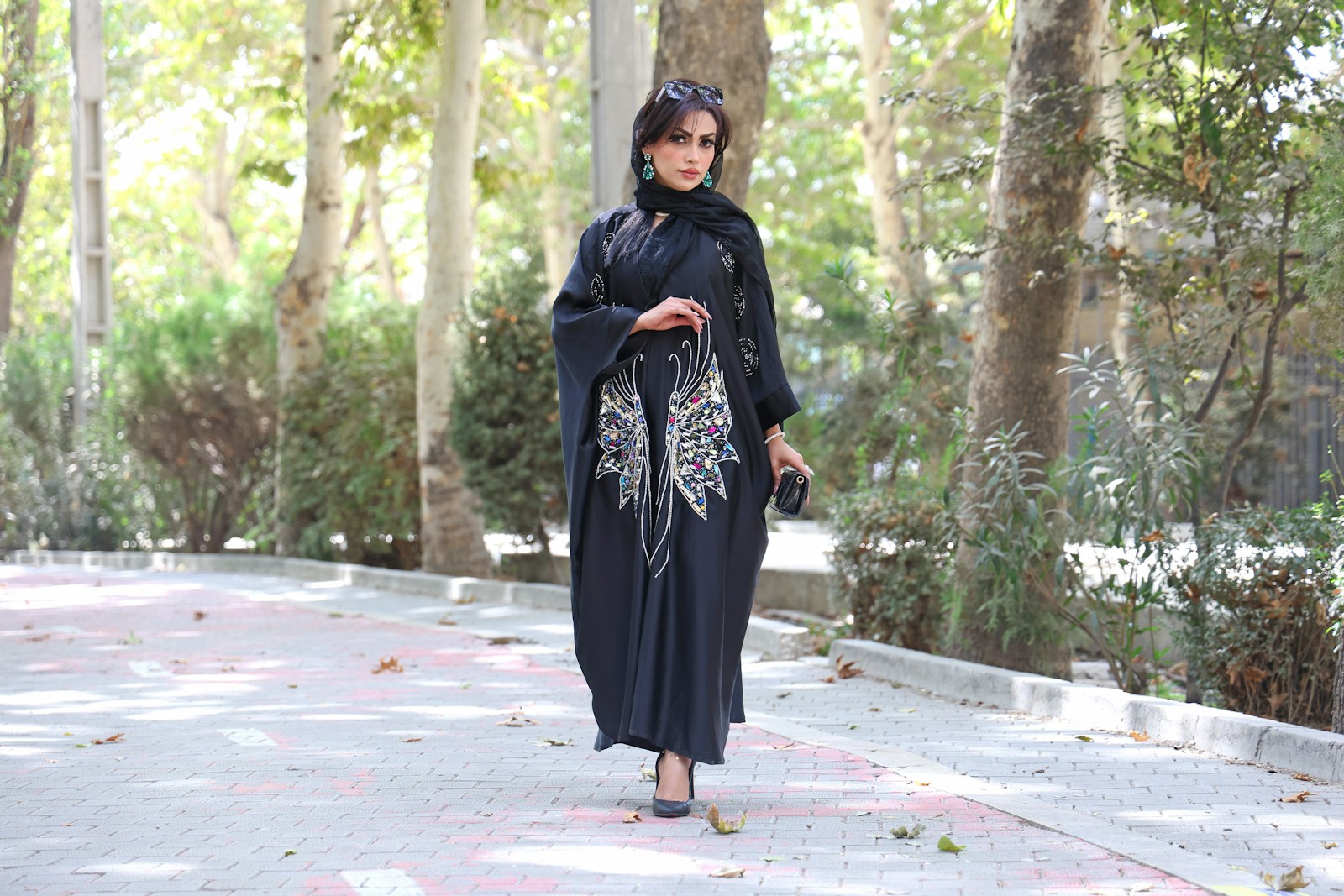
In a situation that many young adults might find all too relatable, a 27-year-old woman found herself embroiled in a heated family dispute over modesty, respect, and personal autonomy. What began as a simple comment about her traditional abaya—a long cloak common in many Middle Eastern cultures—quickly escalated into a dramatic showdown with her mother, only for the tension to dissipate almost entirely the following day.

The conflict ignited when the poster’s mother noted that her abaya was ‘slightly open’ at the front, revealing her pants underneath. “You need to close it all the way for modesty,” her mother insisted. In response, the daughter, trying to diffuse the situation with a touch of humor, replied, “Thanks for the advice.” But her mother had other plans; she dismissed the comment by stating, “It’s not advice. It’s an order.” This declaration set the stage for a significant disagreement and marked the beginning of a heated argument about how the daughter dressed.
During their argument, the mother demanded the daughter change all of her clothes, which she firmly resisted. “No, I already try hard to dress modestly,” the daughter retorted. Frustrated by her mother’s insistence, she warned, “If you keep escalating it, I just won’t wear an abaya at all.” The confrontation reached a boiling point when the mother began to scream, prompting the daughter to leave for work in a huff.
However, the next day took an unexpected turn. Instead of facing another confrontation, the mother acted as though the argument had never happened. “If anything, she’s been nicer than usual,” the daughter noted, struggling to understand the sudden shift in her mother’s behavior. This 180-degree turn left her feeling confused and questioning the dynamics of their relationship.
Many readers focused on the complexity of mother-daughter relationships, particularly in cultures where expectations around modesty and attire can weigh heavily. Some readers suggested that the mother’s abrupt change in demeanor might stem from her realizing the potential fallout of their argument. Others speculated that she may have miscalculated how serious the disagreement would become, leading her to adopt a more conciliatory approach the following day.
As the story gained traction, participants seemed particularly struck by the mother’s authoritarian approach amidst what some perceived as fairly commonplace attire for a young adult living in her own right. One reader commented on the atmosphere of control often enforced by parents in traditional settings, stating that such dynamics can strain the bond between parent and child, particularly when expectations clash with individuality.
Despite the mother’s abrupt change in behavior, the daughter remained unsettled, pondering why the situation shifted so dramatically overnight. The confusion was palpable, reflecting a broader sentiment about navigating familial relationships where cultural and personal values may not align. While some found solace in the mother’s newfound kindness, it also led to more questions than answers about the authenticity of their interactions moving forward.
This unique clash of viewpoints between a mother and her adult daughter illustrates the often-unseen tug-of-war within families: the delicate balance between tradition and personal freedom. As the daughter faces this unexpected sweetness from her mother following a day of conflict, she is left wondering where their relationship will lead next.
More from Willow and Hearth:
Leave a Reply