A contractor looked at a damaged wood pillar and put a number on the job: $400 to replace it. The homeowner behind @pet.macron had another idea, and in a reel he shows how he repaired the pillar himself for just $15.
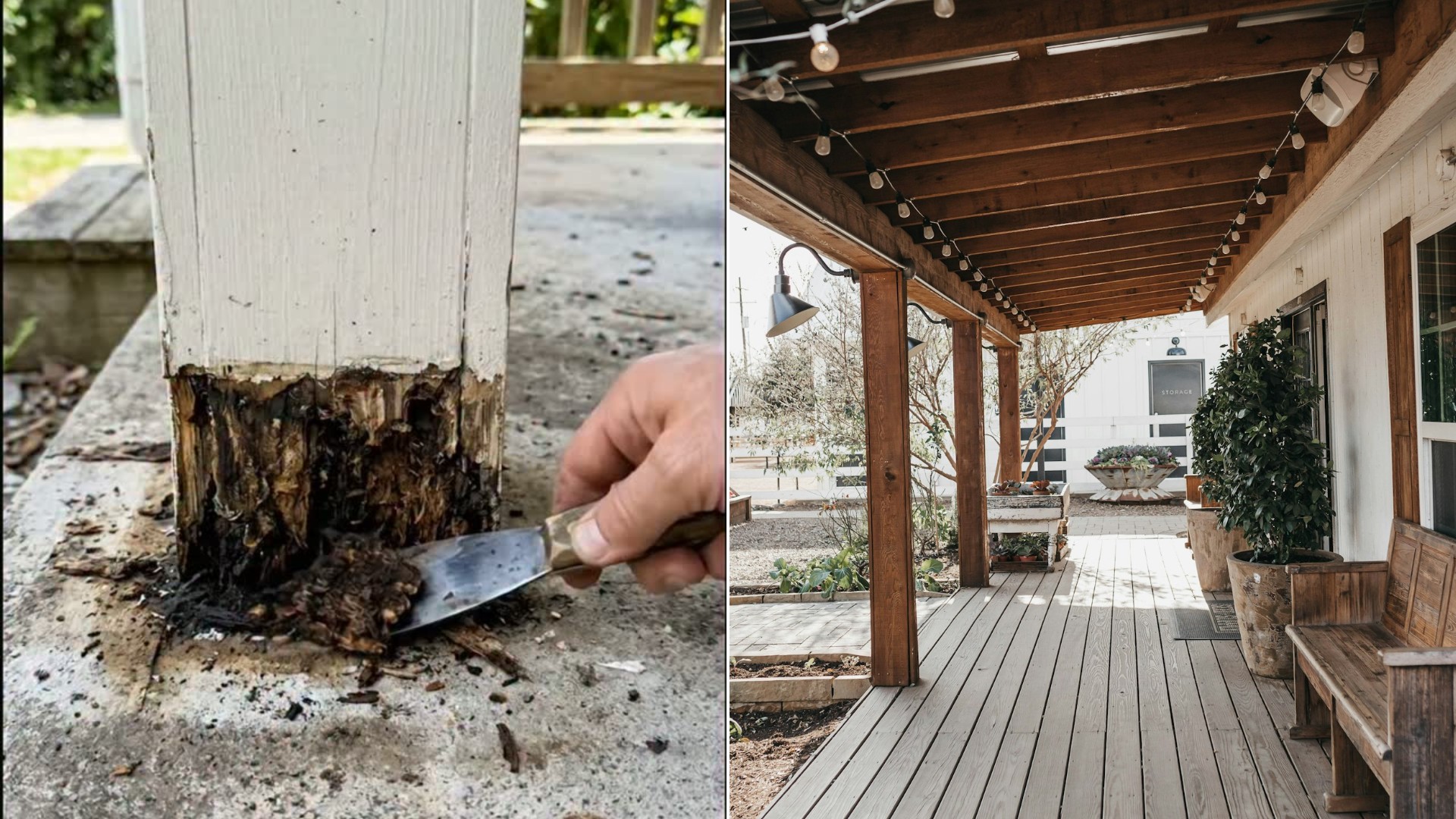
That is a gap of $385, and it is exactly the kind of math that makes homeowners stop scrolling. Before you call anyone, it is worth knowing why the two numbers can be so far apart.
The short version is that replacing a post and repairing one are very different jobs, and a lot of damaged wood does not need the first.
View this post on Instagram
The $400 Quote Versus The $15 Fix
A quote for replacement usually covers more than the lumber. It can include a trip to the house, the cost of removing the old post, new material, labor, cleanup and the contractor’s margin. For a small job, a minimum charge often decides the price before a single board is cut.
The do-it-yourself route skips almost all of that. In his video, the homeowner puts the cost of his repair at $15, which is roughly the price of a few supplies from a hardware store aisle.
That does not make the contractor wrong. Replacement is the right call when a structural post is rotted through or carrying a load it can no longer hold. The point is that you should know which situation you are in before you sign off on the bigger bill.
Why Wood Pillars Fail In The First Place
Almost every damaged wood pillar tells the same story, and the villain is moisture. Water sits at the base of a post, soaks into the end grain and stays there. Add sun, freeze and thaw cycles, and the paint cracks and lets in even more water.
Once wood stays damp, it softens. Insects move in, and fungus finishes the job. A pillar that looks rough on the outside may be perfectly solid a few inches in, and that is where a careful look pays off.
The classic way to check is simple. Press a screwdriver or an awl into the damaged spot. If the tip sinks in easily and the wood crumbles, the rot is deep. If the surface is soft but the wood underneath fights back, a repair may be all you need.
How Homeowners Typically Fix A Damaged Pillar
Many small wood repairs follow the same basic path. You remove all of the soft, damaged material, let the area dry, treat it, fill it and seal it. A fill product made for exterior wood does the heavy lifting, whether it is a two-part epoxy filler or a weatherproof wood filler.
After the filler cures, you sand it flush, prime it and paint it. Primer matters, because bare filler and bare wood both soak up moisture. Two coats of exterior paint, with the bottom edge sealed well, keep water from starting the cycle again.
A job like that is mostly patience. The cost sits in a small tub of filler, sandpaper and a little paint, which is how a repair lands in the neighborhood of $15 instead of $400.
There is a bonus, too. A repair keeps the original post, which matters if the home has older trim or a style that is hard to match. New lumber rarely lines up with the profile of an older pillar, and a fresh board next to weathered ones can stand out for years.
Time counts as well. A weekend of drying and painting is easy to schedule, while a replacement means waiting on a contractor’s calendar and a delivery of material.
When You Should Not Try This Yourself
Be honest about the post’s job. A decorative pillar on a porch is one thing, and a post holding up a roof beam is another. If a support post sags, leans, or shows rot at the joint where it meets the beam, bring in a professional before anything else.
Look for clues that the damage is bigger than it seems. Cracks that spread, a roof line that has dipped, doors that stick, or soft wood that reaches several inches high are all reasons to get a second opinion.
If you hire someone, ask for the quote in writing and ask what it covers. Is the old post hauled away? Is paint included? Will the work meet local building rules? A clear answer to each question is worth more than a lower price.
Smart Ways To Use The Lesson
- Get two or three quotes for any job, and ask each contractor to explain why replacement beats repair.
- Probe the wood with a screwdriver before you decide how bad it is.
- Fix the water problem first. Check gutters, downspouts and the ground slope near the base.
- Use exterior-rated filler, primer and paint, and seal every edge, especially the bottom.
- Take a photo before and after, so you can show the work if you sell the house.
The biggest takeaway from the reel is not that every contractor quote is too high. It is that a quote is the start of a conversation, and a homeowner with a little knowledge and a few dollars of supplies sometimes has a better option than the first number on the page.
Maintenance is the real money saver. Paint a pillar before it peels and it will outlast the one you ignore, whether you spend $15 or $400 along the way.
More Stories You May Like
- Fire Official Says That Burning Smell When You First Turn On The Furnace Is Usually Just Dust, But Carbon Monoxide Alarms Costing $20 To $40 Are A Must This Winter
- Homeowner Quoted $100,000 To Restore The Wood In Her 1888 Victorian Strips It Herself And Says $200 In Materials Made It Worth Every Mistake
- Dad Cleans His Dryer Vent In Under 45 Minutes, And His Best Hack Is Taping A Large Ziploc Bag To The End Of A Leaf Blower
Leave a Reply