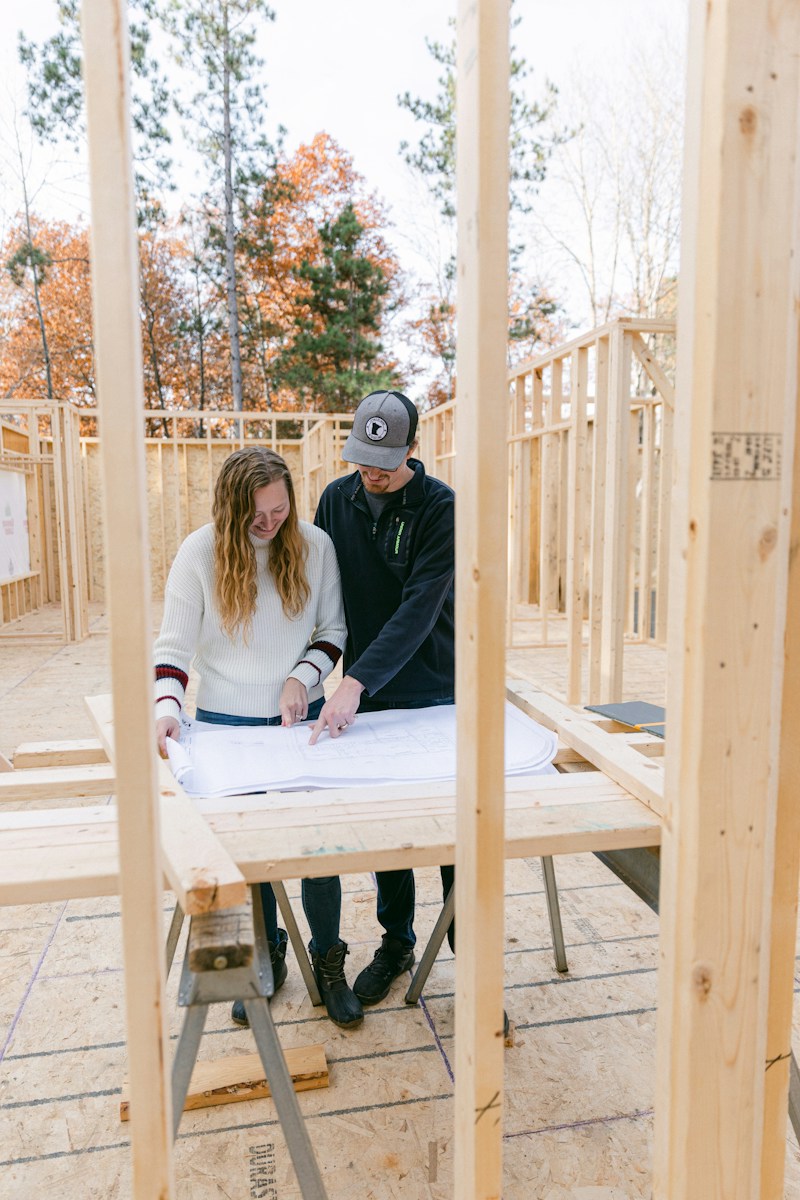
A Minnesota couple with a combined social media following in the millions has spent the past two years doing something most homeowners dread: fighting their own builder in court. Dillon and Suzanne White, known online as @dadchats and @momchats, bought a newly constructed house in Woodbury, Minnesota in April 2024. What followed, according to their own account and Minnesota court filings, was nearly two years of framing problems, water intrusion, mold, and drywall failures that the builder never fully resolved, and eventually a lawsuit filed by the couple after the builder tried to stop them from talking about it online.
The video where Suzanne laid out why the couple finally decided to sue pulled in 4.3 million views, a number that dwarfs their typical performance on the platform, and it landed with an audience of 1.9 million followers who have watched this family document parenthood, home renovations, and now litigation in real time. It is the kind of number that turns a private contract dispute into a public referendum on how new-construction homes get built in America.
What actually went wrong with the house
According to the Star Tribune’s reporting, the Whites documented issues with the framing, flooring and subflooring, water intrusion, mold, and drywall in their new build, problems the builder has denied. Over close to two years, the family says they marked hundreds of areas with blue painter’s tape while trying to get repairs completed and inspections scheduled. Anyone who has lived through a punch list that never seems to close knows the exhaustion of that kind of waiting: the repeated appointments, the contractors who don’t show, the sense that a six-figure purchase is somehow still unfinished business a year and a half later.
Court records reviewed by Trellis.law identify the builder as Michael Lee, Inc., doing business as Michael Lee Homes, now known as K&ML, along with Kootenia Homes LLC. The Whites’ complaint alleges breach of contract, negligence, and fraud.

The fight over who gets to talk about it
What pushed this from a private dispute into a viral one was the builder’s response to the couple posting about their experience. Per the Star Tribune, the builder sought a court order to stop the Whites from continuing to discuss the case on social media. The Whites answered by filing their own suit rather than going quiet, and in June 2026 a judge rejected the builder’s request for a social media injunction, according to the same reporting. That ruling is part of what the couple referenced when explaining, in their own words on camera, why they ultimately chose to sue rather than keep waiting for repairs that weren’t coming.
Construction-defect attorneys say this dynamic is becoming more familiar as homeowners increasingly document disputes online. A blog post from the firm Horn Williamson & Collins, written about this same case, notes that going public can complicate a dispute in ways homeowners don’t always anticipate, and advises that consulting an attorney early “may create more opportunities for a practical resolution” than letting problems fester while negotiating directly with a builder’s warranty department.
This is not just a Minnesota problem
Construction-defect litigation against homebuilders has been climbing industry-wide, and it isn’t limited to small regional builders. Reporting from Green Builder Media found that D.R. Horton, the largest homebuilder in the country, has set aside roughly $1.1 billion in reserves to cover defect claims, while Lennar’s self-insurance reserves for similar issues climbed more than 20% in a single year. The most common complaints tracking across the industry echo almost exactly what the Whites describe: moisture intrusion, mold, sinking foundations, and roofing failures. Builders tend to frame these cases as a small fraction of total homes sold and often point to subcontractors. Homeowners and their attorneys, per that same reporting, point instead to compressed build schedules and labor shortages, pressures that show up as cut corners long before a family notices a water stain on the ceiling.
A separate case making headlines this year, covered by local reporting out of South Carolina, describes roughly 60 lawsuits filed against D.R. Horton over alleged construction flaws in the Midlands region. It’s a reminder that the Whites’ experience, however personal and however viral, sits inside a much larger pattern playing out in new-construction neighborhoods across the country.
Why the story keeps spreading
Part of what makes the Whites’ video resonate at 14 times their typical reach is how relatable the setup is. This isn’t a fixer-upper gone wrong or a flip that fell apart. It’s a new build, the version of homeownership marketed as the safe, mess-free option, without the surprises that come with buying an older house. When a brand-new home needs the same blue tape and battle-worn vigilance as a century-old fixer, it reads as a betrayal of the whole premise. For a couple who built an audience being candid about the unglamorous parts of family life, turning the camera on their home’s failures was, in some ways, on-brand. It’s also why viewers who had never heard of Kootenia Homes before this week felt like the story was somehow about their own house too.
The case remains active, and the Whites have kept documenting its developments for their followers. Whatever the eventual outcome, the video explaining their decision to sue has already done something rarer than a courtroom win: it got a national audience asking harder questions about what “new construction” actually guarantees.
Leave a Reply