A simple transition trick is doing a lot of heavy lifting in a reel from @doveclubb. The clip opens on a bare, empty living room, and a quick cut reveals the same space, same vantage point, now fully furnished and decorated, letting the room itself carry the entire before-and-after.
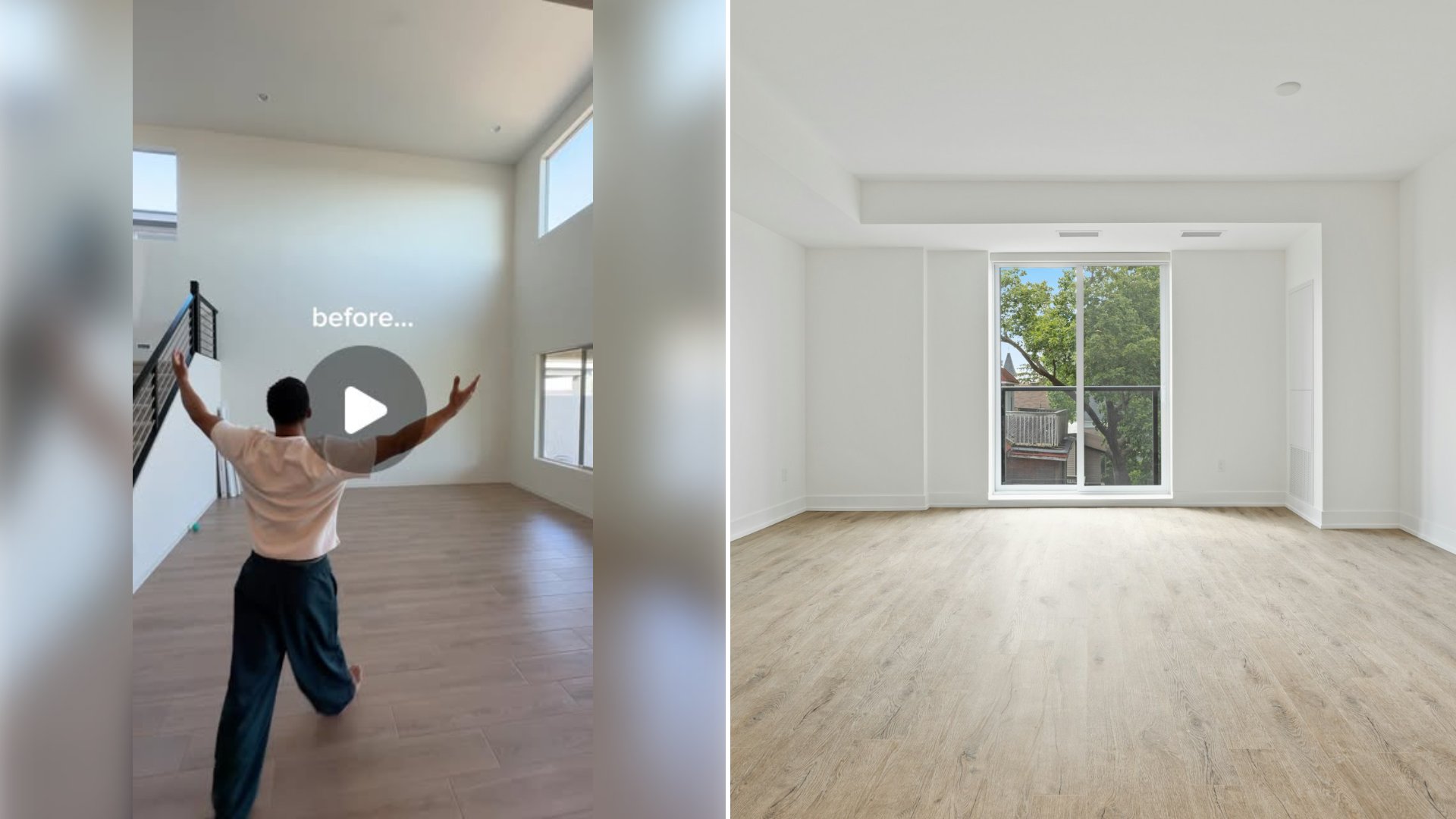
Keeping the camera angle and framing consistent across the cut is what makes the reveal land. With nothing to distract from the comparison, the transformation reads instantly: bare walls and an empty floor give way to furniture, decor, and the kind of finished styling that makes a space feel lived in rather than staged for a showing. The caption, a casual what do you all think, paired with hashtags for living room, house, remodel, and DIY, frames it as a straightforward remodel reveal rather than anything more elaborate.
Before-and-after transitions like this one perform well precisely because they do not rely on narration or explanation. The split second between an empty room and a finished one does the storytelling on its own, which is a big part of why this format keeps showing up across home and renovation accounts.
A styling checklist for turning an empty rental room into a finished living space
For anyone facing their own empty room, designers generally recommend working in a set order rather than shopping piece by piece at random. Start with an anchor piece, typically a sofa or sectional, and choose its size based on the room’s actual dimensions rather than what looks good in a showroom, since an undersized sofa is one of the most common reasons a furnished room still reads as empty. From there, a rug sized to extend under the front legs of the seating area, rather than floating in the middle of the room, is what visually ties a furniture grouping together instead of leaving pieces looking scattered.
Lighting comes next on most professional checklists, specifically layering at least two light sources beyond a single ceiling fixture, such as a floor lamp and a table lamp, to avoid the flat, uninviting look of one overhead bulb lighting an entire room evenly. Window treatments, even simple ones, are also frequently cited as a high-impact, low-cost addition, since bare windows are one of the fastest visual signals that a room is still unfinished.
Finally, layering in soft goods and personal touches, throw pillows, a blanket, a few framed pieces of art or photos on the wall, is what most design guides place last, after the larger furniture and lighting decisions are locked in, since these smaller details are what take a functionally furnished room the rest of the way to feeling personal and finished rather than simply filled.
More from Willow and Hearth
- Couple Turns an Empty High Ceiling Loft Into Their Home With a Gallery Wall, Plants and a Purple Lit Living Area in a 13 Second Reel That Starts With Let’s Move In Together
- Woman Secretly Turns the Spare Storage Room Into Her Partner’s Pink Lit Music Space in a Day and a Half While He Visits Family, Then Films His Reaction
- Man Shows One Month in His New Home by Building a Bed Frame, Stocking a Burgundy Wardrobe, Assembling Oak Storage in a Green Tiled Bathroom and Ending in the Living Room
Leave a Reply