
A Ring doorbell camera captures a new homeowner’s neighbor approaching the front door and behaving as though the resident doesn’t actually live there, creating an uncomfortable, telling exchange about assumptions people make about who belongs in a neighborhood. It’s a small story on its face, but it’s told with enough specificity, real numbers, real rooms, real reactions, that it ends up saying something bigger about how people actually live.
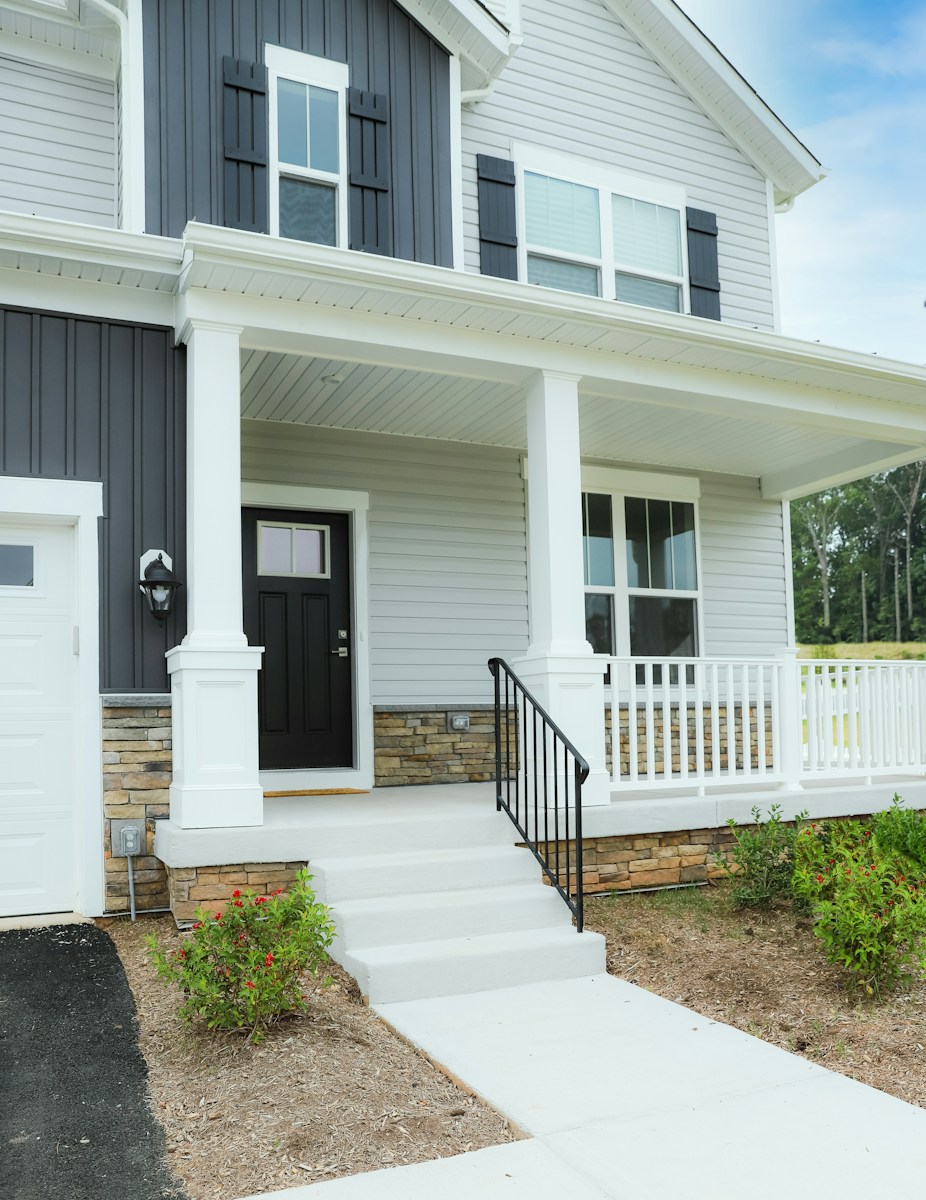
@user81086582693961 My own neighbor just stood on my porch like I didn’t live here… in the house I just moved into. #newhomeowner #doorbellcam #neighborhood
As @user81086582693961 frames it, there’s no attempt to smooth over the messier parts of the story, and that candor is a large part of why the post has resonated with people well beyond the creator’s usual audience.
Moments like this one, caught on a doorbell camera, reportedly capture a brief, uncomfortable exchange exactly as the homeowner experienced it, though as with any short clip, it only shows one side of what was likely a quick and easily misread interaction rather than a fuller conversation.
A doorbell camera adds a specific kind of evidentiary weight to a moment like this one that a verbal retelling never quite has. The exact words, the pause before a neighbor responds, the body language, all of it is preserved exactly as it happened, which is part of why clips built around a genuine, unscripted exchange tend to carry more weight than a secondhand account of the same conversation.
New-homeowner content built around a moment of not being recognized touches on a specific kind of friction that doesn’t get discussed as openly as the more common renovation or moving-day post. Settling into a new house is often framed purely as a logistical process, boxes, furniture, a change of address, when for some new residents it also involves a slower, less tangible process of being recognized as someone who actually belongs on that street.
A story about simply not being recognized as the resident of a house sits in a different category than most viral home content, since there’s no renovation, no reveal, no before-and-after to anchor it. What carries the clip instead is the small, specific social discomfort of the moment itself, which is exactly the kind of thing a polished, scripted video could never convincingly fake.
A doorbell camera’s fixed, unblinking vantage point is part of what makes footage like this feel so trustworthy to viewers. Unlike a phone pulled out mid-conversation, the camera was already running before either person knew the exchange was going to matter, which rules out the possibility that the moment was staged or re-created for the clip.
A first encounter between new neighbors carries an outsized amount of social information packed into just a few seconds, how someone is greeted, whether they’re asked a clarifying question or simply assumed to be in the wrong place, and viewers tend to pick up on those cues quickly even when the exchange itself is brief and polite on its surface.
The comments underneath a video like this tend to break down along familiar lines. Some viewers zero in on the specifics of the exchange itself, wanting to know exactly what was said, while others respond purely to the emotional texture of the moment, the awkwardness, the recognition, the discomfort. That split is a sign the clip is doing double duty, working as both a small piece of social commentary and a compact piece of narrative.
There’s also something quietly instructive about how a moment like this gets read so differently depending on who’s watching. What one viewer sees as an innocent mix-up, another sees as a pattern worth naming, and that gap in interpretation is often exactly what pushes a clip beyond its original audience and into a much wider, more varied conversation.
None of this requires the situation to be resolved, tidy, or fully explained by the end of the clip to still feel worth watching. Plenty of the most-shared home and neighbor content online captures a moment mid-story rather than at its conclusion, and audiences seem perfectly comfortable sitting with that open-endedness as long as the moment itself feels real.
It’s easy to forget, scrolling past a clip like this in a few seconds, how much organizing effort usually sits behind even a brief exchange. Coordinating people’s time, lining up the right moment to film, deciding afterward what to actually post, all of that happens well before a single view registers, and none of it shows up in the sixty seconds an audience actually sees.
A moment like this one also tends to prompt viewers to reflect on their own neighborhoods, how quickly, or how slowly, a new resident gets folded into the informal social fabric of a street, and what small signals, a wave, a greeting, an assumption, end up shaping that process without anyone necessarily intending them to.
For viewers taking notes rather than just watching for entertainment, the real value here is in the process shown rather than the specific outcome, a reminder that the parts of a new-neighbor dynamic that don’t make good footage are usually the parts that matter most.
Belonging to a neighborhood, in practice, usually accrues slowly through repeated, mundane contact, waving from a driveway, a brief exchange at a mailbox, being seen enough times that a face stops registering as unfamiliar. A single doorstep encounter like this one is really a snapshot of day one in that much longer process, before any of that familiarity has had the chance to build up.
Whatever happens next for the people at the center of this particular story, the video offers a small, relatable window into a kind of home-related moment that a lot of people recognize instantly, even if they’ve never lived through this exact version of it themselves.
Leave a Reply