
In an unexpected twist of family dynamics, a long-time family tradition of shared meals has taken a turn toward the chaotic, driven by a grandmother’s peculiar command and a father’s protective instincts. What was once a simple act of serving food has spiraled into a tangled web of misunderstandings, leading to a clash between generational expectations and the realities of caregiving.
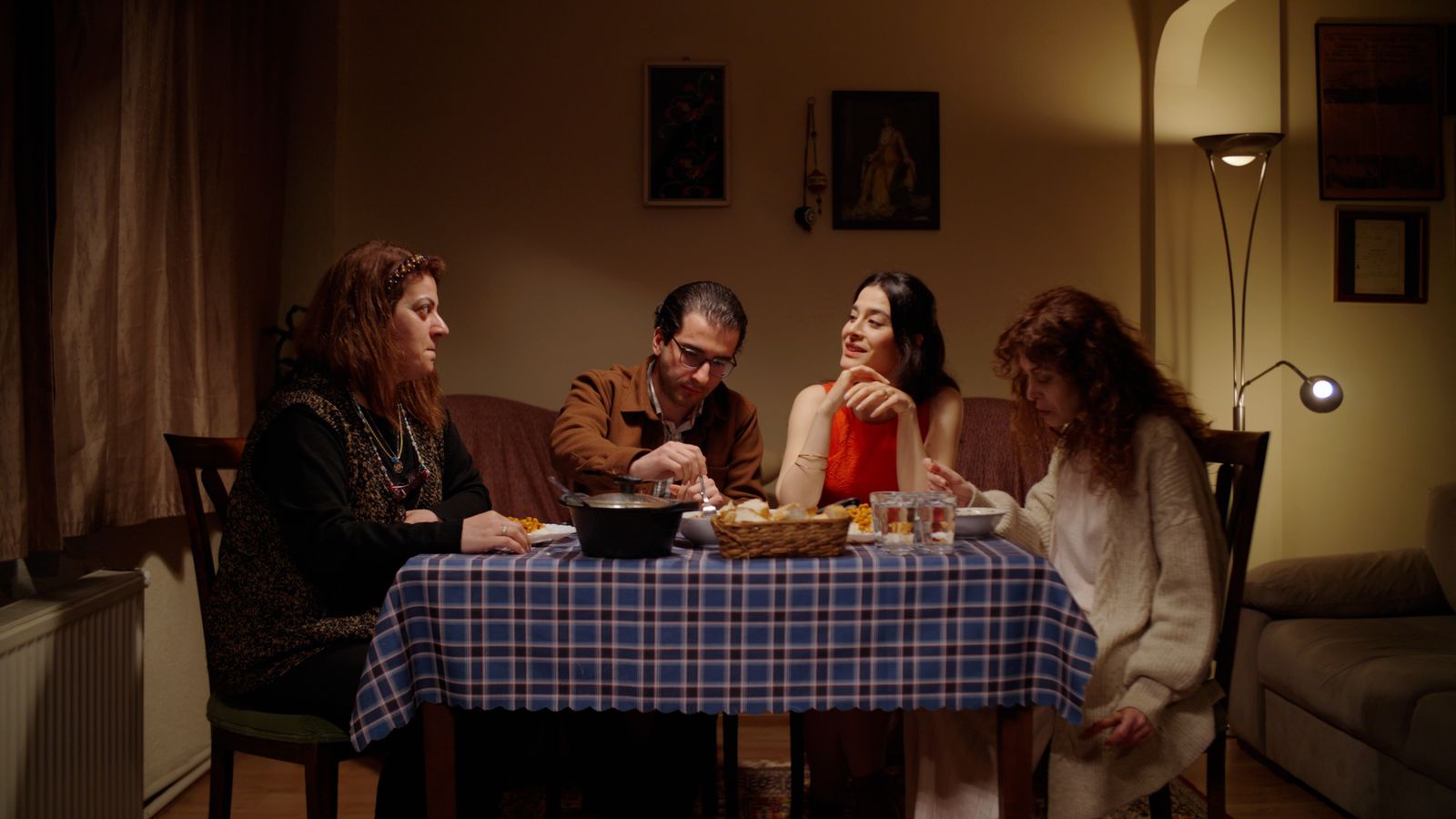
The conflict stems from a Reddit post where the poster details a frustrating trend that began when his grandmother reached the age of 80. Since then, her mental decline became apparent, bringing with it an odd fixation on her grandson. For years, she would single him out in family gatherings, demanding, “Don’t look down, Oberus, it’s bad for your neck and posture.” This unusual directive transformed what should have been a mundane act of serving dinner into a high-stakes balancing act, one fraught with tension and spilled food.
As the story unfolds, it becomes clear that the poster, who is now nearing 30, feels the weight of his grandmother’s expectations during these family meals. “Every time I was pouring food out of a pan onto a plate, she would insist I look straight at her,” he shares. This bizarre requirement became particularly problematic when he had to look down to serve food. “Oberus!!! hey! look up, it’s bad for your neck!” she would exclaim, even as he tried to manage the plate. The result? Food began missing the plate, splattering onto the table, a moment that spiraled into a blame game.
When the inevitable spills occurred, the poster’s father, tired of the ongoing mess, directed his frustration at his son. “Dad comes over to yell at me for being so careless,” he recounted. In a rather striking turn of events, the father soon directed his ire back at his mother, exclaiming, “Oberus told me you told him not to look down!” Tension mounted as grandmother and father clashed over this odd family habit, creating an environment charged with frustration and confusion.
This cycle of spill and blame repeated over several months, leading to exasperation on all sides. The poster noted that while the grandmother’s behavior was clearly rooted in her mental decline, the result was a chaotic dinner atmosphere that left everyone on edge. With each meal, the underlying family tensions simmered, fueled by the grandmother’s insistence and the father’s growing frustration.
Reader reactions to this strange family saga varied, with many expressing sympathy towards the poster, understanding that he was caught in the middle of something larger than himself. Some pointed out the difficulty of managing an elderly relative whose mental state is in decline, acknowledging how challenging it can be for families to navigate such situations gracefully. Many comments seemed to resonate with the poster’s plight, focusing on the absurdity of the grandmother’s commands and the father’s resulting outrage.
Others speculated on the motivations of the grandmother, pondering whether her fixation on the poster was a form of affection or a result of deeper psychological changes. By the end of the discussion, readers recognized the awkwardness of the entire scenario—where love and frustration collided at the dining table, leading to spills and shouts rather than the peaceful family gatherings everyone desired. While some found humor in the absurdity, others reflected on the bittersweet nature of family obligations, especially when elderly relatives are involved.
As the chaotic dinners continued, it became clear that the challenge of maintaining family harmony in the face of mental decline was more complex than simply following orders at the dinner table. The poster’s story encapsulates the emotional tug-of-war that often accompanies caring for aging loved ones, where even well-meaning interactions can lead to unexpected tension and turmoil.
More from Willow and Hearth:
Leave a Reply