
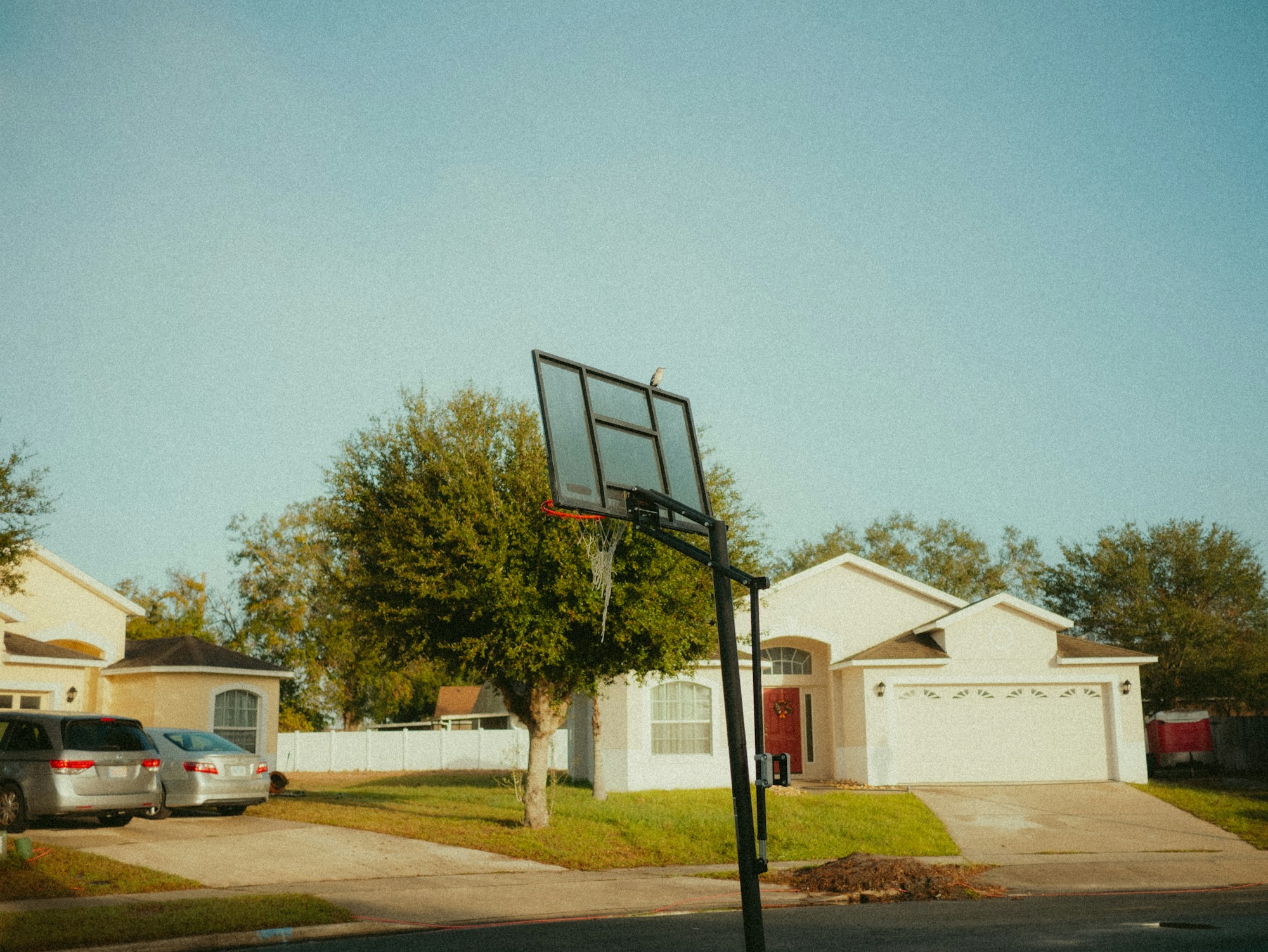
A basketball hoop parked in a driveway overnight is one of the most common triggers for a homeowners association violation notice in the country, and in communities where the bylaws allow daily or weekly fines rather than a single flat penalty, the balance owed can outpace the value of the hoop many times over before anyone in the house realizes what has happened. More than 75 million Americans live in homeowners associations, condominium communities, and other planned developments, according to the Community Associations Institute, and architectural-standards clauses that ban freestanding basketball equipment are among the violations boards cite most often. The fight rarely stays about the hoop for long. It becomes about how a modest weekly charge, left unresolved, compounds into a bill nobody budgeted for.
The hoop is almost never the real argument
In North Carolina, Lindsey Van Winkle’s 11-year-old son had shot baskets in the family’s driveway for seven years before the HOA cited section 10.13 of the community bylaws, which bars basketball goals outright, and gave the family a deadline to remove the equipment for good, according to WBTW News13. “I would have never approved him getting the basketball goal as a gift. I respect the rules, but also feel it’s been seven years with no issues,” Van Winkle told the station. Her son lost the only place he had to work on his shot.
In Wilmington, Delaware, John and Melissa McCafferty fought to keep a hoop that had stood on their property since the 1950s, this time under a state “Clear Zone” law rather than an HOA covenant, after officials ruled the pole sat too close to the pavement, CBS News Philadelphia reported. Melissa was prepared to be arrested rather than watch crews take it down. “All I was seeing was my 10-year-old’s face,” she said. Different rulebook, same instinct from the people enforcing it: a hoop at the curb reads as a liability, not a kid’s after-school routine.
How a $25 fine becomes a five-figure bill
What turns a basketball-hoop dispute into a financial emergency is rarely the first notice. It’s what happens when a board is legally allowed to keep charging after that notice goes unanswered. In one Georgia community, a homeowner named Labron Weems was fined $150 a week over a short-term rental he says he had already stopped running, and by the time the association referred his account to its attorney, he owed $17,573.30 in accumulated fines and fees, according to Moneywise. A neighbor in the same association, Margo Mincey, was cited over a leaning mailbox that had been struck by a passing car and ended up nearly $20,000 out of pocket after refinancing her home to cover the balance. Both homeowners told Moneywise they were locked out of the HOA’s payment portal once their files were sent to collections, so the fines kept accruing with no way to stop them.
The mechanics are the same whether the underlying violation is a rental, a mailbox, or a hoop: most state HOA statutes cap what an association can charge per violation, but far fewer cap how many times a board can charge for the same ongoing violation, or how quickly it can compound. A $25 or $50 weekly fine sounds trivial in a single line of a violation letter. Multiplied across a summer a family spends arguing over whether seven years of driveway basketball suddenly became a problem, it isn’t.

Why boards keep going after the hoop specifically
Portable and in-ground basketball hoops show up disproportionately in HOA violation logs because they sit exactly where architectural review committees look first: the driveway apron and the curb, the most visible edge of a property line. Unlike a fence or a paint color, a hoop also moves, gets left out, and photographs easily from the street, which makes it simple for a board or a hired inspection company to document repeatedly. Attorneys who represent homeowners in covenant disputes generally advise reading the specific bylaw language before assuming a hoop is banned outright, since many communities restrict placement or require it be stored after use rather than prohibiting it entirely — a distinction boards don’t always make clear in the first notice they send.
None of that changes what happens to a family sitting on a growing balance. The hoop gets removed eventually, one way or another. The bill, once it’s been allowed to compound for months, generally does not go away with it.
Leave a Reply