The price tag was $706,000, and the house was brand new. That alone should have meant a clean inspection. Instead, home inspector @inspector.knight found a floor rippling like piano keys, a brick he could pull right out of the wall and a primary bathroom with no hot water. And through it all, a man in the video kept insisting the inspector was the real problem.
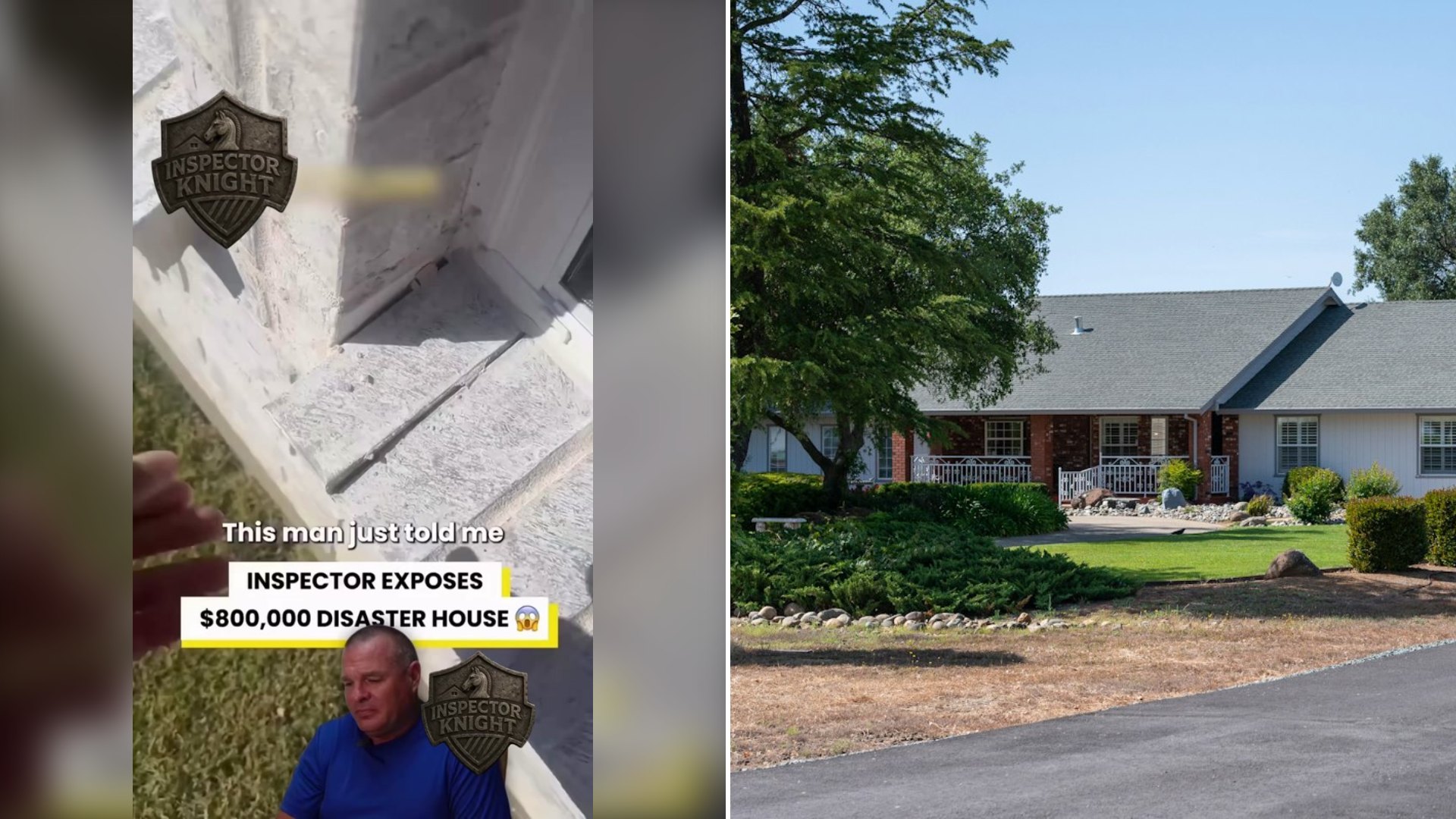
“This man just told me this house was $706,000,” the inspector says early in the clip, clearly surprised by what he is seeing for that kind of money. He points to a stretch of flooring that has buckled into ridges. “It’s like piano keys back here. That’s crazy.”
From there the list grows. He notes damage to the flooring. He finds a brick at the corner of a window that is loose, then shows just how loose by working it free. He checks the fixtures in the primary bathroom and reports no hot water. He grabs a faucet and declares it loose, adding, “Loose is the understatement on this one.”
A Critic Who Says Inspectors Only See the Bad
Woven into the video is a man with a very different opinion of the whole profession. “I hate inspectors,” he says. His complaint is that inspectors only look for problems and “overlook the good stuff.” He calls the findings “little tiny things” and says the house looks like a flip.
The inspector is not having it. “You didn’t see me pull a brick out the wall,” he fires back. As for the flip theory: “My boy, that is a brand new house.”
The man tries to explain away the loose faucets, saying that is just what happens the first time fixtures are installed and that they need to be tightened again later. The inspector lets that one slide with a shrug. But when the conversation turns to the buckled floor, he draws a hard line.
The critic argues the inspector is missing the big issue: why are those floorboards lifting in the first place? He suggests a leaky window. The inspector says the windows are new and the cause is poor installation, and that the water damage on the window sills is exactly what deserves attention. Then he lands the line that sums up his whole job: “Water is what kills houses.”
The inspector’s caption pokes fun at the situation with a nod to a famous mall cop movie, asking why “Paul Blart” is worried about what he is doing. Near the end he thanks his followers for having his back in the comments.
@inspector.knight
Why Inspectors Point Out the Bad and Not the Good
The critic in this video voices something a lot of home sellers and even some buyers feel. An inspection report can run dozens of pages, and almost all of it is problems. It can feel like nobody noticed the beautiful kitchen or the fresh paint.
That is by design. A home inspector is hired to find defects, safety hazards and items that need repair or monitoring. Buyers can see the granite countertops on their own. What they cannot see is whether the water heater is working, whether a wall is shedding bricks or whether moisture is getting under the floors. The report is a tool for negotiation and planning, not a compliment card.
It also helps to understand that not every item on a report carries the same weight. A good inspector will separate minor maintenance, like a loose faucet that needs a quarter turn, from serious concerns that can grow, like water intrusion. Buyers should read the summary page carefully and ask the inspector which findings worry them most.
What Buckled Floors and Loose Brick Can Mean
Floorboards that rise into ridges or peaks, sometimes called cupping, crowning or buckling depending on the shape, are usually a moisture story. Wood flooring swells when it takes on water or humidity. That moisture might come from a leak, a damp subfloor, high humidity in the home or flooring that was installed before it was allowed to adjust to the house. Whatever the source, it needs to be found, because fixing the boards without fixing the moisture just repeats the problem.
A brick that can be pulled loose by hand is a red flag for the mortar or installation around it. Brick veneer on most modern homes is not structural, but it is part of the home’s outer weather barrier. Gaps and loose units can let water behind the veneer, especially around windows where flashing is supposed to direct water out.
No hot water in a primary bathroom of a new house could be anything from a reversed supply line to a valve problem to a water heater issue. It is usually fixable, but it is something to resolve before closing, not after.
If you are buying any home, new or not, here are a few habits that pay off:
- Attend the inspection if you can. Hearing the inspector explain findings in person beats reading them later.
- Ask about moisture specifically. Water stains, soft spots, swollen trim and lifting floors deserve follow-up.
- Get repairs in writing. On a new build, the builder should agree in writing to fix items before closing.
- Re-inspect before closing. Confirm that the brick, the floor and the hot water were actually fixed.
An inspector who finds problems is not ruining the deal. He is doing what the buyer paid him to do, and at $706,000, that is money well spent.
More From Willow and Hearth
- Inspector Says He Could Pull Loose Bricks Right Off the Sill of a New Build Then Asks What You Think of a Kitchen in a Closed Off Far Corner
- Home Inspector Checking a Railing Pulled Out a Voltage Tester and Found a Live Electrical Wire Where No Homeowner Would Ever Expect One, and Electricians Are Stunned
- Pulte New Construction Inspection Shows a Very Different Experience Than the Inspector Expected
Leave a Reply