Cutting a hole in a wall of an 1867 house is a little like opening a time capsule. One homeowner has done it, and the first peek turned up three surprises.
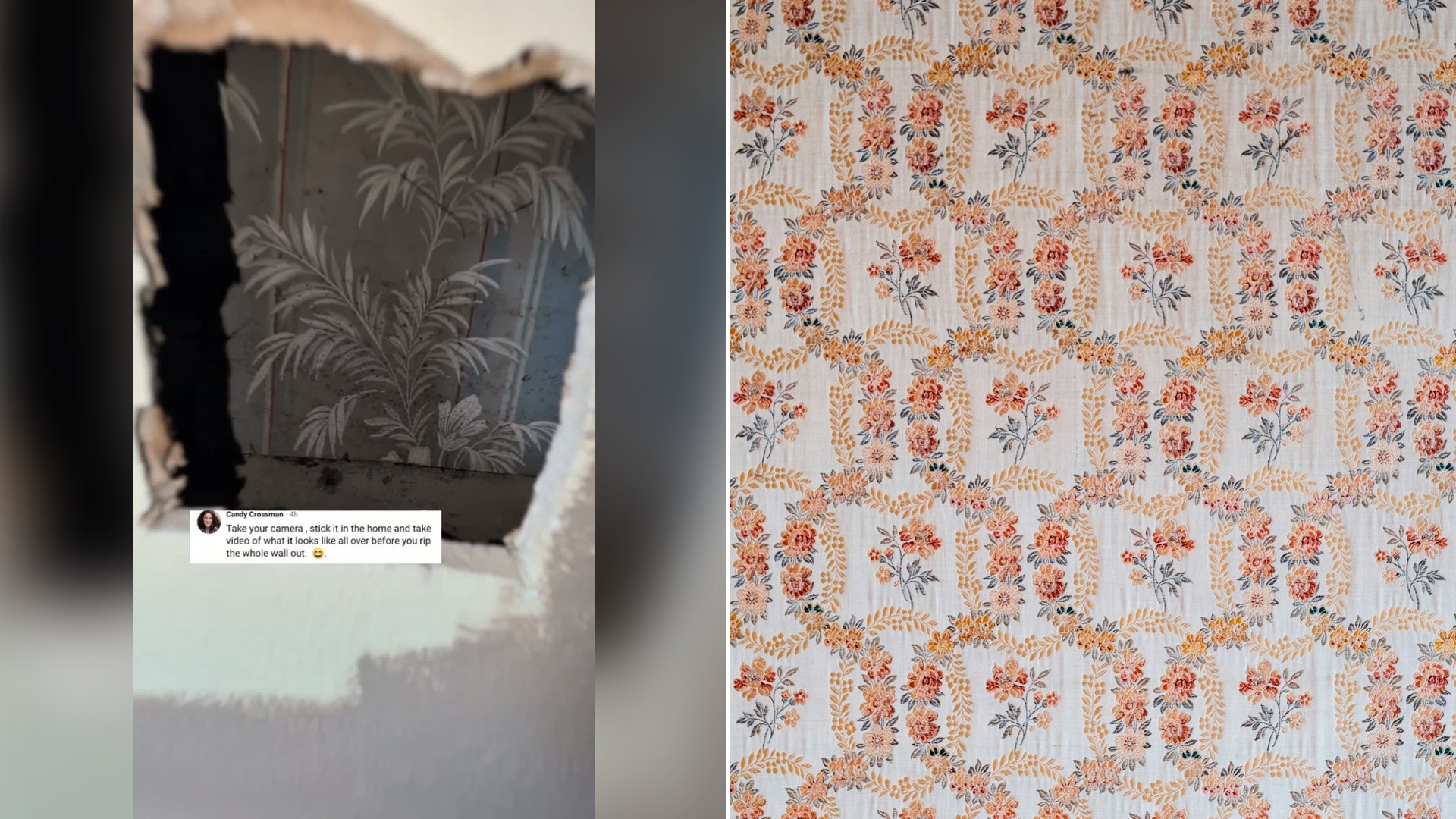
@the.benediction.home shares a tour of what she calls the hole in the wall, part two of a series on her 1867 home. “Alright, here we go to take a look inside,” she says. “I am going to be breaking out a lot more, but this is what we have today.”
The first thing she notices makes her smile: “This wallpaper is so cool.”
View this post on Instagram
Cool Wallpaper Hidden Inside The Wall Of An 1867 Home
Old wallpaper hiding behind newer walls is one of the great joys of restoring a historic house. Over the decades, owners often covered a room instead of tearing it out, so the earlier layers survive in the dark.
She says the wallpaper runs all the way up the opening. That means a past owner either papered the space before it was closed in or left an older wall surface in place when they added a new one.
For anyone who loves history, the pattern, the colors and the paper itself can show what people liked in another era. Homeowners often photograph it carefully before anything is disturbed.
A Walled Off Chimney And A Switch To Drywall
Next, she points out a spot where the wall stops. “There’s a wall that stops there,” she says. “We believe that’s probably the chimney behind it.”
She also explains what she sees on the wall surface. It is lath and plaster, the old fashioned wall system of thin wood strips covered with plaster. Someone covered it with drywall at some point.
Her theory for why is practical. “They also ran more electricity,” she says, “so we think they were probably doing raceways.” She adds that they took the wiring into account, knew where the electric was run and made sure they were not cutting into live wires.
A Nest In The Wall, Hopefully Abandoned
Then comes the part that makes anyone who has owned an old house wince. “And of course, now a nest, hopefully abandoned,” she says. “I guess we’ll also find that out too.”
Nests in walls are common in older homes. Gaps around chimneys, siding and rooflines give small animals easy access, and a quiet wall cavity is a cozy place to settle in.
She promises more. “This is definitely not the end of the saga for this wall,” she says. She plans to cut out a pretty big chunk of it and take viewers along for every step, including any more treasures.
What To Do Before You Cut Into A Wall In An Old House
Opening up a wall in an old house takes more planning than in a new one. Here are some smart steps to follow, just as she did when she checked where the electric ran.
- Shut off power to the area at the breaker and test the wires with a voltage tester.
- Use a stud finder or small inspection hole to look for wires and pipes before cutting.
- Wear a dust mask and eye protection, because old plaster dust can irritate lungs.
- Photograph everything before you disturb it, especially paper, paint and markings.
- Plan how you will haul away debris and protect floors.
Lead Paint, Asbestos And Other Old House Hazards
Homes built before 1978 may have lead paint, and older homes may have other hazards in the materials. If you are not sure what is in your walls, testing is a good idea before heavy demolition.
The EPA recommends using lead safe work practices when you disturb paint in older homes, and it offers guidance for homeowners. Keep children and pets away, seal off the work area with plastic sheeting, and clean up with a HEPA vacuum rather than dry sweeping.
Some older homes also have asbestos in certain materials. Testing by a licensed professional can tell you what you have. When in doubt, ask before you demolish.
How To Handle A Nest Or Animal Surprise
If you find a nest, stop and look from a safe distance. Do not reach in with bare hands. Animals can carry parasites, and droppings can carry germs, so wear gloves and a mask if you must clean up.
A nest may be old and empty, but you cannot always tell by looking. If you suspect an animal is still living there, or if you see signs of bats, call a wildlife professional. Bats are protected in many areas, and removal rules can apply at certain times of year.
Once the animal is gone, seal the entry point and clean and disinfect the area. That protects both your family and your new wall.
Why Chimneys In The Wall Matter
A chimney hidden in a wall deserves special care. If it is no longer used, it should still be checked for structural soundness. Old masonry can crumble, and openings can let in water, pests and drafts.
A chimney professional can inspect it and tell you whether it needs repair or sealing. If you plan to use a fireplace again, a full inspection is a must before lighting any fire.
Exposed brick can also be a beautiful feature. Many owners leave the old chimney visible as part of the design, and it can anchor a room.
A Good Reminder To Go Slow And Enjoy The Discovery
The best part of this post is the attitude. She is curious, careful and excited, and she invites others along for the ride. That is a good recipe for any restoration.
Old houses reward patience. Take your time, document what you find and respect what earlier builders left behind. Every cut can reveal a story, and a little caution keeps that story from turning into a headache.
Stay tuned for more from her 1867 home. With cool wallpaper, a hidden chimney and a nest to deal with, the saga of this wall is just getting started.
More Stories You May Like
- Safety Agency Warns Owners To Stop Using Northlight Tabletop Fireplaces Sold At Target, Walmart And Home Depot For $35 To $90, And The Company Has Not Agreed To A Recall
- Realtor.com Says 20.5% Of Home Listings Now Have Price Cuts, Yet The Market Looks More Like A Seller Pause Than An Exodus And Buyers Can Still Negotiate Repairs
- Engineer Buys A Retired Boeing 737 On Facebook For Around $5,300, Buries It In A 14 Foot Hole For A Secret Party Bunker, And His Wife Says It Was Junk But She’s Coming Around
Leave a Reply