Her community is tiny. Just about 17 houses, each with its own two-car driveway and two-car garage. You would think parking would be the one thing nobody fights about. But in a video that starts with “Does anybody have this issue in their community?”, homeowner @melissa.arredondocruz walks past the guest parking spots and shows what she says has been going on for months: broken-down cars that never move.
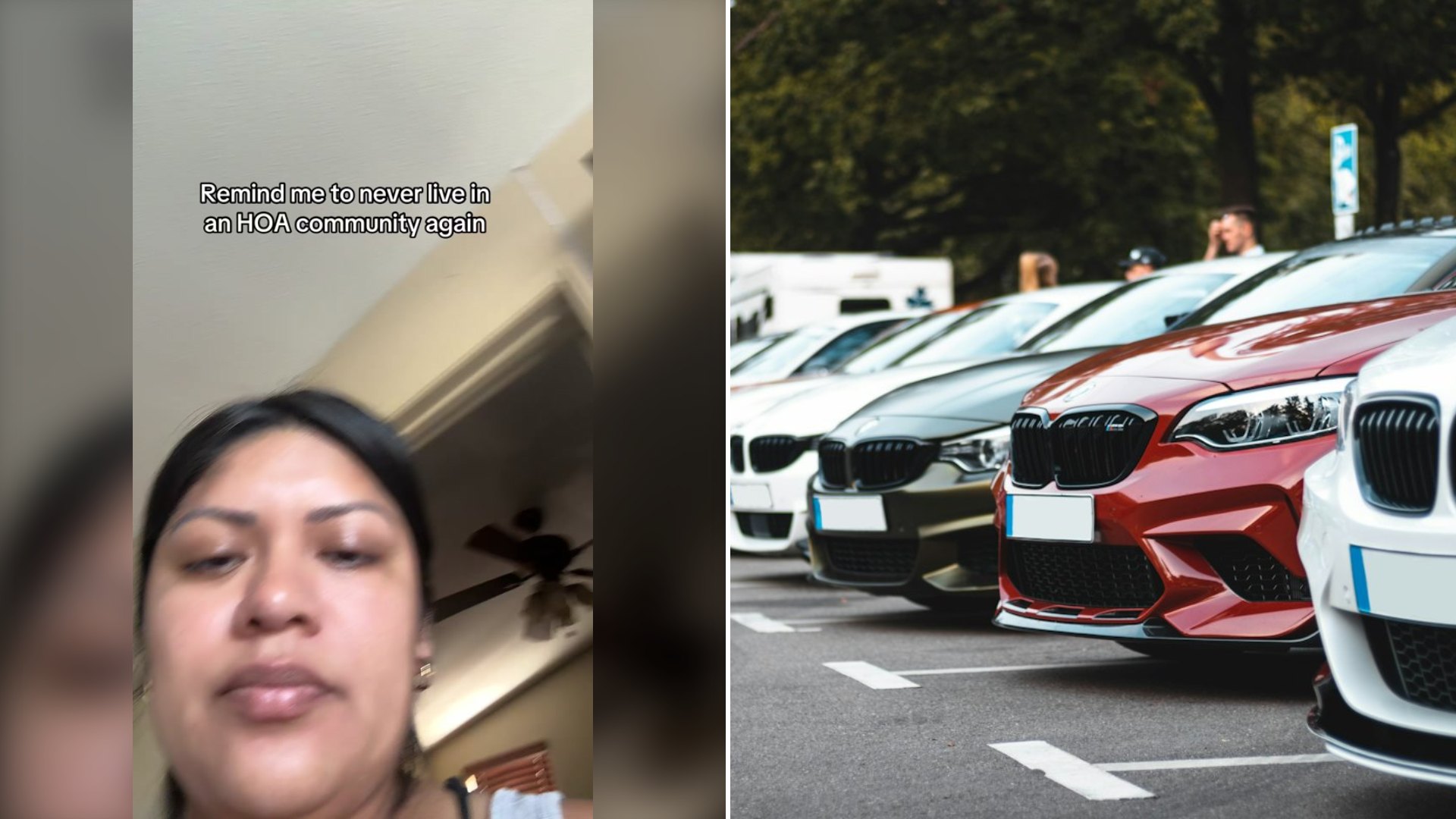
She lays out the rule clearly. Because she lives in an HOA community, residents are supposed to use their own driveways and garages first, before taking the open guest spots. “But the thing is, nobody does that, okay?” she says.
Instead, she says, those spaces, including the ones that wrap around the side, are filled with cars that are going nowhere. “I’m talking about flat tires, registration expired,” she says. “These cars don’t get touched for months. And when they finally do, it’s just to switch the car with another car.”
That last detail is what makes it so frustrating. The spots are not being used for guests. They are being used as long-term storage.
“It just sucks because some of us could really use” those spaces, she says.
Her biggest complaint is about the HOA itself. “They’ll complain if they see any detail sticking out of your house,” she says, “but they won’t address this.” And according to her caption, things are no better beyond the guest spots: “Street parking outside is even worse BTW.”
@melissa.arredondocruz
Why Small Communities Feel This the Most
In a big development with hundreds of homes, a couple of parked junkers might go unnoticed. In a 17-home community, a handful of guest spaces may be all there is. When several are taken by cars that never move, there is nowhere left for visiting family, a home health aide, a contractor or a grandchild home for the weekend.
Stalled cars bring other problems too. Flat tires and expired tags can be a sign a car has been abandoned, and vehicles that sit for months can leak fluids, attract pests and make a neighborhood look neglected. For homeowners, that can matter at resale time, when buyers drive through and form a first impression.
Selective enforcement is the sore spot many HOA residents know well. When a board sends letters about small cosmetic details on houses while a clear rule about parking goes ignored, owners start to feel the rules apply only to some people.
It is also worth remembering that the guest spots are usually common property. Every owner in the community helps pay for them through dues, along with the paving, striping, lighting and insurance that come with them. When a few residents turn them into private storage, everyone else is paying for space they cannot use.
How to Get Your HOA to Act on Parking
Every community’s rules are different, but these steps help in most HOAs.
Find the exact rule. Look in your covenants, bylaws and written rules for anything on guest parking, inoperable vehicles, expired registration, time limits or towing. Quote it word for word when you complain.
Write it down. Send a written complaint to the board or management company, not just a comment in passing. List the spaces, describe the vehicles without making it personal, and include dated photos showing how long they have sat.
Ask what action will be taken and when. A specific question gets a more specific answer than a general complaint.
Point out consistency. Politely note that the association enforces other rules and ask that this one be enforced the same way. Boards have a duty to apply rules fairly.
Attend the board meeting. Bring it up during the owner comment period so it lands in the minutes. A few neighbors showing up together carries weight.
Propose a fix. If the rules are vague, suggest clear ones, such as time limits on guest spots, a guest parking pass system or a requirement that vehicles in common areas be operable and registered.
What About Towing?
Many HOAs can tow vehicles from common areas that break the rules, but towing is regulated by state and sometimes local law. Often the association must have the authority in its documents, post proper signs and give notice before towing. Check with your management company or an attorney before anyone calls a tow truck.
If cars are parked on a public street, the city or county usually handles abandoned or unregistered vehicles. Many local governments have a code enforcement line or online form for reporting them. Private streets inside a community are often a different story and fall to the HOA.
Keep It Neighborly
Before escalating, it can help to simply ask. Sometimes a car belongs to someone dealing with a job loss, an illness or a family emergency, and a friendly conversation leads to a quick solution. A note offering help to get a car towed for repairs can go further than a formal complaint.
But when the board looks the other way for months, owners are right to speak up. As @melissa.arredondocruz put it, she just wants to know if other people deal with this too. Judging by how common parking fights are in HOAs, she is far from alone.
More From Willow and Hearth
- Gardening Fix After an HOA Violation Shows How One Homeowner Solved It Without Paying a Fine
- HOA Threatens Fifty Dollars a Day in Fines over Weeds Even Though the Homeowner Mows Every Two Weeks
- HOA Has Not Filed with the State in Four Years and May Have Been Legally Dissolved According to One Homeowner
Leave a Reply