Most of us have a few square feet of wasted space hanging right over our heads. In a smaller home, where every closet is already stuffed, the attic can be the storage room you never knew you had. One DIYer decided to stop climbing a ladder outside the house to reach it and put a proper pull-down attic ladder right in the ceiling, and he says the whole project turned out easier than he expected.
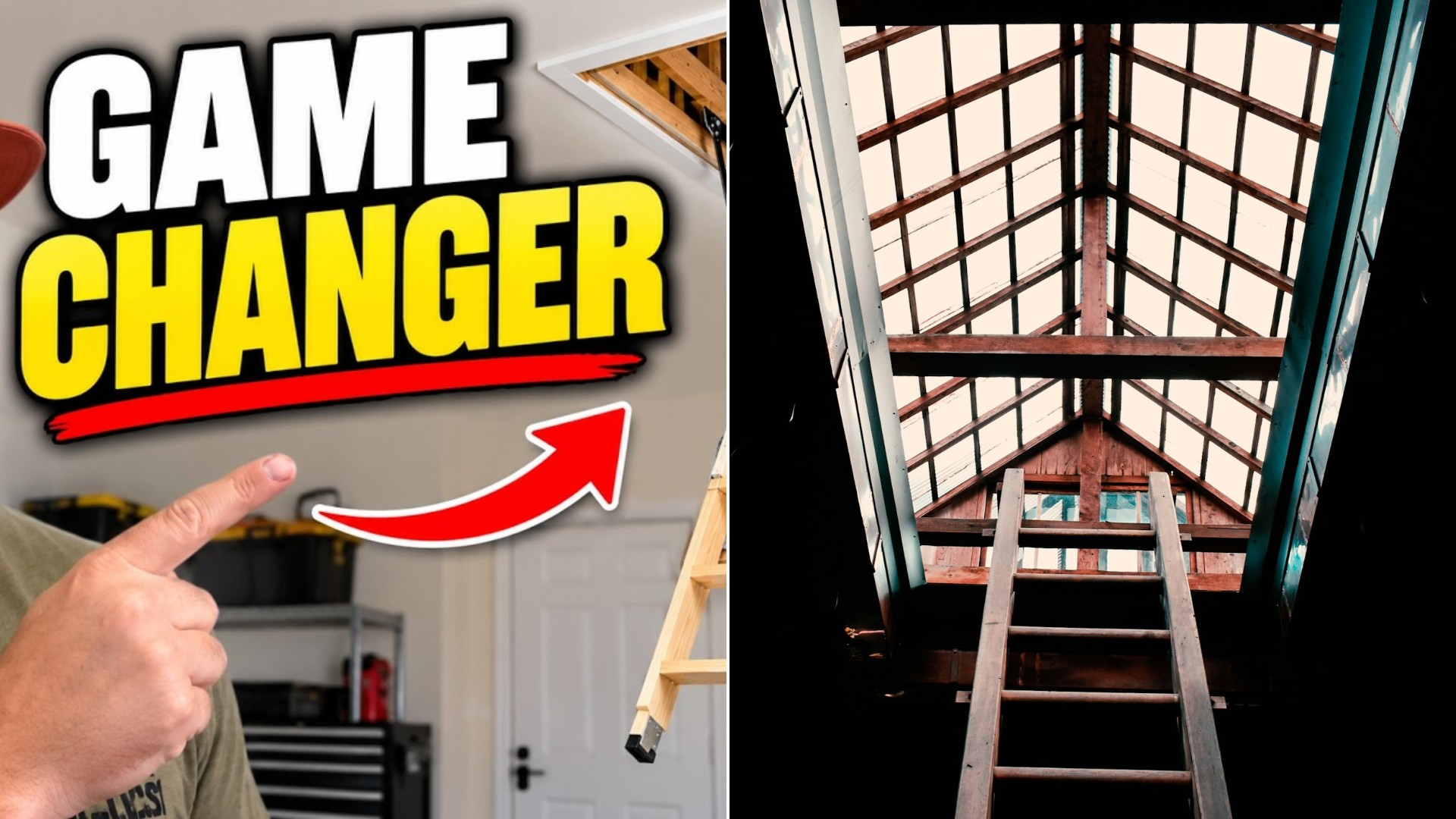
The homeowner, who goes by The DIY HVAC Guy, has ceiling cassette mini splits in his house. Getting up to them meant walking around to the exterior and going in from outside. An interior hatch fixes that, and it doubles as a way to store boxes and holiday decorations upstairs.
He went with an aluminum, insulated attic ladder rated R5, with a 22-inch opening and rough dimensions he figured at about 22 by 55 inches. It carries 375 pounds and fits ceiling heights from 7 feet 8 inches up to 10 feet 3 inches. His ceiling is about 7 feet 9 inches, so he sits just above the minimum.
How the Job Went
Before a single cut, he went through the box. The ladder arrives zip-tied together, and the instructions say to leave those ties alone until the unit is set in place. He then followed the install guide step by step: bushings first, then the straps that fold over the climbing section and out of the way.
The legs adjust, with bolt holes at regular increments, so you can trim them to fit your ceiling height. Because his ceiling is on the low end of the range, he cut off a good bit of extra length, then bolted the pieces back through the existing holes with locking nuts.
The guide also calls for temporary supports. He used 2x4s attached to the framing once the rough opening was cut, then fished the ladder assembly up and let it rest on them while he fastened everything from the attic. One support sits about 3 inches from the opening and the other about 8 inches. His planned opening was about 22 and a half by 54 inches.
His ceiling had old plaster, which makes a mess, and the joists sat on 16-inch centers, so the framing needed bracing. He framed in the opening with two pieces one way and added extras, then reinforced it until it felt solid enough to stand on without any give.
Smart Tricks Worth Stealing
He did a few things that really are worth copying. Before cutting, he went through the attic and scraped off the old mortar that had squeezed through the plaster, then vacuumed it all up so less debris would drop into the room. He also had a helper at the bottom with a shop vac while he cut from above. He wore a respirator in the attic, which is a good idea around old plaster and insulation dust.
The helper also caught a mistake. The header side, the one with the hinges, has to be the one that sits 3 inches from the opening, and the footer side belongs at 8 inches. He had it flipped, and fixing it before lowering the ladder saved real trouble. Check the orientation twice before you lift it.
Next came shims. They keep the frame snug in the oversized rough opening and keep it parallel to the wall, so he measured from the wall on both sides and adjusted until the distances matched. He pre-drilled with a 5/32 bit and drove lag screws with a ratcheting wrench, though an impact driver works too. Three lags go in the header side, plus one on each side, and he put a couple in while the supports were still up. After he lowered the ladder and removed the supports, he finished the rest.
Then he sealed around the frame with Great Stuff foam so no air could sneak through. With the attic cold, he reports the rails up top were chilly, but the ceiling area down below felt just as it did before the install.
What He Would Tell You Before You Try It
- One person could technically do it, but a helper makes it easier, especially for the vacuum and for catching mistakes.
- Pull the cord and hold the knob when you close the door. If you let go on a tall ceiling, it can slam shut and jar something loose. The unit has a lock feature if you nudge it forward, so push past that point deliberately.
- Keep the legs flat on the floor so weight spreads evenly.
- Paint the trim to match the ceiling. His white trim made the hatch almost disappear, where before it stood out like a sore thumb.
He planned to build a platform in the attic so storage is easy, and says he loves having the access now, whether for storing things or working up there. He leaves links to the ladder in his video description.
Before You Cut a Hole in Your Ceiling
Some general advice for anyone tempted. Look at your attic first: know where the joists run, where wiring and ductwork cross, and whether the floor up there can handle the weight of what you plan to store. Many attics are not framed to be storage floors, so check before you stack heavy boxes. Measure the swing space of the ladder when it is open, so it clears walls and doors. And if you are not comfortable cutting joists or moving wires, a licensed contractor or electrician is money well spent. Cutting or relocating framing can affect your home’s structure, and local codes may require permits or specific framing for the opening.
The savings are the draw here, and he says they made the job well worth it. If you take your time, follow the instructions that come with your model and work safely, an attic ladder is one of those upgrades that pays you back every time you reach for the suitcases.
More Stories You May Like
- Inspector Says He Could Pull Loose Bricks Right Off the Sill of a New Build Then Asks What You Think of a Kitchen in a Closed Off Far Corner
- Inspector Wonders Whether He Just Inspected a Good New Build and Shows What Made This One Different
- Grandchild Secretly Buys Their Childhood Home Then Takes Grammy For A Drive Past It And Reveals The House Is Theirs
Leave a Reply