Your furnace quits, the house starts to cool, and your first instinct is to grab the phone. HVAC technician Tad of Taddy Digest says hold on a minute. A few simple checks could save you the cost of a service call.
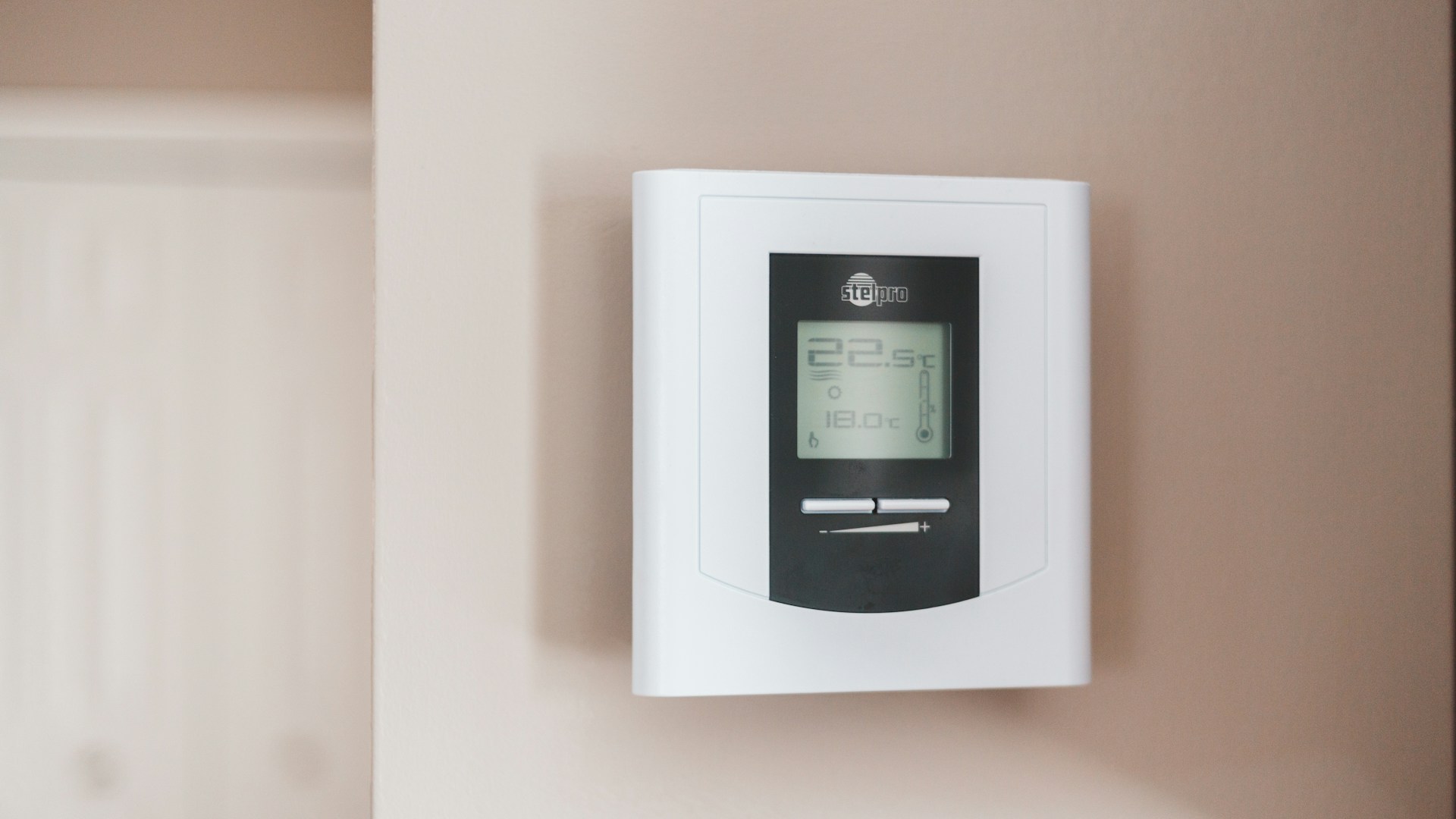
His rule is to go in order, and the first stop is the thermostat. If the display is blank, he says, take it off the wall and look at the batteries. Fresh ones may bring the screen right back to life, and that alone could be the entire problem.
But if the thermostat has no batteries and runs on wires, or fresh batteries do not help, there is a second place to look, and it is on the floor.
A Pan Full Of Water Under The Furnace Could Mean A Frozen Drain Pipe
If you have a high-efficiency furnace, Tad says, there is a pan underneath it that catches water if there is a drain issue. In the middle of winter, the drain pipe outside may have frozen. The water backs up into the pan, and a float switch in the pan opens and shuts the furnace down.
That means the water may need to be sucked out. Tad says this may be a job for a technician or contractor, but the cause could be as simple as a stopped-up drain. Knowing it ahead of time helps you tell the company what you found.
A loud racket from the furnace is another clue. It might come from the inducer motor assembly, where the wheel can rust, or from the blower, where something is loose. That is a call to a technician too, but if you can say there is a loud noise and roughly where it is coming from, he says, the tech can find the problem and fix it faster.
A Dirty Filter Can Shut The Whole Furnace Down
Next, check the filter. It sounds too simple, but Tad explains why it matters. A dirty filter causes low airflow, and with too little air moving, the furnace gets too hot and has too much of a temperature rise. A limit switch is built to open when that happens, and it shuts the system off.
So the order is thermostat, then the pan, then the filter. If you have gone through all three and the furnace is running in heating mode, listen for any loud noises. If everything sounds normal, there is another check, but this one needs a little care.
The Blinking Light That Tells A Tech What Went Wrong
Take the panels off the furnace and make sure the door switch is closed. There is a switch that cuts power when the door is open, and Tad shows on camera that when his hand comes off it, the LED on the control board goes dark.
Most furnace control boards have an LED for diagnostics. If something is wrong, it blinks red or another color a certain number of times, and that pattern means a particular error. The panel usually has a chart. It might point to an open pressure switch, a bad control board, no gas or a flame sensor issue.
You do not have to fix any of that yourself. But if you call a company and tell them the blink pattern, you are giving them a head start.
He Gets This Call At Least Once Every Year, And The Gas Meter Has A Lock On It
If you have a gas furnace, you need gas for it to work. Tad says he gets this call at least once every single year. He drives out, checks for gas pressure at the unit and finds none. Why? Because the meter is locked out with a lock on it, either because the bill was not paid or because the homeowner forgot.
So walk around the house and check the gas meter. Make sure there is no red lock on it and that the valve is in line with the pipe, which means it is on. If you have propane instead, take the lid off the tank and look at the gauge. If it says zero, the tank needs refilling.
These checks, he says, can save you money. Nobody wants to pay a contractor to come out just to look at the meter and say, “Did you forget something?”
How A Furnace Actually Works, Step By Step
Tad then turns to technicians and walks through the sequence of operations. When the thermostat calls for heat, the control board sends power to the inducer motor. The motor runs and pulls a negative pressure through a tube to a pressure switch, which closes and completes a safety circuit that includes the rollout switches and a limit switch.
Once the safeties are proven, the board sends power to a spark or hot surface igniter and to the gas valve. Gas flows through the manifold pipe, through the orifices and to the burners, and the flame travels across the carryover track. A flame sensor on the other side sends a signal back to the board, and then the blower turns on after a short delay.
The heat exchanger is behind it all, and the inducer pulls the flame through it and sends exhaust out the flue pipe. If the rollout switches ever open, Tad says, there is usually a problem with the heat exchanger, and that is not good.
He also points to a common trouble spot: the small port on the pressure switch tube. If it is stopped up, the pressure switch will not close and the furnace will not light. That is exactly why it helps to describe symptoms clearly to a tech before they arrive.
Know Where To Stop And Call A Pro
Batteries, a pan, a filter and a gas meter are fine for a homeowner. Taking panels off a furnace is not for everyone, and anything involving gas lines, burners or electrical parts is a job for a professional. If you smell gas, leave the house and call for help right away.
Tad’s message to homeowners is simple: you know what to check, so do not let him down. And if the repair still ends up in a technician’s hands, you will at least be able to say what you found.
Leave a Reply