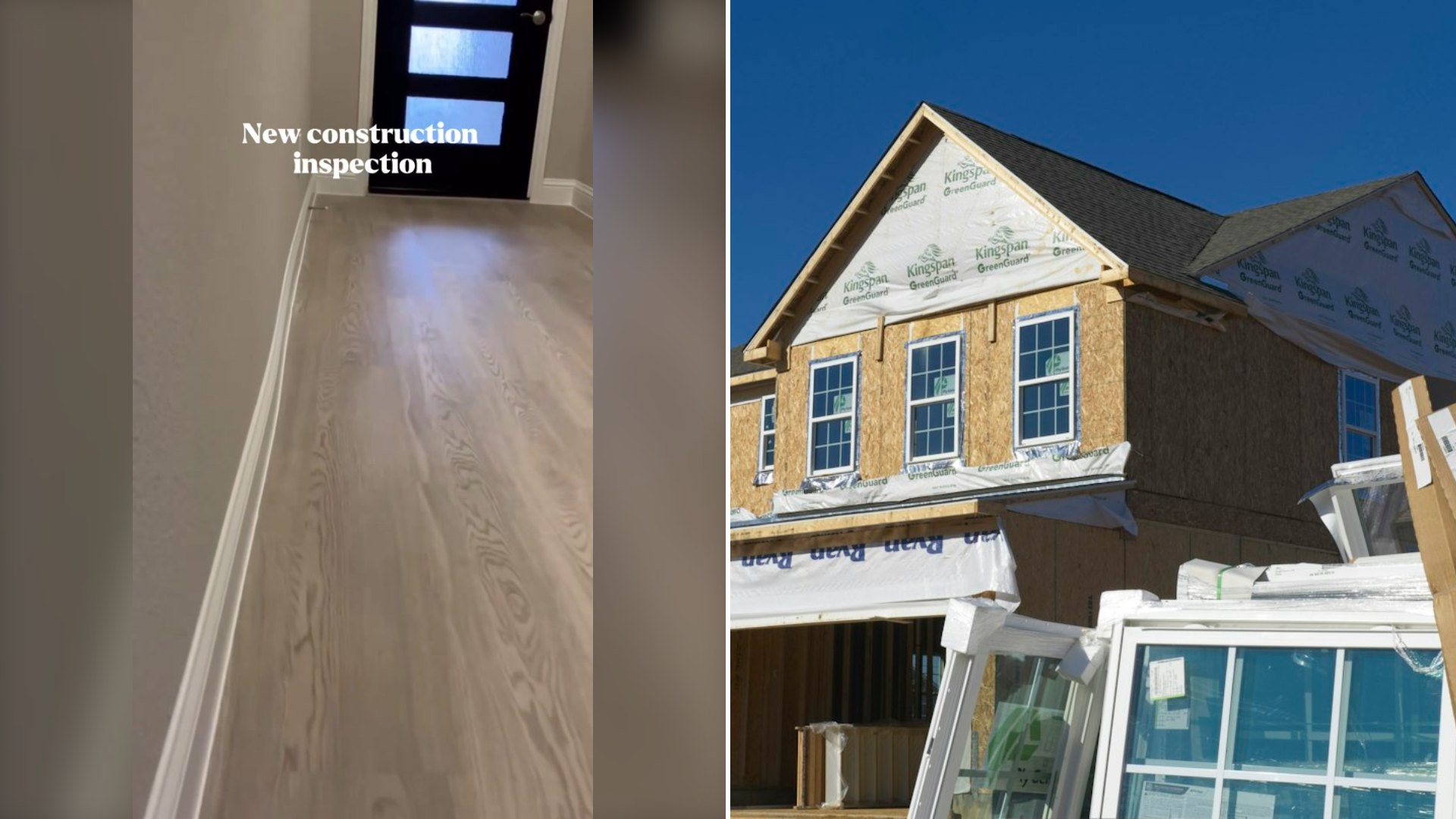
Brand new should mean done right. That is what most buyers assume when they pick up the keys to a freshly built home, and it is exactly the assumption a home inspector who posts as @constructioncheckhq set out to test. In a short walk-through of a new construction house, he found a part that was never installed, cracked and loose mortar by the garage door, a shower that only half works, and a window next to a door that is missing the safety glass building code calls for.
None of it is the kind of thing you notice when you are touring a model home with a cup of coffee in your hand and a sales rep pointing out the quartz countertops. All of it is the kind of thing you will notice later, usually at the worst possible moment.
What the Inspector Found
The video opens with a piece that simply is not there. “I noticed it wasn’t even installed,” the inspector says, showing the spot where a component should have been fitted and never was. It is a small thing, but it sets the tone for the rest of the tour.
Next he heads to the door leading into the garage. “The mortar’s cracked,” he says. “A little loose.” Mortar around an entry is not just cosmetic. Cracks let water work their way in, and loose material tends to get looser over time, especially in a spot that sees daily foot traffic and temperature swings from the garage.
Then comes the shower. In a brand new bathroom, the main shower fixture does not function at all. “Only the wand does,” he points out, meaning the handheld sprayer works while the fixed showerhead stays dry. “And how that got missed is beyond me,” he adds. “It needs to be fixed though.”
That is a fair question. A shower is about as basic a test as a builder can run before handing over the keys. Turn the valve, switch the diverter, and see if water comes out of both heads. When something that simple slips through, it is reasonable to wonder what else was never checked.
The final find is the one that matters most for safety. “Windows that are installed less than 24 inches of the door are required to have safety glass,” the inspector explains. Then he shares a trick every homeowner can use: “A good way to tell is you will find an etching in one of the corners.” He leans in to look at the window beside the door. “Not on this one.”
@constructioncheckhq
Why Safety Glass Near Doors Matters
The rule the inspector mentions exists for a very practical reason. Glass next to a door gets bumped, leaned on, and fallen into far more often than a window in the middle of a wall. People trip on the threshold, kids run toward the door, someone pushes a door open a little too hard and hits the pane. Ordinary glass breaks into long, sharp shards that can cause serious cuts. Safety glass, usually tempered or laminated, is designed to break into small, duller pieces or to hold together when it cracks.
Residential building codes used across most of the country treat glass within a short distance of a door as a “hazardous location” that requires safety glazing, with a few exceptions based on height and placement. Bathrooms, glass near tubs and showers, and large low windows near walking surfaces fall into the same category. The small etched stamp in the corner, sometimes called a “bug,” is how manufacturers mark glass that meets that standard.
You can check your own home in about five minutes. Walk around and look at every window and sidelight close to an exterior or interior door, plus any glass near your tub or shower. Look in each corner for a small etched label. If you cannot find one, that does not automatically mean the glass is unsafe, since some markings are hidden by trim, but it is worth asking a glass company or inspector to confirm, especially if grandchildren visit.
How to Protect Yourself When Buying New Construction
Many buyers skip a private inspection on a new home because the city already inspected it. That is a costly misunderstanding. Municipal inspectors check that a house meets minimum code at certain stages, often on a tight schedule across many homes. They are not there to make sure your shower works or your mortar is solid. A private inspector works for you.
Here is how to get the most out of the process:
- Get a pre-drywall inspection. If the builder allows it, have an inspector look at framing, plumbing, and wiring before the walls close up. Problems are far cheaper to fix at that stage.
- Get a final inspection before closing. Schedule it a few days before your final walk-through so you have time to submit a written list of repairs.
- Test everything yourself. On the walk-through, run every faucet and shower setting, flush every toilet, open and close every window and door, and flip every switch.
- Put requests in writing. Verbal promises from a site supervisor are easy to forget. Email the list and keep copies.
- Know your warranty. Most builders offer a one-year workmanship warranty, with longer coverage for systems and structure. Schedule an inspection around month eleven so you can file claims before that first year runs out.
The inspector’s question about the shower is the one every buyer should keep in mind. If something that obvious got missed, it pays to have a trained set of eyes look at the things that are harder to see. A few hundred dollars for an inspection is a small price compared to discovering a problem after the warranty clock has run out.
More From Willow and Hearth
- Inspector Says He Could Pull Loose Bricks Right Off the Sill of a New Build Then Asks What You Think of a Kitchen in a Closed Off Far Corner
- Handyman Shuts Down His Business After Five Years and Hundreds of Jobs and Shares What He Learned
- Pulte New Construction Inspection Shows a Very Different Experience Than the Inspector Expected
Leave a Reply