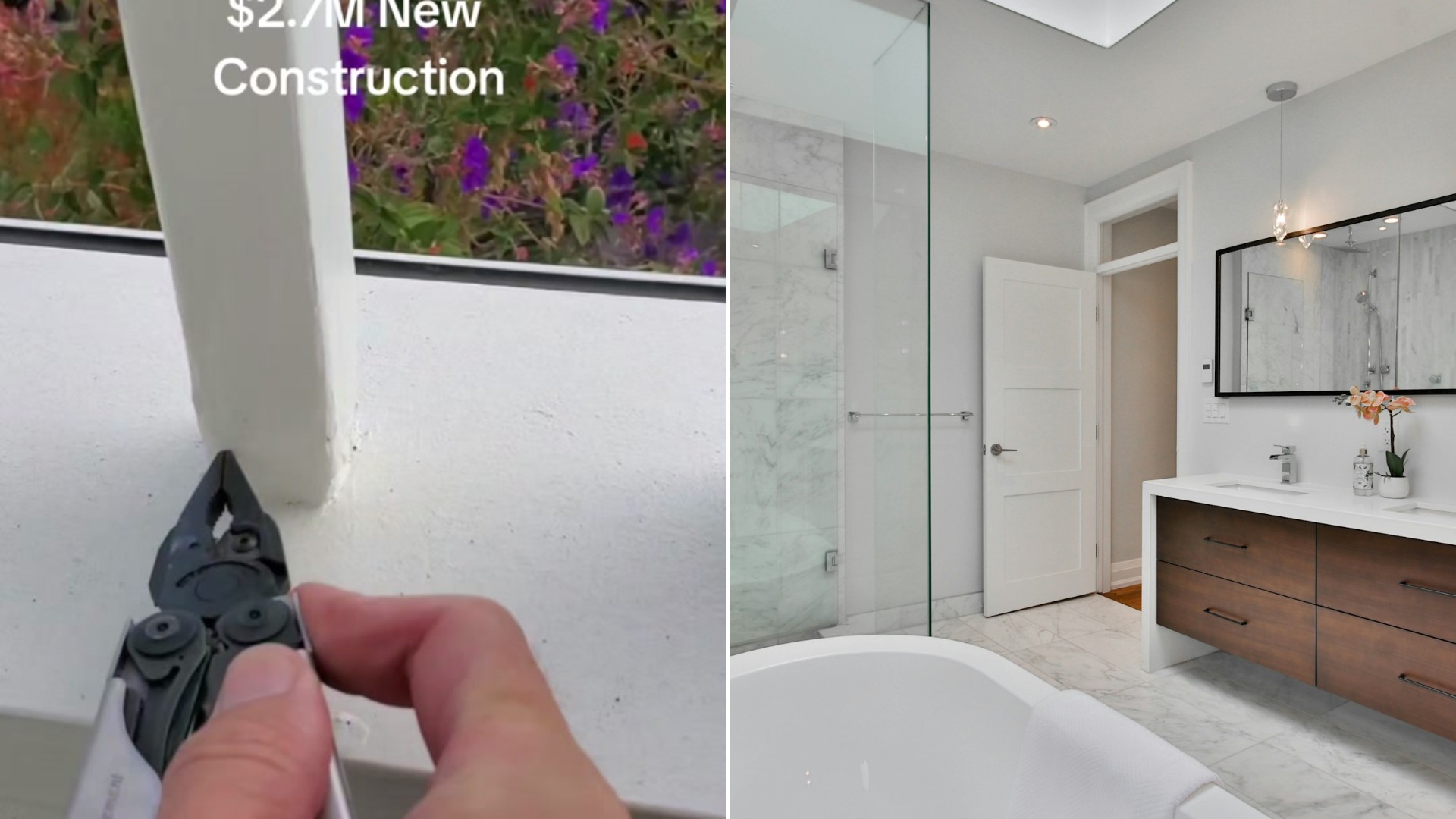
At $2.7M, a new build should be the kind of house where nothing is out of place. Home inspector @inspectionhome walked through one at that price and came away with a list that says otherwise.
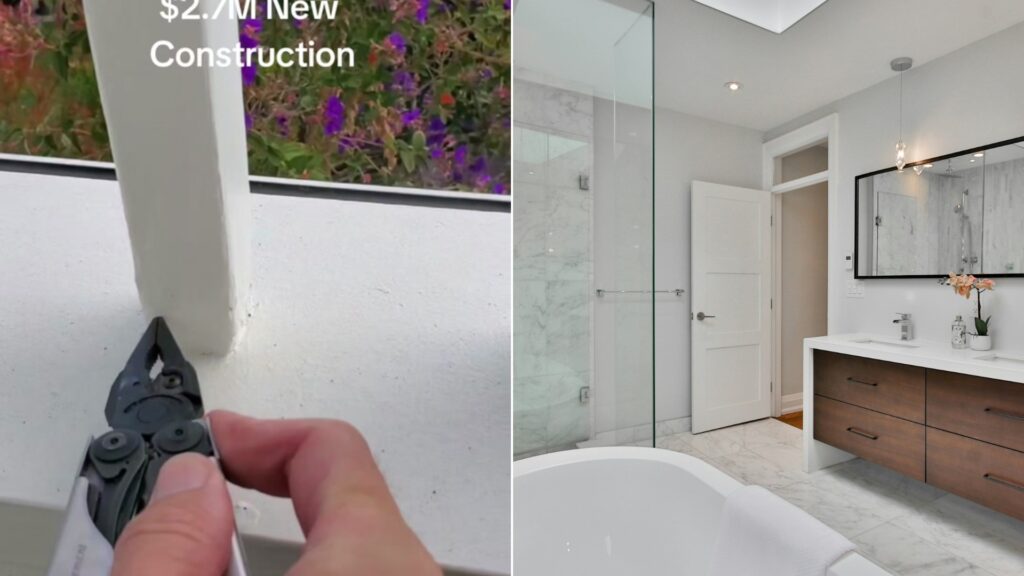
He found two showers that are not watertight, window frames that are not sealed around the brick, and a door that looks like someone kicked it in.
The problems range from water and weather to plain workmanship, and every one of them is something a buyer can learn to look for.
@inspectionhome
Two Showers That Are Not Watertight
A shower that is not watertight lets water escape through gaps in the enclosure, around the door or at the curb. When it happens in one bathroom, it can be a one off mistake. When it happens in two, it suggests a pattern in how the work was done.
Water leaking out of a shower rarely makes a big mess at first. It sinks into the floor edges, the subfloor and the framing, and the damage can build for months before anyone sees a stain.
The simplest check is to run the shower with the door closed and look carefully at the seams, the bottom of the door and the floor outside. A towel placed at the threshold will show a leak quickly.
Window Frames Not Sealed Around The Brick
On a brick house, the joint where the window frame meets the brick is a classic place for water to get in. Sealant there keeps rain from running behind the frame and into the wall.
When that joint is unsealed, wind driven rain can find its way into the wall cavity and soak the framing and insulation. It may take a few storms before anyone sees a water stain on the inside trim.
Brick walls are designed with small openings called weep holes near the bottom that let moisture escape, so do not seal those up. The caulk belongs at the window frame, where brick meets the window, not in the weep holes.
A Door That Looks Like Someone Kicked It In
Perhaps the most striking item is a door that looks like someone kicked it in. Damage like that can come from a delivery, a rough move or a forceful close, and on a new house it should be noticed and repaired before the buyer takes possession.
A damaged door is not always only cosmetic. A crack in the frame or jamb can keep the door from latching, which affects both security and energy loss.
Doors that scrape, stick or sit crooked in the opening should be looked at as well. Open and close every door in the house during a walkthrough and see whether each one latches cleanly.
Price Does Not Replace An Inspection
The most useful lesson is that a high price does not mean a house has been double checked. Municipal building inspectors confirm that key stages meet code, but they do not check every sealant line, shower seam or door.
That is why independent home inspectors recommend that buyers of new construction bring their own inspector. An inspector works for the buyer, not the builder, and has no interest in the closing date.
How To Handle It If You Find Problems
Put every issue in writing with photos and send it to the builder, then ask for a repair schedule. Do not rely on verbal promises, and keep a copy of everything you send.
For water related items, ask for proof of the fix, such as a retest of the shower or a photo of the new sealant. If a problem keeps coming back, ask for a qualified third party to confirm the repair.
Check your builder warranty and note its deadlines. Many warranties cover workmanship for a limited time, and missing a window can leave you paying for repairs yourself.
Three Quick Checks Any Buyer Can Do
First, look at the caulk at every window and at the seam between window frames and exterior walls. It should be continuous, without gaps, cracks or pulled away edges.
Second, run each shower for five minutes with the door closed and check the floor outside. Third, open and close every door and note any that scrape, stick or show damage on the frame or slab.
Keep a dated photo log of whatever you find. If a problem turns out to be bigger than it looked, a record from before closing is useful when you ask the builder to repair it.
Why Sealant Gaps Matter More Than They Look
A gap in the sealant around a window frame may be only a few millimeters wide, but wind driven rain does not need much of an opening. Water that gets behind a frame can travel down inside the wall and show up far from the window.
By the time a stain appears on the drywall, the framing and insulation inside the wall may be damp. That is why inspectors look closely at every joint where a window meets the exterior wall.
Ask the builder what flashing and sealant were used around the windows, and whether the work was inspected before the siding or brick went on. A confident builder will be able to answer those questions.
Take Your Own Walkthrough, Too
You do not need to be an inspector to spot a loose caulk line or a damaged door. Go through the house with a flashlight, a small level and a notepad, and look at every window, door and shower.
A $2.7M new build may look polished in a listing photo, but the details are where the quality shows. Take the time to check them before you sign, and make sure the finished house matches the one you were promised.
More Stories You May Like
- $1.5 Million New Build Has A Shower That Is Not Watertight, A Window Open To The Exterior And A Nail Sticking Out Of The Shingles, Would You Accept This Quality
- Realtor.com Says 20.5% Of Home Listings Now Have Price Cuts, Yet The Market Looks More Like A Seller Pause Than An Exodus And Buyers Can Still Negotiate Repairs
- Furnaces That Need A Second Try To Light Are Warning You Before January, And A 15 Minute Walk Through On The First Of The Month Can Catch It
Leave a Reply