Detroit was once one of the richest cities in the world, and the brick-and-limestone fourplex that investors toured on the city’s west side still carries that pride on its face. Then they opened the door, and the pride ran straight into a wall of trash.
The walk-through comes from Sanborn Construction Group, a team that tours rough buildings for investors. Their verdict, after one of the messiest tours you will ever read about, was that each unit could still rent for $1,000 to $1,100.
“This Brick Is In Fantastic Shape” Said The Investor, Right Before He Opened The Door
Outside, the news was good. Nick, who was assessing the building for one of his investors, said the brick looked terrific and should hold up for about a hundred years if it was done right. He pointed out that brickwork is expensive, so seeing it in this shape was a good sign.
The windows were newer, which told him someone had spent real money at some point. A few gaps could be packed with a little mortar, nothing he was worried about. Even the front steps got a compliment: he thought they were painted limestone, a reminder that Detroit buildings of this age were built with nice stone.
The neighbor had just told him it was actually a fourplex, news to him before arriving. That was the last easy moment of the day.
Six Or Seven Dumpsters, Dead Animals And “A Lot Of Needles” Inside
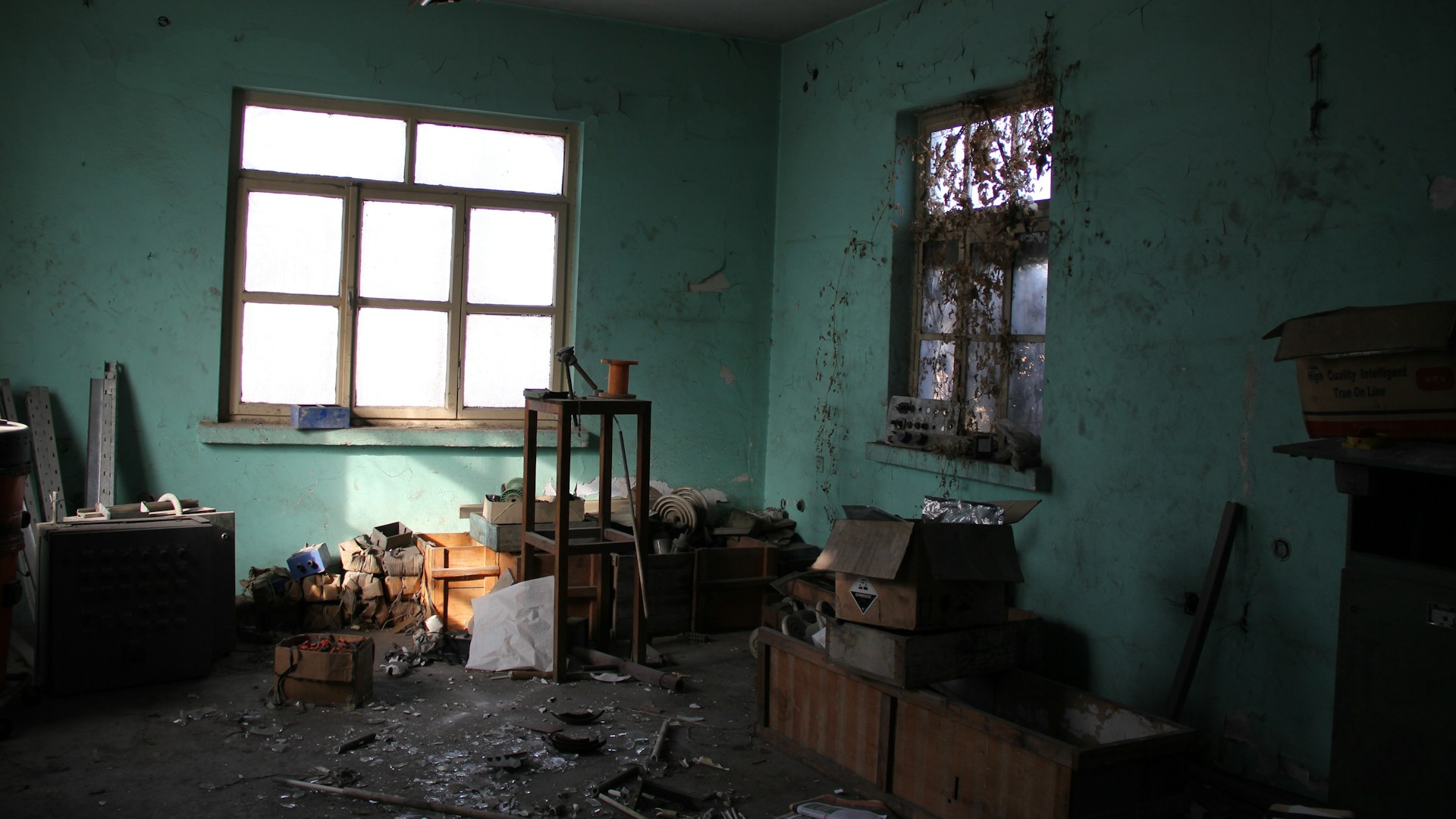
Inside, the whole place was packed with belongings. Nick warned that the biggest number on this project would be demolition and clean-out, because nobody can even see the building until the junk is gone. He said the team did a similar building a year or two earlier, also full of trash, and that video turned out to be the most viewed on their channel.
His partner Gabby said it felt like an episode of a hoarding show. She is five feet tall and ended up standing on a table just to see over the piles. If every unit looked like that one, she figured the job would need six or seven dumpsters.
There were needles, paint everywhere, and a smell she described as mold, pee and animal feces. Gabby said it looked like the place had been used as a drug den, and the group stepped carefully because nobody knew what was under the debris.
A 2008 Obama Sticker And A 2013 Expiration Date Reveal How Long The Place Sat Empty
The clues in the clutter were almost like archaeology. They spotted a 2008 Obama sticker, an old CRT television, and a drink with an expiration date of 2013. From that, the team guessed the building was abandoned somewhere between 2007 and 2013.
They split the difference at 2010. Gabby put it plainly: the building has been sitting vacant for about 16 years.
She also had a theory about how it got that way. In Detroit, she explained, a normal eviction goes through legal proceedings and a bailiff, who brings a team and charges for the full clean-out. This did not look like that to her. It looked like squatters had taken over and the city had condemned the building, with what she called layers of squatters on top of each other.
Cracked Floors, A Collapsed Ceiling And Light Coming Through The Roof
Upstairs, Gabby reported moisture, a collapsed ceiling in places, and windows that the land bank had removed when it secured the property. She said the land bank often comes through, secures a property and takes the windows out, and sometimes leaves them sitting inside. A heavy original cast iron tub would be a real chore to haul out, she added, though she thought some tile might be saved.
Later, in the downstairs unit, Nick said there was a pipe that appeared to have burst. He could see clear through the floor and subfloor, and he admitted the group probably should not even be standing there. In the third unit, one of them could see out through the roof, so a new roof was a certainty.
One unit was off limits altogether because of fire damage. Gabby noted that a door in the hallway likely protected the third unit from that fire, which she called crazy cool.
“Knob And Tube” Wiring, A Brick Basement And An Old Trash Incinerator
The basement tour was a history lesson. The foundation is brick rather than poured concrete, and Nick said the brickwork looked pretty good overall. A few corners had damage that needed tuck pointing, and salt deposits suggested water was getting in.
He said plainly that he is not a structural engineer and would bring one in. For now, he said, it was not going to kill the project. Gabby said the foundation would be the thing that decides whether the project works.
The wiring was old knob and tube, including an original breaker box with ceramic fuse pieces. They also found separate basements for each unit, gas meter hookups on the inside of the building, and an old incinerator where residents once burned trash in the 1920s, 30s and 40s. Galvanized pipes and clotheslines hung nearby, and Gabby noted there was even moss growing indoors.
Still, They Priced The Rents At $1,000 To $1,100 A Unit
Here is where the story turns. Despite all of it, the investors kept coming back to the same number. Standing in the big first unit, Gabby said she would rent each unit out for around $1,000 apiece, and later said she would go between $1,000 and $1,100.
After seeing all three units she got more specific. She would rent the first, huge one for $1,200, the middle one they never saw for $1,000, and the third for $1,100, calling it a small three-bedroom with a nice hallway. The team also said the bedrooms and ceilings were bigger than in most houses they had seen that day.
Gabby summed up what they knew: the building needs a clean-out, and the foundation will tell them whether the project works. If it does, she says her team could manage it and turn it into a performing rental.
What To Check Before You Buy A Building Like This
Few of us will tour a squatter-filled fourplex, but the lessons carry over to any fixer-upper. Here is a practical checklist.
- Budget the clean-out first. As the investors said, you cannot judge a building until you can see it, so allow for dumpsters and labor before anything else.
- Hire a structural engineer if you see bowing walls, cracked masonry or water stains. A professional opinion costs far less than a surprise foundation repair.
- Assume the wiring and plumbing need work. Old knob and tube wiring is a concern for many insurers, so ask an electrician and your insurance agent early.
- Protect yourself. Wear sturdy boots, long pants and a mask in any long-vacant building, and never walk on floors you cannot trust.
- Price the rents conservatively. Check what similar units actually rent for nearby, and remember the final number only matters after the repairs are paid for.
The takeaway is simple. Good bones can hide under terrible surfaces, and the investors in Detroit believe this fourplex has them. Whether the numbers work comes down to the roof, the foundation and a whole lot of dumpsters.
More Stories You May Like
- Couple Pays Just Under 250 Grand For A Tiny House Built Over A Year, Skips The Loft For Open Space, And Still Wishes They Had Put In A Dishwasher
- She Bought Her First Home And Heard Scratching After One Week, Four Months And Several Pest Controllers Later A Smoke Test Still Could Not Find How The Rats Got In
- Son Secretly Fixes Up A House For 10 Months And Hands It To His Mom, Who Had Been Renting Her Whole Life And Had No Idea Until She Walked In
Leave a Reply